
Science
New Research Reveals Moon’s Precursor Planet Formed Near Sun

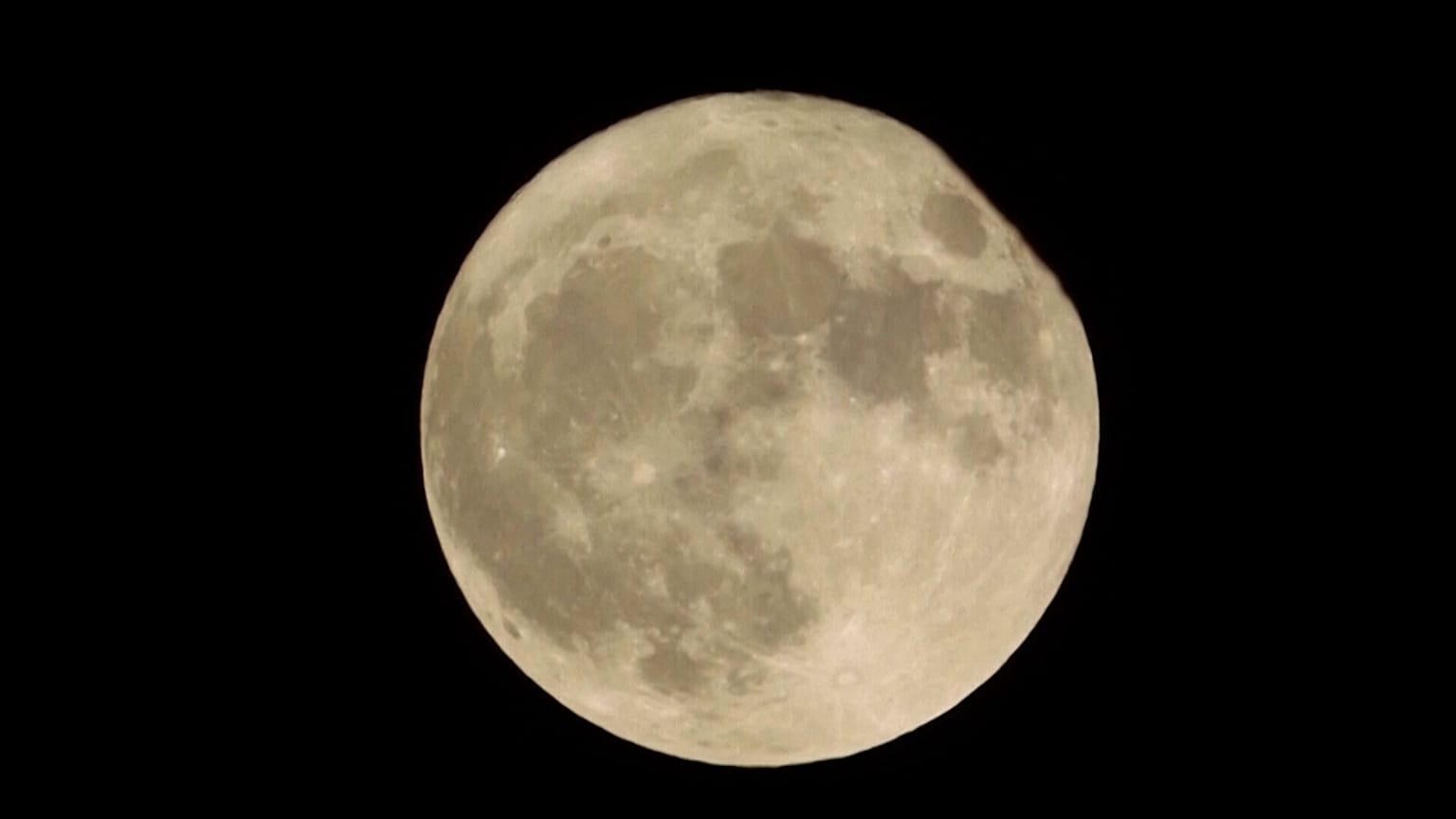
A recent study has revealed that Theia, the long-lost planet believed to have played a crucial role in the formation of the Moon, likely originated much closer to the Sun than previously thought. This finding challenges decades of assumptions about the early Solar System and adds new insights into the complex history of Earth’s formation.
For over 50 years, the leading theory regarding the Moon’s creation has been the giant impact hypothesis. This theory posits that approximately 4.5 billion years ago, Theia collided with the early Earth, resulting in debris from the impact coalescing to form the Moon. However, the absence of direct chemical evidence from Theia has made it difficult for scientists to ascertain its exact origins and composition.
Now, a collaborative team of astronomers from France, Germany, and the United States has conducted a detailed analysis of ancient lunar and terrestrial rocks. By examining isotopes found in these samples, researchers have shed light on where Theia may have come from.
Insights from Isotope Analysis
The research team utilized rocks collected from Earth and samples returned from the Moon by Apollo astronauts to investigate their isotopic compositions, which serve as chemical fingerprints. While it is known that the metal isotope ratios of Earth and Moon rocks are nearly identical, this similarity has complicated efforts to identify Theia’s unique characteristics.
The team employed a method akin to planetary reverse engineering, modeling hundreds of scenarios involving early Earth and Theia. They meticulously tested various combinations of isotopes, including iron, chromium, zirconium, and molybdenum, to discern which scenarios could produce the isotope signatures observed today.
The results indicated that materials forming closer to the Sun exhibit distinct isotopic patterns compared to those from the outer regions of the Solar System. This analysis ultimately led researchers to conclude that Theia most likely originated in the inner Solar System, even nearer to the Sun than Earth itself.
Implications for Planet Formation Research
The implications of this research are significant. It not only paints a clearer picture of Earth’s history but also refines our understanding of the conditions under which planets form. Jake Foster, an astronomer at the Royal Observatory Greenwich in the UK, who was not involved in this research, expressed enthusiasm about the findings. He remarked, “One of the things about this research that does make it so exciting is not only is it helping to paint a picture of what happened to the Earth four and a half billion years ago, but also it’s able to almost exactly pinpoint where this object came from.”
The analysis of Theia may pave the way for future studies on planetary formation, collision, and evolution in the early stages of a solar system. As scientists continue to unravel the mysteries of our cosmic origins, this research represents a pivotal step forward in understanding the complex interactions that shaped our solar neighborhood.
For more information on this groundbreaking study, viewers can watch the accompanying video in the media player above.

Taste Test Reveals Best Mince Pies from Major UK Supermarkets

Baba Vanga Predicts Alien Contact and Global Upheaval in 2026

Astronomers Uncover the Pulsating Mystery of 3I/ATLAS

Ajax Match Abandoned After Fireworks Erupt in Stands

Asia’s Longest Domestic Flights: Some Stretch Over 3,000 Miles

Inmates Sneak in Fried Chicken Takeaways at HMP Wandsworth

Parkdean Resorts Launches Major Black Friday Discounts for 2026 Stays

Former Rockstar Employee Reveals GTA 6 Animations in Leak

Maintain Your HVAC System: Avoid Costly Repairs This Winter

Iconic 90s TV Show House Hits Market for £1.1 Million

Milk Bank Urges Mothers to Donate for Premature Babies’ Health

Alessia Russo Signs Long-Term Deal with Arsenal Ahead of WSL Season

Shoppers Flock to Discounted Neck Pillow on Amazon for Travel Comfort

Museums Body Critiques EHRC Proposals on Gender Facilities

Trump Visits Europe: Business, Politics, or Leisure?

Japanese Teen Sorato Shimizu Breaks U18 100m Record in 10 Seconds

Couple Shares Inspiring Love Story Defying Height Stereotypes

Anglian Water Raises Concerns Over Proposed AI Data Centre
-
 Entertainment2 months ago
Iconic 90s TV Show House Hits Market for £1.1 Million
-
 Lifestyle4 months ago
Milk Bank Urges Mothers to Donate for Premature Babies’ Health
-
 Sports3 months ago
Alessia Russo Signs Long-Term Deal with Arsenal Ahead of WSL Season
-
 Lifestyle4 months ago
Shoppers Flock to Discounted Neck Pillow on Amazon for Travel Comfort
-
 Politics4 months ago
Museums Body Critiques EHRC Proposals on Gender Facilities
-
 Business4 months ago
Trump Visits Europe: Business, Politics, or Leisure?
-
 Lifestyle4 months ago
Japanese Teen Sorato Shimizu Breaks U18 100m Record in 10 Seconds
-
 Politics4 months ago
Couple Shares Inspiring Love Story Defying Height Stereotypes
-
 World4 months ago
Anglian Water Raises Concerns Over Proposed AI Data Centre
-

 Sports4 months ago
Bournemouth Dominates Everton with 3-0 Victory in Premier League Summer Series
-

 World4 months ago
Wreckage of Missing Russian Passenger Plane Discovered in Flames
-

 Lifestyle4 months ago
Shoppers Rave About Roman’s £42 Midi Dress, Calling It ‘Elegant’