
World
Russia Develops Remote-Controlled Spy Pigeons with Brain Implants

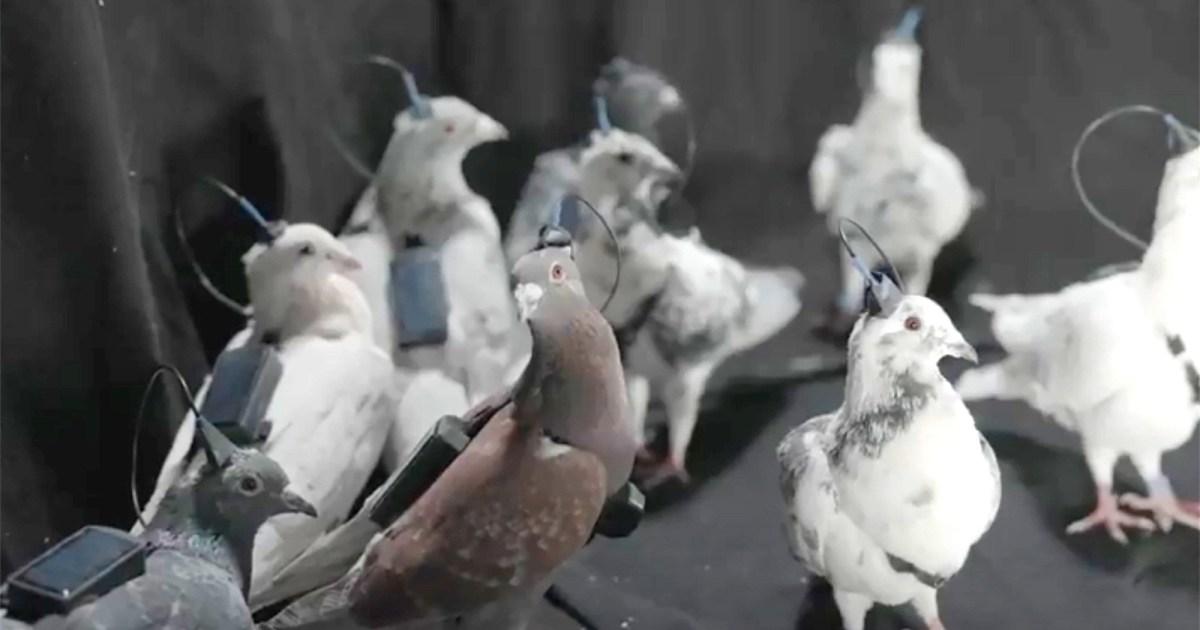
Russia is advancing its technological capabilities by developing remote-controlled pigeons equipped with brain implants, raising concerns among experts in defense and animal welfare. The Moscow-based neurotechnology firm, Neiry, has introduced the PJN-1, a type of “bird-biodrone” designed to allow operators to pilot pigeons across significant distances.
The technology involves implanting neural chips into pigeons, enabling technicians to control their flight paths in real-time. According to Neiry, operators can upload commands by stimulating specific brain regions, leading the birds to “believe they want to fly” in the desired direction. This innovation highlights the intersection of animal biology and technology, with potential applications in military and intelligence fields.
Details of the Technology and Its Implications
Surgical procedures involve precise electrode placement in the pigeons’ brains. Each bird carries a lightweight, solar-powered backpack that contains essential electronics, including GPS tracking and a signal receiver for the neural implant. Neiry claims that the system requires no training, asserting that any bird can become “remotely controllable” post-operation. Pigeons can cover distances of up to 310 miles in a single day, or more than 1,850 miles in a week.
Alexander Panov, the founder of Neiry, stated, “Right now, the solution works on pigeons, but any bird can be used as the carrier.” He mentioned plans to utilize ravens for heavier payloads, seagulls for coastal monitoring, and albatrosses for extensive marine areas. The ability to blend into urban environments makes pigeons particularly suited for discreet surveillance operations.
Despite the technological advancements, concerns persist regarding the ethical implications and potential risks associated with such practices. Neiry has not disclosed how many birds experienced complications during the implantation process, although the company aims for a 100% survival rate. The flock-steering technology could also be adapted for monitoring sensitive facilities, indicating a broader military application.
Concerns from Animal Rights and Defense Experts
The development of these “spy pigeons” has drawn criticism from animal rights advocates, who question the morality of surgically altering animals for surveillance purposes. Moreover, defense analysts warn that the use of such technologies in conflict zones could raise ethical dilemmas and complicate military operations. While proponents argue that the likelihood of a biodrone malfunctioning is minimal, equating it to the natural behavior of birds, the potential for misuse remains a significant concern.
The technology also follows Neiry’s controversial experimentation with cow brains to enhance milk production, furthering scrutiny of the company’s ethical standards. As these developments unfold, both animal rights groups and defense experts will continue to monitor the implications of remote-controlled animal technology, emphasizing the need for stringent regulations and ethical considerations in its application.
The introduction of remote-controlled pigeons marks a significant step in the intersection of biotechnology and surveillance, prompting debates about the future of such innovations in both civilian and military contexts.

Taste Test Reveals Best Mince Pies from Major UK Supermarkets

Baba Vanga Predicts Alien Contact and Global Upheaval in 2026

Astronomers Uncover the Pulsating Mystery of 3I/ATLAS

Ajax Match Abandoned After Fireworks Erupt in Stands

Asia’s Longest Domestic Flights: Some Stretch Over 3,000 Miles

Inmates Sneak in Fried Chicken Takeaways at HMP Wandsworth

Parkdean Resorts Launches Major Black Friday Discounts for 2026 Stays

Former Rockstar Employee Reveals GTA 6 Animations in Leak

Maintain Your HVAC System: Avoid Costly Repairs This Winter

Iconic 90s TV Show House Hits Market for £1.1 Million

Milk Bank Urges Mothers to Donate for Premature Babies’ Health

Alessia Russo Signs Long-Term Deal with Arsenal Ahead of WSL Season

Shoppers Flock to Discounted Neck Pillow on Amazon for Travel Comfort

Museums Body Critiques EHRC Proposals on Gender Facilities

Trump Visits Europe: Business, Politics, or Leisure?

Japanese Teen Sorato Shimizu Breaks U18 100m Record in 10 Seconds

Couple Shares Inspiring Love Story Defying Height Stereotypes

Anglian Water Raises Concerns Over Proposed AI Data Centre
-
 Entertainment2 months ago
Iconic 90s TV Show House Hits Market for £1.1 Million
-
 Lifestyle4 months ago
Milk Bank Urges Mothers to Donate for Premature Babies’ Health
-
 Sports3 months ago
Alessia Russo Signs Long-Term Deal with Arsenal Ahead of WSL Season
-
 Lifestyle4 months ago
Shoppers Flock to Discounted Neck Pillow on Amazon for Travel Comfort
-
 Politics4 months ago
Museums Body Critiques EHRC Proposals on Gender Facilities
-
 Business4 months ago
Trump Visits Europe: Business, Politics, or Leisure?
-
 Lifestyle4 months ago
Japanese Teen Sorato Shimizu Breaks U18 100m Record in 10 Seconds
-
 Politics4 months ago
Couple Shares Inspiring Love Story Defying Height Stereotypes
-
 World4 months ago
Anglian Water Raises Concerns Over Proposed AI Data Centre
-

 Sports4 months ago
Bournemouth Dominates Everton with 3-0 Victory in Premier League Summer Series
-

 World4 months ago
Wreckage of Missing Russian Passenger Plane Discovered in Flames
-

 Lifestyle4 months ago
Shoppers Rave About Roman’s £42 Midi Dress, Calling It ‘Elegant’