
Politics
Election Results Spark Heated Debate on Urban Voting Influence

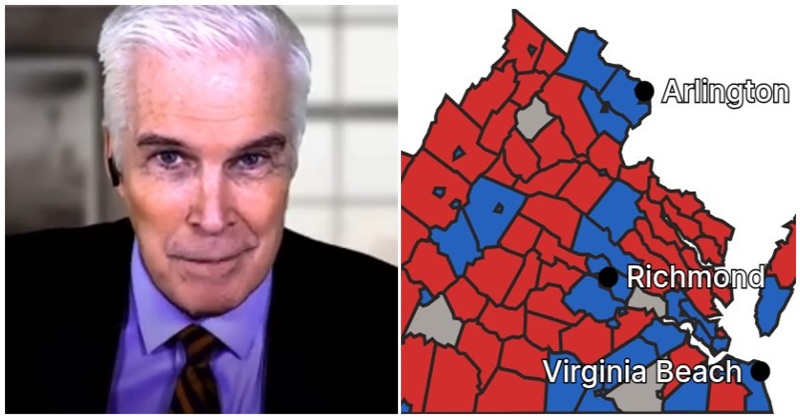
The recent election day on November 5, 2025, marked a significant moment in American politics, particularly as it was the first since Donald Trump resumed his presidency. The results have ignited fierce discussions regarding the role of urban areas in electoral outcomes, particularly among supporters of Trump.
A notable incident arose on social media when Bill Mitchell, a media personality known for his association with Trump supporters, expressed frustration over the influence of large cities on election results. He argued that if it were not for urban voters, Republicans would dominate elections. This statement quickly drew widespread criticism and humorous rebuttals from various users on social media platforms.
Mitchell’s tweet claimed, “If it wasn’t for big cities, Democrats would never win anything,” asserting that urban populations unfairly skew election outcomes. However, the response he received revealed a different perspective. Numerous users pointed out the flaws in his argument, emphasizing that elections are fundamentally about people and their votes, not merely geographical distribution.
Responses included comments such as, “If it wasn’t for people, we’d win!” from one user, while another humorously added, “If it wasn’t for cheese, pizza would just have sauce.” Many users highlighted the basic principle that votes come from individuals living in populous areas.
One user stated, “Thanks, Bill. That’s where all the people are,” while another remarked, “That’s because people vote, not land.” These replies collectively underscored the idea that the concentration of voters in cities is a reflection of democratic participation, not an unfair advantage.
The debate continued with remarks such as, “Without the most votes from the most populous places, Republicans lose a lot.” This sentiment resonated with many who argued that electoral success is determined by voter turnout and engagement rather than the location of those votes.
As the discussion unfolded, it became evident that the frustration expressed by some Trump supporters regarding urban voting dynamics reflects a broader conversation about representation and the electoral process in the United States. The implications of these results were further highlighted with the election of Zohran Mamdani as the mayor of New York City, where he garnered over a million votes, showcasing the power of urban electorates.
This incident serves as a reminder of the ongoing complexities within American politics, where urban and rural divides continue to shape electoral narratives. The responses to Mitchell’s comments illustrate not only the passionate engagement of voters across the spectrum but also the importance of understanding how demographics influence election outcomes.

Taste Test Reveals Best Mince Pies from Major UK Supermarkets

Baba Vanga Predicts Alien Contact and Global Upheaval in 2026

Astronomers Uncover the Pulsating Mystery of 3I/ATLAS

Ajax Match Abandoned After Fireworks Erupt in Stands

Asia’s Longest Domestic Flights: Some Stretch Over 3,000 Miles

Inmates Sneak in Fried Chicken Takeaways at HMP Wandsworth

Parkdean Resorts Launches Major Black Friday Discounts for 2026 Stays

Former Rockstar Employee Reveals GTA 6 Animations in Leak

Maintain Your HVAC System: Avoid Costly Repairs This Winter

Iconic 90s TV Show House Hits Market for £1.1 Million

Milk Bank Urges Mothers to Donate for Premature Babies’ Health

Alessia Russo Signs Long-Term Deal with Arsenal Ahead of WSL Season

Shoppers Flock to Discounted Neck Pillow on Amazon for Travel Comfort

Museums Body Critiques EHRC Proposals on Gender Facilities

Trump Visits Europe: Business, Politics, or Leisure?

Japanese Teen Sorato Shimizu Breaks U18 100m Record in 10 Seconds

Couple Shares Inspiring Love Story Defying Height Stereotypes

Anglian Water Raises Concerns Over Proposed AI Data Centre
-
 Entertainment2 months ago
Iconic 90s TV Show House Hits Market for £1.1 Million
-
 Lifestyle4 months ago
Milk Bank Urges Mothers to Donate for Premature Babies’ Health
-
 Sports3 months ago
Alessia Russo Signs Long-Term Deal with Arsenal Ahead of WSL Season
-
 Lifestyle4 months ago
Shoppers Flock to Discounted Neck Pillow on Amazon for Travel Comfort
-
 Politics4 months ago
Museums Body Critiques EHRC Proposals on Gender Facilities
-
 Business4 months ago
Trump Visits Europe: Business, Politics, or Leisure?
-
 Lifestyle4 months ago
Japanese Teen Sorato Shimizu Breaks U18 100m Record in 10 Seconds
-
 Politics4 months ago
Couple Shares Inspiring Love Story Defying Height Stereotypes
-
 World4 months ago
Anglian Water Raises Concerns Over Proposed AI Data Centre
-

 Sports4 months ago
Bournemouth Dominates Everton with 3-0 Victory in Premier League Summer Series
-

 World4 months ago
Wreckage of Missing Russian Passenger Plane Discovered in Flames
-

 Lifestyle4 months ago
Shoppers Rave About Roman’s £42 Midi Dress, Calling It ‘Elegant’