
Politics
US Lawmaker Proposes Bill for NATO Withdrawal, Citing Obsolescence

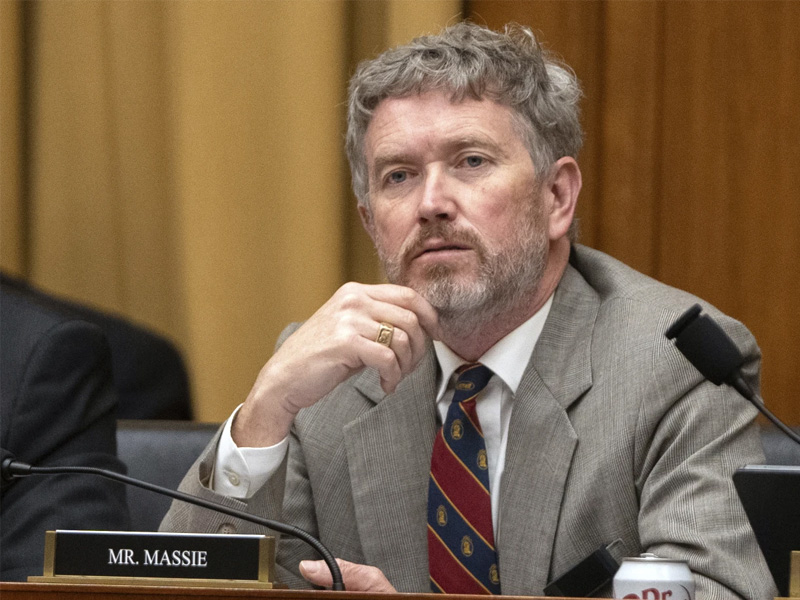
Republican Representative Thomas Massie of Kentucky has introduced a bill aimed at withdrawing the United States from the North Atlantic Treaty Organization (NATO). He argues that the alliance, which was established during the Cold War, is no longer relevant and imposes financial burdens on American taxpayers while risking involvement in foreign conflicts. In a post on X, Massie stated, “NATO is a Cold War relic. The United States should withdraw from NATO and use that money to defend our country, not socialist countries. Today, I introduced HR 6508 to end our NATO membership.”
Massie’s initiative has garnered support from fellow Republican Anna Paulina Luna of Florida, who expressed her endorsement by co-sponsoring the bill. The criticisms of NATO’s current role are echoed in Massie’s assertion that the organization has cost U.S. taxpayers trillions of dollars since the Soviet Union’s collapse over 30 years ago. He emphasized that the U.S. involvement in NATO contradicts the founding principles of the American Constitution, which he claims did not authorize permanent foreign entanglements.
Legislative Background and Proposal Details
Earlier this year, Republican Senator Mike Lee of Utah introduced a related measure known as the “Not a Trusted Organisation Act,” or “NATO Act,” in the Senate. Massie’s bill serves as a companion piece in the House of Representatives, aligning both legislative efforts to seek a formal exit from NATO. According to reports, the proposed legislation will utilize Article 13 of the North Atlantic Treaty, which allows any party to withdraw after providing one year’s notice to the U.S. government.
The text of the proposal stipulates, “Consistent with Article 13 of the North Atlantic Treaty, done at Washington April 4, 1949, not later than 30 days after the date of the enactment of this Act, the President shall give notice of denunciation of the North Atlantic Treaty for purposes of withdrawing the United States from the North Atlantic Treaty Organisation.”
Additionally, the bill outlines that no federal funds allocated for the U.S. government may be used to support NATO’s budgets, including its civil, military, or Security Investment Program budgets.
Massie’s call for withdrawal from NATO reflects a growing sentiment among some lawmakers that the alliance should be reassessed in light of changing geopolitical dynamics. This proposal raises significant questions about the future of U.S. foreign policy and its commitments to collective defense.
As discussions on the bill proceed, it remains to be seen how Congress will respond to this substantial shift in international relations. The outcome could have lasting implications for both U.S. national security and its role on the global stage.

Explore the UK’s Most Scenic Winter Beach Walks

Trump Claims Renewed Ceasefire Between Thailand and Cambodia

UC Irvine Launches Groundbreaking Clinical Trial for Huntington’s Disease

Birmingham City Eyes Young Talent Adam Brennan Ahead of January

EU Police Report Warns of AI Threats in Future Warfare

Michael Eisner’s Wealth Fuels Portsmouth’s Fratton Park Expansion Plans

Birmingham’s Top Comprehensive Secondary Schools Ranked in 2026

Gateshead Flyover Closure Marked with Cake As Demolition Delayed

UC Irvine Secures $11.9 Million for Pioneering Huntington’s Trial

Iconic 90s TV Show House Hits Market for £1.1 Million

Milk Bank Urges Mothers to Donate for Premature Babies’ Health

Alessia Russo Signs Long-Term Deal with Arsenal Ahead of WSL Season

Shoppers Flock to Discounted Neck Pillow on Amazon for Travel Comfort

Museums Body Critiques EHRC Proposals on Gender Facilities

Trump Visits Europe: Business, Politics, or Leisure?

Japanese Teen Sorato Shimizu Breaks U18 100m Record in 10 Seconds

Couple Shares Inspiring Love Story Defying Height Stereotypes

Anglian Water Raises Concerns Over Proposed AI Data Centre
-
 Entertainment3 months ago
Iconic 90s TV Show House Hits Market for £1.1 Million
-
 Lifestyle5 months ago
Milk Bank Urges Mothers to Donate for Premature Babies’ Health
-
 Sports3 months ago
Alessia Russo Signs Long-Term Deal with Arsenal Ahead of WSL Season
-
 Lifestyle5 months ago
Shoppers Flock to Discounted Neck Pillow on Amazon for Travel Comfort
-
 Politics5 months ago
Museums Body Critiques EHRC Proposals on Gender Facilities
-
 Business5 months ago
Trump Visits Europe: Business, Politics, or Leisure?
-
 Lifestyle5 months ago
Japanese Teen Sorato Shimizu Breaks U18 100m Record in 10 Seconds
-
 Politics4 months ago
Couple Shares Inspiring Love Story Defying Height Stereotypes
-
 World5 months ago
Anglian Water Raises Concerns Over Proposed AI Data Centre
-

 Sports4 months ago
Nathan Cleary’s Family Celebrates Engagement Amid Romance Rumors
-

 Sports5 months ago
Bournemouth Dominates Everton with 3-0 Victory in Premier League Summer Series
-

 World5 months ago
Wreckage of Missing Russian Passenger Plane Discovered in Flames