
Science
Astronomers Uncover the Pulsating Mystery of 3I/ATLAS

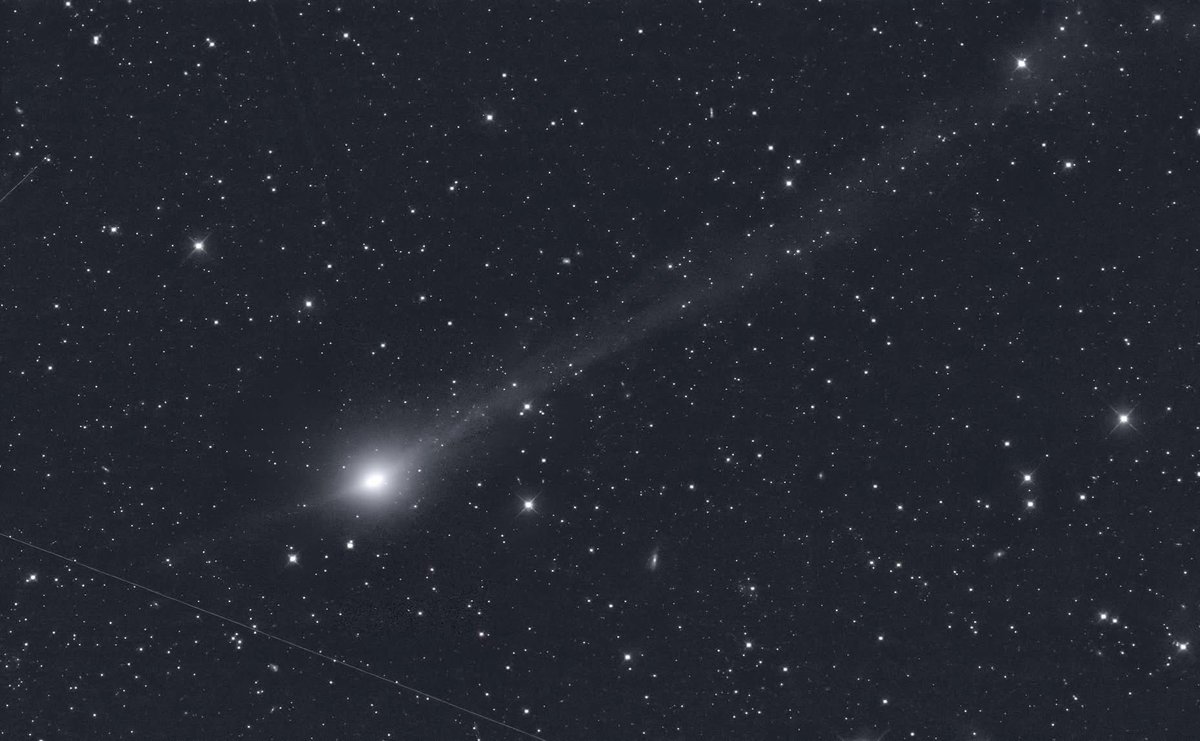
Astronomers have made a compelling discovery regarding the interstellar object known as 3I/ATLAS, first detected on July 1, 2025. Unlike typical asteroids, this object displays a unique rhythmic brightness that shifts every 16.16 hours, leading scientists to rethink their understanding of its characteristics and behavior. Initial observations suggested a rotating elongated nucleus, but further analysis indicates a more intricate phenomenon at play.
The light variability from 3I/ATLAS does not stem solely from the object’s shape. Observations from the Hubble Space Telescope on July 21, 2025 revealed a glowing coma surrounding the nucleus, rather than a solid core that reflects light. This coma, a halo of gas and dust, complicates measurements of the object’s size and luminosity. While the nucleus is likely much smaller than initially assumed, its contribution to the overall light output is minimal.
If one considers a solid surface with a typical albedo of 4-5%, the mathematics would suggest a radius of 10 kilometers in visible light or up to 23 kilometers at a wavelength of 1 micrometer. However, the findings indicate that the effective radius of the nucleus is approximately 2.8 kilometers, meaning it reflects less than one percent of the total light at that wavelength. This raises intriguing questions about the pulsating light observed.
The periodicity of 3I/ATLAS is not necessarily due to the shape of its nucleus, but likely linked to jet activity observed over recent weeks. Images from November 30, 2025, captured complex jet formations emanating from the rotating nucleus. If these jets release material in a pulsed manner rather than continuously, the coma would exhibit periodic brightness variations corresponding to these eruptions.
As the object rotates, pockets of ice on the nucleus can warm up and release gas and dust, creating bursts that increase the coma’s brightness. This process resembles a heartbeat, with each pulse acting as a stream of material circulating through the coma. The estimated outflow velocity of 440 meters per second means sublimated volatiles can travel significant distances, up to 25,600 kilometers during one complete rotation.
Despite the striking nature of these findings, the lack of systematic observations over multiple days has left many questions unanswered. Without a series of calibrated images, the origin of the pulsing jets remains speculative. If 3I/ATLAS were a technological object, its jets might not align with the Sun, complicating the interpretation of the observed activity.
The reported periodicity of 16.16 hours highlights a fascinating complexity in understanding this interstellar object. As research continues, astronomers aim to gather more data to clarify the nature of 3I/ATLAS and its mysterious behavior, potentially unlocking further secrets of the cosmos.

Taste Test Reveals Best Mince Pies from Major UK Supermarkets

Baba Vanga Predicts Alien Contact and Global Upheaval in 2026

Astronomers Uncover the Pulsating Mystery of 3I/ATLAS

Ajax Match Abandoned After Fireworks Erupt in Stands

Asia’s Longest Domestic Flights: Some Stretch Over 3,000 Miles

Inmates Sneak in Fried Chicken Takeaways at HMP Wandsworth

Parkdean Resorts Launches Major Black Friday Discounts for 2026 Stays

Former Rockstar Employee Reveals GTA 6 Animations in Leak

Maintain Your HVAC System: Avoid Costly Repairs This Winter

Iconic 90s TV Show House Hits Market for £1.1 Million

Milk Bank Urges Mothers to Donate for Premature Babies’ Health

Alessia Russo Signs Long-Term Deal with Arsenal Ahead of WSL Season

Shoppers Flock to Discounted Neck Pillow on Amazon for Travel Comfort

Museums Body Critiques EHRC Proposals on Gender Facilities

Trump Visits Europe: Business, Politics, or Leisure?

Japanese Teen Sorato Shimizu Breaks U18 100m Record in 10 Seconds

Couple Shares Inspiring Love Story Defying Height Stereotypes

Anglian Water Raises Concerns Over Proposed AI Data Centre
-
 Entertainment2 months ago
Iconic 90s TV Show House Hits Market for £1.1 Million
-
 Lifestyle4 months ago
Milk Bank Urges Mothers to Donate for Premature Babies’ Health
-
 Sports3 months ago
Alessia Russo Signs Long-Term Deal with Arsenal Ahead of WSL Season
-
 Lifestyle4 months ago
Shoppers Flock to Discounted Neck Pillow on Amazon for Travel Comfort
-
 Politics4 months ago
Museums Body Critiques EHRC Proposals on Gender Facilities
-
 Business4 months ago
Trump Visits Europe: Business, Politics, or Leisure?
-
 Lifestyle4 months ago
Japanese Teen Sorato Shimizu Breaks U18 100m Record in 10 Seconds
-
 Politics4 months ago
Couple Shares Inspiring Love Story Defying Height Stereotypes
-
 World4 months ago
Anglian Water Raises Concerns Over Proposed AI Data Centre
-

 Sports4 months ago
Bournemouth Dominates Everton with 3-0 Victory in Premier League Summer Series
-

 World4 months ago
Wreckage of Missing Russian Passenger Plane Discovered in Flames
-

 Lifestyle4 months ago
Shoppers Rave About Roman’s £42 Midi Dress, Calling It ‘Elegant’