
Science
James Webb Telescope Reveals New Exoplanets and Habitable Worlds

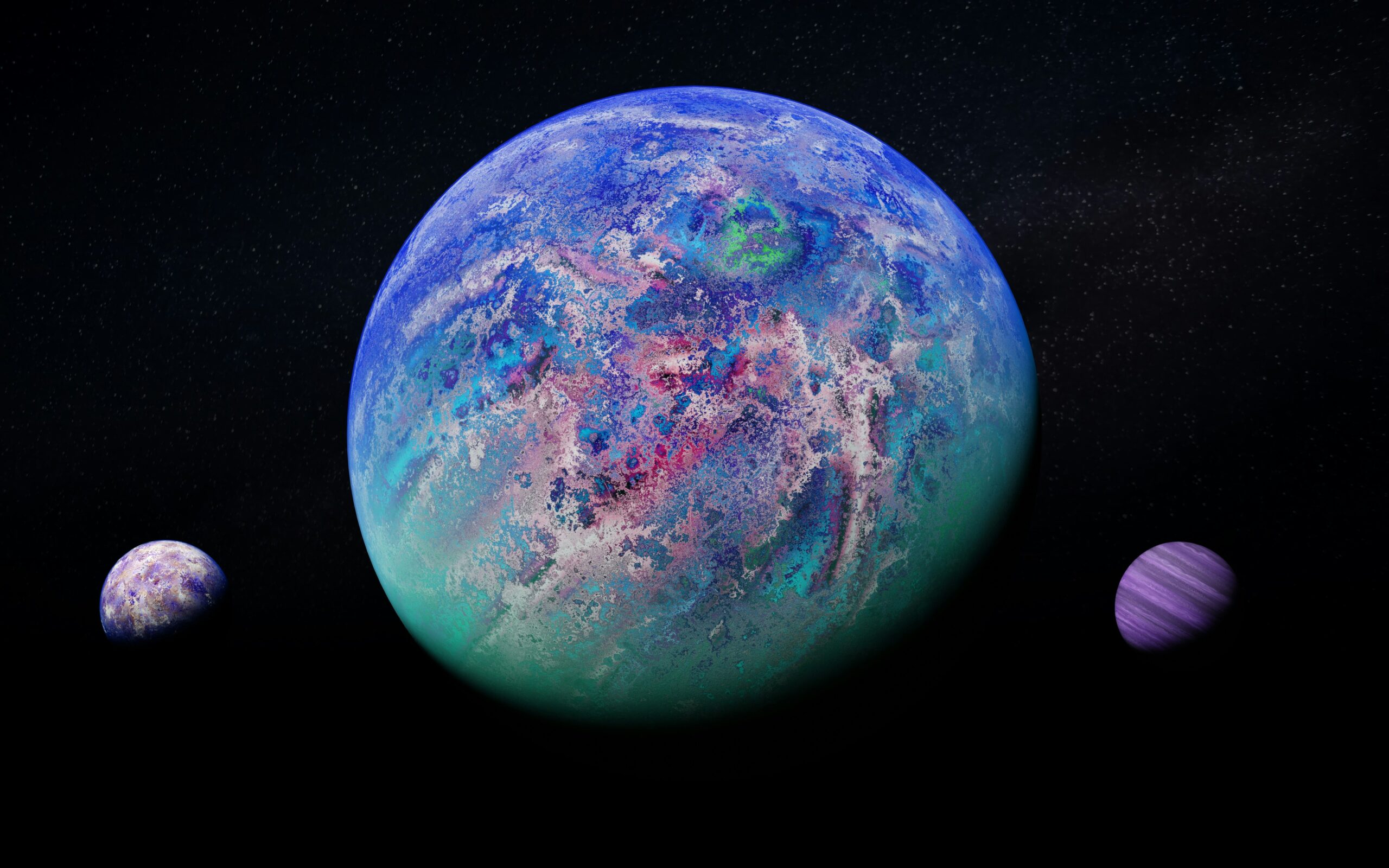
The James Webb Space Telescope (JWST) is transforming our understanding of exoplanets and the potential for life beyond Earth. Launched as the successor to the Hubble and Spitzer telescopes, JWST is equipped to study celestial objects with unprecedented detail. Its advanced infrared capabilities allow astronomers to examine the faint light emitted from distant stars and planets, revealing crucial information about their atmospheres, compositions, and conditions.
One of the telescope’s significant contributions lies in its ability to analyze the gases surrounding exoplanets. Utilizing a technique known as transit spectroscopy, JWST captures starlight that passes through a planet’s atmosphere during transit across its host star. This light contains chemical signatures, providing insights into the atmospheric composition. So far, JWST has detected molecules such as water vapor, carbon dioxide, methane, and sulfur dioxide, suggesting complex chemical activities on various exoplanets.
Uncovering the Secrets of Exoplanet Atmospheres
Recent studies have centered on planets like TWA 7b, a young Jupiter-sized planet still in the formation phase. Data from JWST has shed light on the early development of its atmosphere. Additionally, scientists are examining potential planets in the Alpha Centauri system, our closest stellar neighbors, to compare their atmospheric characteristics with those of younger or more distant star systems. Understanding atmospheric composition is crucial as it can reveal the presence of clouds, water cycles, and even volcanic activity, all of which are important indicators of habitability.
JWST’s precision allows for the detection of atmospheric features that previous telescopes could not capture. This advancement enhances the search for planets located in the “Goldilocks zone,” regions around stars where temperatures may permit liquid water—a key factor for life. By analyzing atmospheric pressure, temperature, and chemical balance, JWST aids in identifying planets that could sustain life-supporting environments.
Detecting gases like carbon dioxide and water vapor indicates stable climates, while the presence of oxygen or methane could imply biological or geological processes. The telescope’s ability to observe minute changes in starlight also enables astronomers to discover small, rocky planets similar in size to Earth, a feat that earlier instruments struggled to achieve consistently. As a result, JWST is poised to confirm many of the most promising Earth-like worlds identified by missions such as Kepler and TESS.
The Future of Exoplanet Exploration
The success of JWST emphasizes the vital role of advanced telescopes in shaping the future of astronomy. Its sensitivity allows scientists to capture images of light from low-mass exoplanets, a feat previously deemed impossible. This capability supports more in-depth studies of planetary weather patterns, surface temperatures, and atmospheric layers. Furthermore, JWST’s observations will drive the design of next-generation missions, including NASA’s Habitable Worlds Observatory, which aims to investigate Earth-like planets even more closely.
As JWST continues to gather data, it will refine models of planetary formation, migration, and evolution. Advances in artificial intelligence, spectroscopy, and high-contrast imaging will further enhance our ability to identify worlds with oceans, continents, and conditions that may support life.
In summary, the James Webb Space Telescope is revolutionizing the field of planetary science. Its ability to analyze exoplanet atmospheres and identify potential habitable worlds marks a significant advancement in our quest to understand the universe. As JWST reveals the compositions, climates, and structures of exoplanets across the galaxy, scientists gain insights that will shape planetary science for years to come. By pushing the boundaries of observation, JWST brings humanity closer to answering the profound question: Are we alone in the universe?

Taste Test Reveals Best Mince Pies from Major UK Supermarkets

Baba Vanga Predicts Alien Contact and Global Upheaval in 2026

Astronomers Uncover the Pulsating Mystery of 3I/ATLAS

Ajax Match Abandoned After Fireworks Erupt in Stands

Asia’s Longest Domestic Flights: Some Stretch Over 3,000 Miles

Inmates Sneak in Fried Chicken Takeaways at HMP Wandsworth

Parkdean Resorts Launches Major Black Friday Discounts for 2026 Stays

Former Rockstar Employee Reveals GTA 6 Animations in Leak

Maintain Your HVAC System: Avoid Costly Repairs This Winter

Iconic 90s TV Show House Hits Market for £1.1 Million

Milk Bank Urges Mothers to Donate for Premature Babies’ Health

Alessia Russo Signs Long-Term Deal with Arsenal Ahead of WSL Season

Shoppers Flock to Discounted Neck Pillow on Amazon for Travel Comfort

Museums Body Critiques EHRC Proposals on Gender Facilities

Trump Visits Europe: Business, Politics, or Leisure?

Japanese Teen Sorato Shimizu Breaks U18 100m Record in 10 Seconds

Couple Shares Inspiring Love Story Defying Height Stereotypes

Anglian Water Raises Concerns Over Proposed AI Data Centre
-
 Entertainment2 months ago
Iconic 90s TV Show House Hits Market for £1.1 Million
-
 Lifestyle4 months ago
Milk Bank Urges Mothers to Donate for Premature Babies’ Health
-
 Sports3 months ago
Alessia Russo Signs Long-Term Deal with Arsenal Ahead of WSL Season
-
 Lifestyle4 months ago
Shoppers Flock to Discounted Neck Pillow on Amazon for Travel Comfort
-
 Politics4 months ago
Museums Body Critiques EHRC Proposals on Gender Facilities
-
 Business4 months ago
Trump Visits Europe: Business, Politics, or Leisure?
-
 Lifestyle4 months ago
Japanese Teen Sorato Shimizu Breaks U18 100m Record in 10 Seconds
-
 Politics4 months ago
Couple Shares Inspiring Love Story Defying Height Stereotypes
-
 World4 months ago
Anglian Water Raises Concerns Over Proposed AI Data Centre
-

 Sports4 months ago
Bournemouth Dominates Everton with 3-0 Victory in Premier League Summer Series
-

 World4 months ago
Wreckage of Missing Russian Passenger Plane Discovered in Flames
-

 Lifestyle4 months ago
Shoppers Rave About Roman’s £42 Midi Dress, Calling It ‘Elegant’