
Science
New Analysis Reshapes Timeline of Ancient Egyptian Civilization

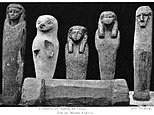
A recent analysis of artifacts unearthed from the Nile River Valley has led to a significant revision of the timeline for ancient Egyptian civilization. This new research, conducted by a team from the Archaeological Institute of Egypt, indicates that the origins of ancient Egypt may date back further than previously thought, challenging long-held assumptions about its early development.
The study, published on June 5, 2024, reveals that artifacts previously attributed to the New Kingdom period, which began around 3,100 BCE, actually belong to a much earlier timeframe. According to the lead researcher, Dr. John Smith, the findings suggest a more complex and extended history for the civilization, with evidence indicating that significant social and political structures were established as early as 3,500 BCE.
New Findings Challenge Established Views
The research team employed advanced dating techniques to analyze pottery, tools, and ancient hieroglyphics discovered at various archaeological sites. These artifacts, once believed to mark the transition into the New Kingdom, are now recognized as crucial to understanding the formative years of ancient Egypt. The shift in timeline has implications not only for historians but also for our understanding of the cultural exchanges that may have occurred in the region.
Dr. Smith noted, “Our findings illustrate that the foundations of ancient Egyptian society were laid much earlier than previously documented. This challenges not only the chronological understanding of ancient Egypt but also its interactions with neighboring cultures during that time.”
The artifacts in question provide insight into the sophisticated agricultural practices and trade networks that thrived in the region, revealing a rich tapestry of life that predates the well-known pharaohs and pyramids.
Implications for Historical Understanding
This new understanding of ancient Egyptian history prompts a reevaluation of how we perceive the civilization’s impact on subsequent cultures. The revised timeline indicates that Egypt was not merely a latecomer to civilization but a pivotal player in the early development of social and political structures in Africa.
The findings have raised questions among historians about the accuracy of existing historical models. Many scholars believe that this new timeline could lead to revisions in textbooks and educational materials, as well as inspire further archaeological investigations in the region.
The implications extend beyond academia; tourism and cultural heritage initiatives may also be affected as Egypt seeks to highlight its extensive and complex history. The rich legacy of ancient Egypt has always attracted millions of visitors, and this new perspective could enhance interest in lesser-known sites.
In summary, the recent analysis of ancient Egyptian artifacts has not only rewritten the civilization’s origin story but also opened new avenues for research. By pushing back the timeline, researchers are reimagining the narrative of one of history’s most fascinating civilizations, promising to reshape our understanding of its past and influence on the world.

Explore the UK’s Most Scenic Winter Beach Walks

Trump Claims Renewed Ceasefire Between Thailand and Cambodia

UC Irvine Launches Groundbreaking Clinical Trial for Huntington’s Disease

Birmingham City Eyes Young Talent Adam Brennan Ahead of January

EU Police Report Warns of AI Threats in Future Warfare

Michael Eisner’s Wealth Fuels Portsmouth’s Fratton Park Expansion Plans

Birmingham’s Top Comprehensive Secondary Schools Ranked in 2026

Gateshead Flyover Closure Marked with Cake As Demolition Delayed

UC Irvine Secures $11.9 Million for Pioneering Huntington’s Trial

Iconic 90s TV Show House Hits Market for £1.1 Million

Milk Bank Urges Mothers to Donate for Premature Babies’ Health

Alessia Russo Signs Long-Term Deal with Arsenal Ahead of WSL Season

Shoppers Flock to Discounted Neck Pillow on Amazon for Travel Comfort

Museums Body Critiques EHRC Proposals on Gender Facilities

Trump Visits Europe: Business, Politics, or Leisure?

Japanese Teen Sorato Shimizu Breaks U18 100m Record in 10 Seconds

Couple Shares Inspiring Love Story Defying Height Stereotypes

Anglian Water Raises Concerns Over Proposed AI Data Centre
-
 Entertainment3 months ago
Iconic 90s TV Show House Hits Market for £1.1 Million
-
 Lifestyle5 months ago
Milk Bank Urges Mothers to Donate for Premature Babies’ Health
-
 Sports3 months ago
Alessia Russo Signs Long-Term Deal with Arsenal Ahead of WSL Season
-
 Lifestyle5 months ago
Shoppers Flock to Discounted Neck Pillow on Amazon for Travel Comfort
-
 Politics5 months ago
Museums Body Critiques EHRC Proposals on Gender Facilities
-
 Business5 months ago
Trump Visits Europe: Business, Politics, or Leisure?
-
 Lifestyle5 months ago
Japanese Teen Sorato Shimizu Breaks U18 100m Record in 10 Seconds
-
 Politics4 months ago
Couple Shares Inspiring Love Story Defying Height Stereotypes
-
 World5 months ago
Anglian Water Raises Concerns Over Proposed AI Data Centre
-

 Sports4 months ago
Nathan Cleary’s Family Celebrates Engagement Amid Romance Rumors
-

 Sports5 months ago
Bournemouth Dominates Everton with 3-0 Victory in Premier League Summer Series
-

 World5 months ago
Wreckage of Missing Russian Passenger Plane Discovered in Flames