
Sports
Montenegrin Wastewater Plant Sparks Protests and Political Tension

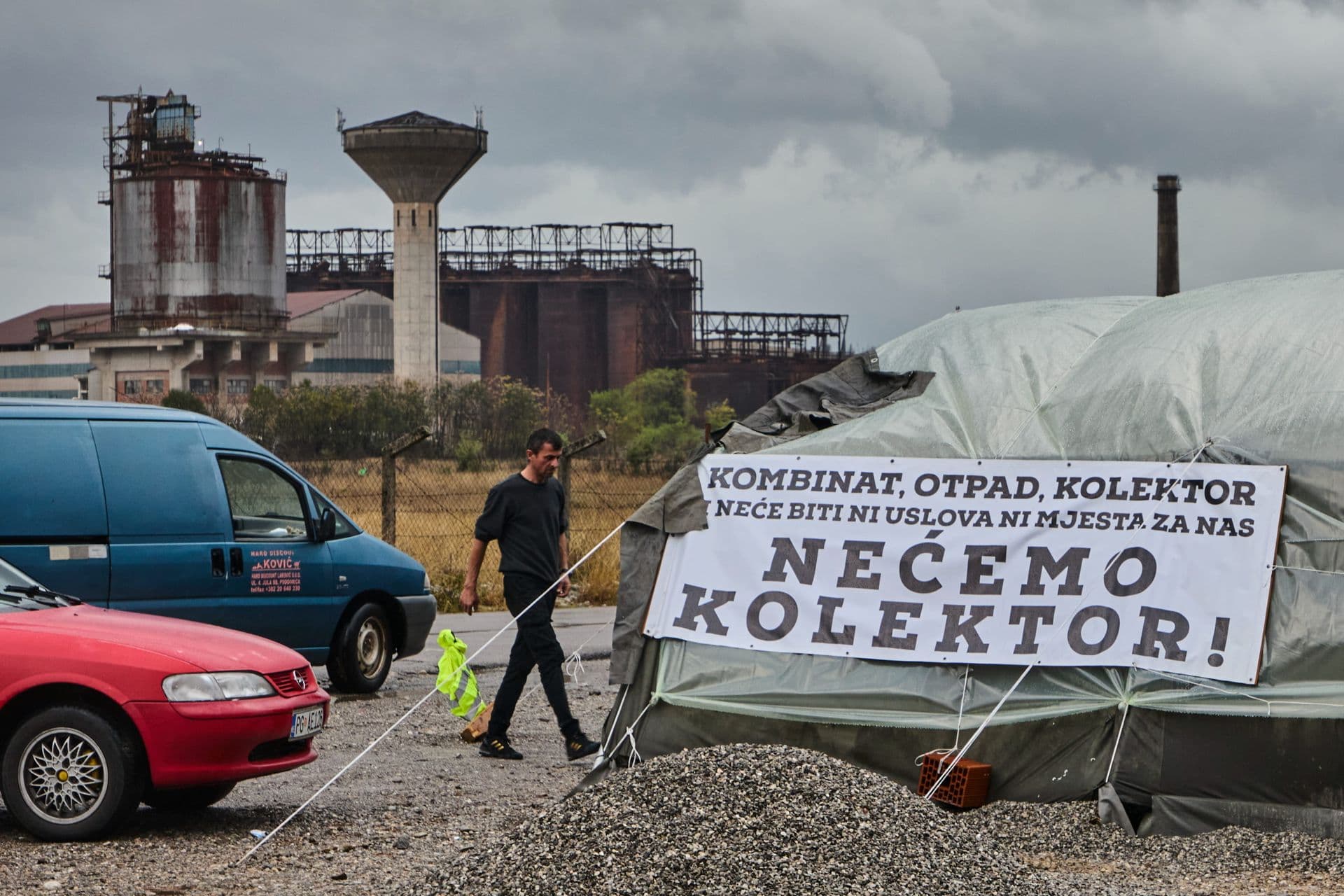
The construction of a wastewater treatment plant in Botun, located in the Zeta municipality near Podgorica, has ignited significant public unrest and raised concerns about potential political instability in Montenegro. Local residents have been protesting for nearly a month against the proposed facility, fearing it could endanger their health and environment. With the December 14, 2023, referendum looming, the future of this project hangs in the balance.
Residents of Botun have set up tents to voice their opposition to the construction of the treatment plant. They argue that the new wastewater collector will only exacerbate existing environmental issues. According to local protester Jagoš Bećirović, the community’s position will be clarified following the referendum, where 12,747 residents of Zeta will have the opportunity to express their views. However, the referendum will not be legally binding for the capital city, Podgorica.
In a recent meeting with Prime Minister Milojko Spajić and Podgorica Mayor Saša Mujović, residents were assured that the government would address previous environmental concerns in Botun. This includes the remediation of toxic red sludge pools and ongoing monitoring of harmful gas emissions, with a promise to halt operations should pollution levels exceed EU standards.
Mujović stated, “I genuinely hope that reason prevails, as I believe the government’s and the capital’s offer is exceptionally fair. The plant is not a polluter, public health is not at risk, and there is no reason not to begin construction at the defined location.”
The Zeta municipality became independent three years ago, previously functioning as a part of Podgorica. Ongoing disputes over the border between the two municipalities further complicate their collaboration on this project.
The stakes are high for Montenegro. If construction on the wastewater treatment plant does not commence by the end of the year, Podgorica could lose approximately €100 million in EU funds. This facility represents the largest environmental investment by the European Union in Montenegro to date, with nearly €33 million allocated in grants for the new sewer system and collector, along with support from the German Development Bank KfW.
The agreement for construction was signed in 2022 with the Turkish consortium Kuzu Group. EU officials have repeatedly emphasized that compliance with the criteria outlined in Chapter 27—environmental protection—cannot be achieved without the initiation of this project.
Montenegro has committed to having a total of 29 wastewater treatment plants operational by 2035, ensuring that 95 percent of its population is connected to the sewer system. The new facility in Botun is crucial to addressing the wastewater management needs of a city that has seen its population grow from 55,000 when the existing plant was built in 1978 to nearly 180,000 residents according to the 2023 census.
The political ramifications of the situation are unfolding. Milan Knežević, leader of the ruling Democratic People’s Party (DNP), has been actively participating in the protests and has threatened to withdraw from the city government if construction begins. He further warned that his party would exit the Montenegrin government if police force is used against the protesters.
Among the ruling parties, the Socialist People’s Party (SNP), along with local officials from the Democratic Montenegro and the New Serbian Democracy, oppose the construction of the collector in Botun. However, leaders at the national level from these parties have not publicly opposed the government’s plans for the facility.
The growing tensions suggest that the protests may serve as a façade for deeper political maneuvering. Critics argue that politicians are exploiting the fears of the few hundred residents who have lived for decades in an environment compromised by the red sludge, now facing the additional threat posed by the proposed collector. The outcome of the referendum and the subsequent government response will be critical in determining the future of both the wastewater project and the political landscape in Montenegro.

Explore the UK’s Most Scenic Winter Beach Walks

Trump Claims Renewed Ceasefire Between Thailand and Cambodia

UC Irvine Launches Groundbreaking Clinical Trial for Huntington’s Disease

Birmingham City Eyes Young Talent Adam Brennan Ahead of January

EU Police Report Warns of AI Threats in Future Warfare

Michael Eisner’s Wealth Fuels Portsmouth’s Fratton Park Expansion Plans

Birmingham’s Top Comprehensive Secondary Schools Ranked in 2026

Gateshead Flyover Closure Marked with Cake As Demolition Delayed

UC Irvine Secures $11.9 Million for Pioneering Huntington’s Trial

Iconic 90s TV Show House Hits Market for £1.1 Million

Milk Bank Urges Mothers to Donate for Premature Babies’ Health

Alessia Russo Signs Long-Term Deal with Arsenal Ahead of WSL Season

Shoppers Flock to Discounted Neck Pillow on Amazon for Travel Comfort

Museums Body Critiques EHRC Proposals on Gender Facilities

Trump Visits Europe: Business, Politics, or Leisure?

Japanese Teen Sorato Shimizu Breaks U18 100m Record in 10 Seconds

Couple Shares Inspiring Love Story Defying Height Stereotypes

Anglian Water Raises Concerns Over Proposed AI Data Centre
-
 Entertainment3 months ago
Iconic 90s TV Show House Hits Market for £1.1 Million
-
 Lifestyle5 months ago
Milk Bank Urges Mothers to Donate for Premature Babies’ Health
-
 Sports3 months ago
Alessia Russo Signs Long-Term Deal with Arsenal Ahead of WSL Season
-
 Lifestyle5 months ago
Shoppers Flock to Discounted Neck Pillow on Amazon for Travel Comfort
-
 Politics5 months ago
Museums Body Critiques EHRC Proposals on Gender Facilities
-
 Business5 months ago
Trump Visits Europe: Business, Politics, or Leisure?
-
 Lifestyle5 months ago
Japanese Teen Sorato Shimizu Breaks U18 100m Record in 10 Seconds
-
 Politics4 months ago
Couple Shares Inspiring Love Story Defying Height Stereotypes
-
 World5 months ago
Anglian Water Raises Concerns Over Proposed AI Data Centre
-

 Sports4 months ago
Nathan Cleary’s Family Celebrates Engagement Amid Romance Rumors
-

 Sports5 months ago
Bournemouth Dominates Everton with 3-0 Victory in Premier League Summer Series
-

 World5 months ago
Wreckage of Missing Russian Passenger Plane Discovered in Flames