
Top Stories
Holocaust Survivor Champions Free Speech in Landmark Case

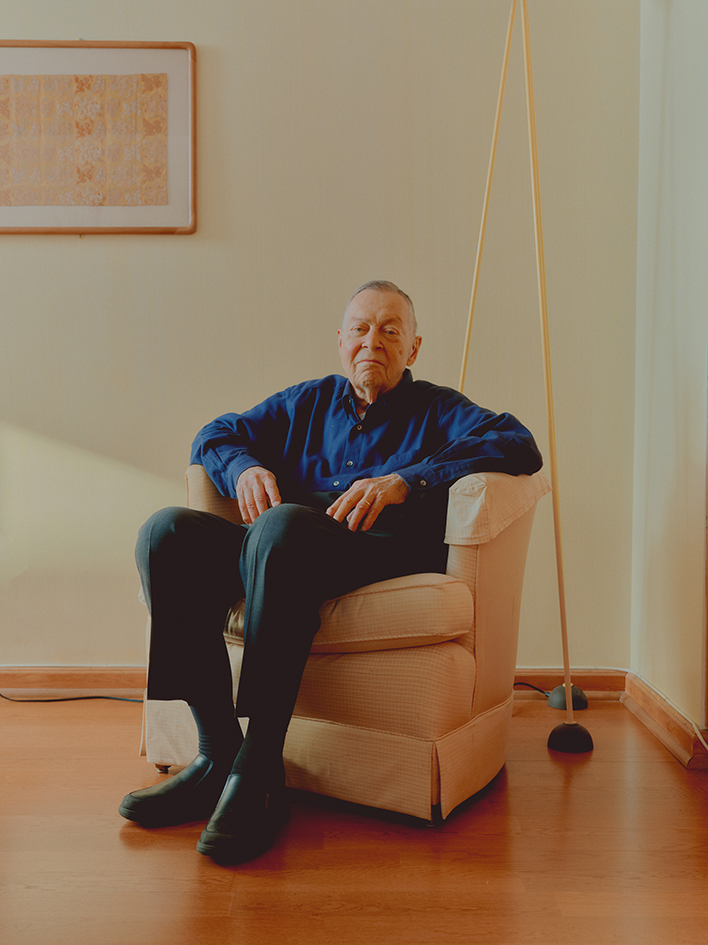
In 1977, a significant legal battle over free speech unfolded in Skokie, a suburb of Chicago known for its large Jewish population, many of whom were Holocaust survivors. The National Socialist Party of America sought permission to march through the village, prompting local leaders to file a lawsuit aimed at preventing the event. Their complaint argued that the display of Nazi symbols constituted a “symbolic assault” on the community. As tensions escalated, with some Jewish groups planning to counter the march violently, the American Civil Liberties Union (ACLU) stepped in to advocate for the Nazis’ right to free speech in court.
The ACLU, which has a long history of defending controversial speech, was led at the time by Aryeh Neier, a Jewish man who narrowly escaped the Holocaust as a child. Neier’s leadership during this tumultuous time underscored the organization’s commitment to upholding the principle that all speech, even that which is deeply offensive, must be protected. The ACLU, founded in 1920, aimed to defend the expression of opinion regardless of its nature, even if it included extremist views.
Neier’s defense of free speech was not without controversy. Throughout the Skokie case, he received numerous letters, some accusing him of naivety in defending Nazis. One letter stated, “I love free speech more than I detest the Nazis,” reflecting the complex emotions surrounding the case. Neier argued that protecting the rights of the Nazis was essential in preserving freedom for all. He wrote in his memoir, Defending My Enemy, “To defend myself, I must restrain power with freedom, even if the temporary beneficiaries are the enemies of freedom.”
The philosophical debate over whether to tolerate the intolerant has long challenged liberal democracy. The idea was notably presented by philosopher Karl Popper in his work The Open Society and Its Enemies, where he posited that intolerance should not be tolerated. Neier countered that Popper’s viewpoint could lead to a slippery slope of suppression, ultimately undermining freedom itself. He pointed to the Brandenburg v. Ohio Supreme Court case in 1969, which established the precedent that speech could not be suppressed unless it incited “imminent lawless action.” This ruling later protected the rights of anti-Vietnam War protesters, illustrating how defending the rights of the hateful can fortify the rights of all.
Ultimately, the courts ruled that the Nazis could march in Skokie, but their leader, fearing a lack of support, called off the event. In the aftermath, a Holocaust Remembrance Museum was established in the village. Neier reflected on their victory, stating that the ACLU “defeated the Nazis by preserving the legitimacy of American democracy.” He emphasized the importance of free speech for everyone, asserting, “Jews must be free to speak and because I must be free to speak.”
Fast forward to 2023, and Neier, now 88, remains a vocal advocate for civil liberties. He sat down for an interview in a New York City restaurant, where he ordered his usual meal. Despite his age, his conviction about the importance of free speech remains strong. Having fled Nazi Germany as a baby, Neier’s life has been intertwined with the fight for human rights.
After surviving the bombings of London during World War II, Neier and his family emigrated to the United States. He graduated from Cornell University and joined the ACLU at 26, becoming its national director at 33. His leadership during the Skokie case solidified his role in the human rights movement. He later co-founded Helsinki Watch, which evolved into Human Rights Watch, and served as the inaugural president of George Soros’s Open Society Foundation for two decades.
Neier’s recent reissue of Defending My Enemy resonates at a time when many in the United States grapple with the meaning of free speech. He expressed concern over the current state of civil liberties, noting a growing intolerance for dissenting opinions. “The worst aspect of what is going on is the absence, or partial absence, of resistance in the United States,” he remarked.
Reflecting on the historical context of free speech, Neier highlighted past challenges faced by activists under various administrations, including McCarthyism and the Sedition Act during World War II. He believes that today’s political climate is particularly precarious, citing concerns over attempts to undermine institutions that protect free expression.
As he navigated the streets of New York, Neier reflected on the international system’s fragility. He noted that while the United States has historically been a supporter of the United Nations, its current leadership poses challenges to the institution’s legitimacy. He recalled past administrations that have withdrawn support from the UN, indicating that the international system has faced crises before.
Neier also addressed the ongoing issues surrounding the International Criminal Court (ICC) and its ability to hold leaders accountable for crimes against humanity. He pointed to recent developments involving former leaders like Rodrigo Duterte of the Philippines and Benjamin Netanyahu of Israel, emphasizing the importance of accountability in the global arena.
While discussing contemporary political figures such as New York’s mayor-elect Zohran Mamdani, Neier acknowledged the complexity of their positions. He expressed his reservations but also recognized the potential for significant change in the city. Neier maintained that it is challenging for any mayor in New York City to act in an anti-Semitic manner due to the substantial Jewish presence in key positions of power.
Neier’s dedication to civil liberties has led to conflicts with various factions within the human rights movement. He has been criticized for his stance on economic and social rights, arguing that these issues should be addressed through the democratic process rather than being enshrined as legal rights. He reiterated his belief in the necessity of free speech, regardless of the content, as a cornerstone of a healthy democracy.
As the conversation concluded, Neier’s insights served as a reminder of the ongoing struggle for civil liberties and the complexities of defending free speech in a changing political landscape. His life and work stand as a testament to the enduring importance of these principles, even in the face of adversity.

Taste Test Reveals Best Mince Pies from Major UK Supermarkets

Baba Vanga Predicts Alien Contact and Global Upheaval in 2026

Astronomers Uncover the Pulsating Mystery of 3I/ATLAS

Ajax Match Abandoned After Fireworks Erupt in Stands

Asia’s Longest Domestic Flights: Some Stretch Over 3,000 Miles

Inmates Sneak in Fried Chicken Takeaways at HMP Wandsworth

Parkdean Resorts Launches Major Black Friday Discounts for 2026 Stays

Former Rockstar Employee Reveals GTA 6 Animations in Leak

Maintain Your HVAC System: Avoid Costly Repairs This Winter

Iconic 90s TV Show House Hits Market for £1.1 Million

Milk Bank Urges Mothers to Donate for Premature Babies’ Health

Alessia Russo Signs Long-Term Deal with Arsenal Ahead of WSL Season

Shoppers Flock to Discounted Neck Pillow on Amazon for Travel Comfort

Museums Body Critiques EHRC Proposals on Gender Facilities

Trump Visits Europe: Business, Politics, or Leisure?

Japanese Teen Sorato Shimizu Breaks U18 100m Record in 10 Seconds

Couple Shares Inspiring Love Story Defying Height Stereotypes

Anglian Water Raises Concerns Over Proposed AI Data Centre
-
 Entertainment2 months ago
Iconic 90s TV Show House Hits Market for £1.1 Million
-
 Lifestyle4 months ago
Milk Bank Urges Mothers to Donate for Premature Babies’ Health
-
 Sports3 months ago
Alessia Russo Signs Long-Term Deal with Arsenal Ahead of WSL Season
-
 Lifestyle4 months ago
Shoppers Flock to Discounted Neck Pillow on Amazon for Travel Comfort
-
 Politics4 months ago
Museums Body Critiques EHRC Proposals on Gender Facilities
-
 Business4 months ago
Trump Visits Europe: Business, Politics, or Leisure?
-
 Lifestyle4 months ago
Japanese Teen Sorato Shimizu Breaks U18 100m Record in 10 Seconds
-
 Politics4 months ago
Couple Shares Inspiring Love Story Defying Height Stereotypes
-
 World4 months ago
Anglian Water Raises Concerns Over Proposed AI Data Centre
-

 Sports4 months ago
Bournemouth Dominates Everton with 3-0 Victory in Premier League Summer Series
-

 World4 months ago
Wreckage of Missing Russian Passenger Plane Discovered in Flames
-

 Lifestyle4 months ago
Shoppers Rave About Roman’s £42 Midi Dress, Calling It ‘Elegant’