
World
Falklands Islands Set to Launch Oil Production Amid Tensions

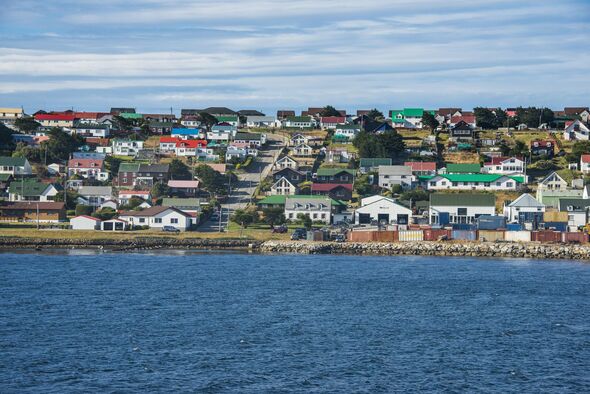
The Falklands Islands is poised to commence its first oil production, nearly 15 years after the discovery of the Sea Lion Field. Under the leadership of operator Navitas Petroleum, plans for the £1.3 billion project indicate that oil could begin flowing as early as 2028. This milestone follows the company’s announcement that it has received “in principle” approval from the Falkland Islands government, with the final approval process currently underway.
The Falklands government has expressed strong interest in leveraging the potential benefits of oil production. A spokesperson emphasized that establishing a hydrocarbons industry is “a political and community priority for the Falkland Islands.” They noted, “If a hydrocarbons industry is successfully established, it will provide transformative opportunities for the people of the Falkland Islands, leading to financial and political security.”
Should the project receive the necessary final approvals, Navitas plans to relocate its Aoka Mizu floating production vessel from Shetland to the Falklands to initiate exploration activities. The Aoka Mizu is expected to drill up to 23 wells during the initial phase of development. Financial projections suggest that residents could see a windfall amounting to approximately £1 million per person once drilling operations commence.
Oil and gas reserves at the Sea Lion Field are located approximately 1.6 miles beneath the seabed, in water depths nearing 1,500 feet. The British Overseas Territory has been under UK administration since 1883, yet it continues to face sovereignty claims from Argentina.
Tensions surrounding the Falklands were reignited during a recent speech by Argentine President Javier Milei at the UN General Assembly. In his address, he reiterated Argentina’s claims to the islands, known as Las Malvinas, stating, “I wish to reiterate our legitimate claim in terms of sovereignty over the Malvinas and the surrounding maritime areas that continue to be illegally occupied.” He criticized the ongoing colonial situation and called on the United Kingdom to engage in bilateral negotiations.
The historical context of the Falklands Islands is marked by significant conflict, including the 1982 Falklands War, during which Argentina invaded the territory, leading to a 74-day conflict that resulted in the loss of 255 British lives, along with the destruction of seven ships and nine aircraft. Despite the UK’s reclamation of the islands, Argentina maintains its claim, highlighting the enduring complexities of the region’s political landscape.
As the Falklands moves closer to oil production, the potential economic benefits may have far-reaching implications for both the local community and international relations, particularly with Argentina. The situation underscores the intersection of natural resources and geopolitical tensions, as stakeholders monitor developments in this contentious area.

110 Palestinians Die in Israeli Prisons Under Ben Gvir’s Policies

Study Examines Collegiate Athletes’ Motivations in Dual Roles

Falklands Islands Set to Launch Oil Production Amid Tensions

Lammy Advocates for Judge-Only Trials to Combat Fraud Faster

New Leadership in Londonderry Chamber Aims to Boost Economy

Lamb Of God’s Journey: How “Laid To Rest” Reshaped Metal

Research Reveals Urgent Need for Longer Road Crossing Times

Family Transforms Historic North East Watchtower into Home

India Proposes Permanent GPS Tracking on Smartphones Amid Backlash

Iconic 90s TV Show House Hits Market for £1.1 Million

Milk Bank Urges Mothers to Donate for Premature Babies’ Health

Alessia Russo Signs Long-Term Deal with Arsenal Ahead of WSL Season

Shoppers Flock to Discounted Neck Pillow on Amazon for Travel Comfort

Museums Body Critiques EHRC Proposals on Gender Facilities

Trump Visits Europe: Business, Politics, or Leisure?

Japanese Teen Sorato Shimizu Breaks U18 100m Record in 10 Seconds

Couple Shares Inspiring Love Story Defying Height Stereotypes

Anglian Water Raises Concerns Over Proposed AI Data Centre
-
 Entertainment2 months ago
Iconic 90s TV Show House Hits Market for £1.1 Million
-
 Lifestyle4 months ago
Milk Bank Urges Mothers to Donate for Premature Babies’ Health
-
 Sports3 months ago
Alessia Russo Signs Long-Term Deal with Arsenal Ahead of WSL Season
-
 Lifestyle4 months ago
Shoppers Flock to Discounted Neck Pillow on Amazon for Travel Comfort
-
 Politics4 months ago
Museums Body Critiques EHRC Proposals on Gender Facilities
-
 Business4 months ago
Trump Visits Europe: Business, Politics, or Leisure?
-
 Lifestyle4 months ago
Japanese Teen Sorato Shimizu Breaks U18 100m Record in 10 Seconds
-
 Politics4 months ago
Couple Shares Inspiring Love Story Defying Height Stereotypes
-
 World4 months ago
Anglian Water Raises Concerns Over Proposed AI Data Centre
-

 Sports4 months ago
Nathan Cleary’s Family Celebrates Engagement Amid Romance Rumors
-

 Sports4 months ago
Bournemouth Dominates Everton with 3-0 Victory in Premier League Summer Series
-

 World5 months ago
Wreckage of Missing Russian Passenger Plane Discovered in Flames