
Health
Revolutionary Blood Test Detects 50 Cancer Types Before Symptoms

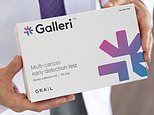
A new blood test, known as the Galleri test, has demonstrated the ability to accurately detect over 50 types of cancer, often before any symptoms emerge. This groundbreaking research, involving more than 23,000 patients, reveals that the test can identify approximately 62 percent of cancer cases. The findings are set to be presented at the annual congress of the European Society of Medical Oncology in Berlin.
The Galleri test, developed by the US-based company Grail, works by analyzing small fragments of tumor DNA found in the bloodstream. It aims to enhance early detection of cancers, particularly those that are typically diagnosed at later stages, such as pancreatic, liver, and ovarian cancers, which often have lower survival rates. The test has shown a remarkable ability to detect 74 percent of the 12 most deadly cancers, including bowel and lung cancers.
According to Sir Harpal Kumar, president of International Business and BioPharma at Grail and former head of Cancer Research UK, this advancement represents a significant step toward transforming cancer diagnostics. He stated, “We think this is a further step along the way in really transforming cancer outcomes.”
In the recent trial, researchers followed up with participants for at least 12 months. Out of 23,161 patients who underwent the test, cancer signals were detected in 216 individuals, leading to diagnoses in 133 of those cases. This resulted in a 61.6 percent sensitivity rate, indicating the test’s effectiveness in identifying cancers. Furthermore, the test demonstrated a specificity rate of 99.6 percent, accurately ruling out cancer in those without the disease.
The results highlight the test’s enhanced performance for certain cancers that shed higher amounts of detectable DNA into the bloodstream. For the 12 cancers with lower survival rates, the Galleri test achieved an accuracy of 73.7 percent at early stages, making it particularly promising for improving early detection.
The UK’s National Health Service (NHS) is currently conducting a major trial involving over 140,000 people to evaluate the test’s effectiveness further. Previous assessments have indicated that the Galleri test could significantly reduce late-stage cancer diagnoses and mortality rates, with research suggesting an annual blood test could lead to 49 percent fewer late-stage diagnoses and 21 percent fewer deaths within five years compared to standard care.
Critics have acknowledged the promising results but emphasize the need for further data before widespread implementation. Professor Nitzan Rosenfeld from the Barts Cancer Institute at Queen Mary University of London described the results as “impressive” and noted that the 62 percent accuracy is encouraging. However, he urged caution, highlighting that additional data is essential for a comprehensive assessment.
Conversely, Professor Anna Schuh from the University of Oxford expressed reservations, stating that while the results are an improvement over current screening methods, they still fall short of expectations when compared to random chance. She emphasized that the Galleri test should complement existing cancer screening programs rather than replace them.
The development of the Galleri test marks a significant advancement in cancer detection, offering hope for earlier diagnoses and better patient outcomes. As trials continue and further data emerges, the potential for this innovative blood test to change the landscape of cancer diagnostics becomes increasingly tangible.

Moyes Faces Referee Controversy Ahead of Everton vs Chelsea Clash

Man Hospitalised After Assault Outside Shop in Sandwell

Fred MacAulay and Ally McCoist Reunite for Special World Cup Show

NoOnes Targets $1 Trillion Gift Card Market to Enhance Crypto Access

Beloved Actor Matt Clark Passes Away at 89, Fans Mourn Loss

Discover How Milk Thistle Supplements Enhance Liver Health

Irish Community Care Celebrates 60 Years of Support in Liverpool

New Affordable Housing Development Planned for Crawley Site

Millions of Parking Tickets Issued Amid Calls for Reform

Claire Tomlinson Bids Farewell to Sky Sports After 27 Years

Iconic 90s TV Show House Hits Market for £1.1 Million

Nathan Cleary’s Family Celebrates Engagement Amid Romance Rumors

Tributes Flow for Kerry Gentle, Beloved RNLI Volunteer and Artist

Milk Bank Urges Mothers to Donate for Premature Babies’ Health

Shoppers Flock to Discounted Neck Pillow on Amazon for Travel Comfort

Alessia Russo Signs Long-Term Deal with Arsenal Ahead of WSL Season

Nuneaton Town FC Advances Plans for New Stadium in Stockingford

Exploring England’s Cathedrals: A Journey Through History and Architecture
-
 Lifestyle8 months ago
Claire Tomlinson Bids Farewell to Sky Sports After 27 Years
-
 Entertainment11 months ago
Iconic 90s TV Show House Hits Market for £1.1 Million
-
 Sports1 year ago
Nathan Cleary’s Family Celebrates Engagement Amid Romance Rumors
-
 Lifestyle8 months ago
Tributes Flow for Kerry Gentle, Beloved RNLI Volunteer and Artist
-
 Lifestyle1 year ago
Milk Bank Urges Mothers to Donate for Premature Babies’ Health
-
 Lifestyle1 year ago
Shoppers Flock to Discounted Neck Pillow on Amazon for Travel Comfort
-
 Sports12 months ago
Alessia Russo Signs Long-Term Deal with Arsenal Ahead of WSL Season
-
 Sports9 months ago
Nuneaton Town FC Advances Plans for New Stadium in Stockingford
-
 Lifestyle1 year ago
Exploring England’s Cathedrals: A Journey Through History and Architecture
-

 Politics1 year ago
Museums Body Critiques EHRC Proposals on Gender Facilities
-

 Business1 year ago
Trump Visits Europe: Business, Politics, or Leisure?
-

 Lifestyle1 year ago
Japanese Teen Sorato Shimizu Breaks U18 100m Record in 10 Seconds