
Politics
Inquiry Critiques Sturgeon Government’s Pandemic Response

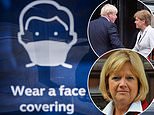
A recent inquiry report has sharply criticized the handling of the Covid-19 pandemic by the government of former First Minister Nicola Sturgeon. The report, part of the UK Covid-19 Inquiry, concluded that the Scottish Government’s approach was marked by a lack of preparedness and a failure to respond effectively to the crisis.
The inquiry found that Sturgeon’s government implemented an “inappropriate” zero-Covid strategy, which ultimately proved ineffective. According to Baroness Heather Hallett, who chaired the inquiry, both the Scottish and UK governments acted “too little, too late” in their pandemic responses. The extensive report spans over 700 pages and includes detailed assessments of the decisions made during the crisis.
In a statement summarizing her findings, Hallett said: “I can summarise my findings as ‘too little, too late.’” This assessment follows weeks of testimonies from key figures involved in the pandemic response, including Sturgeon, John Swinney, and Humza Yousaf.
The report highlighted significant failures in the government’s planning and response strategies. It pointed out that the political rivalry between Sturgeon and then-Prime Minister Boris Johnson resulted in a “constant tension” that hindered effective cooperation between the UK and Scottish governments. The inquiry indicated that such political antipathy was detrimental to the public interest.
The inquiry also revealed that informal decision-making structures, such as unminuted “Gold Command” meetings, led to a decline in transparency within the Scottish cabinet. Sturgeon and Swinney made critical decisions, such as school closures, without sufficient input from other ministers, effectively sidelining the cabinet’s role in governance.
The findings are particularly poignant given that Scotland recorded 13,429 deaths attributed to Covid-19 between 2020 and 2022. Aamer Anwar, representing the Scottish Covid Bereaved group, expressed deep concerns about the governments’ decisions, stating, “The four governments gambled with the lives of our citizens.” He emphasized that the failure to adhere to scientific advice early in the pandemic made subsequent lockdowns inevitable and resulted in a tragic death toll.
Hallett emphasized that the devolved administrations, while entitled to rely on UK government guidance, became overly dependent on that response, which left them unprepared for the pandemic’s challenges. She stated that by mid-February 2020, the governments “knew enough to spur them into action,” but their lack of urgency during critical periods was “inexplicable.”
The inquiry’s findings call for urgent reforms in the decision-making processes during emergency situations. Hallett has proposed 19 key recommendations aimed at improving the structures within each of the four UK governments to ensure better preparedness for future crises.
In conclusion, the inquiry underscores the critical need for effective governance and collaborative efforts during public health emergencies. The report serves as a reminder of the importance of timely and informed decision-making in safeguarding public health.

Welsh Ambulance Service Targets Frequent 999 Callers for Support

Welsh Ambulance Service Targets Frequent 999 Callers for Better Care

Bremen’s Marble Imaging Secures €5.3M for Revolutionary Satellites

WNBA and Players Association Secure 40-Day Extension on CBA Talks

Three Vacant West Midlands Homes Auctioned for £50,000 Each

Four Long-Standing Suspects Remain at Large on West Midlands List

Taste Test Reveals Best Mince Pies from Major UK Supermarkets

Baba Vanga Predicts Alien Contact and Global Upheaval in 2026

Astronomers Uncover the Pulsating Mystery of 3I/ATLAS

Iconic 90s TV Show House Hits Market for £1.1 Million

Milk Bank Urges Mothers to Donate for Premature Babies’ Health

Alessia Russo Signs Long-Term Deal with Arsenal Ahead of WSL Season

Shoppers Flock to Discounted Neck Pillow on Amazon for Travel Comfort

Museums Body Critiques EHRC Proposals on Gender Facilities

Trump Visits Europe: Business, Politics, or Leisure?

Japanese Teen Sorato Shimizu Breaks U18 100m Record in 10 Seconds

Couple Shares Inspiring Love Story Defying Height Stereotypes

Anglian Water Raises Concerns Over Proposed AI Data Centre
-
 Entertainment2 months ago
Iconic 90s TV Show House Hits Market for £1.1 Million
-
 Lifestyle4 months ago
Milk Bank Urges Mothers to Donate for Premature Babies’ Health
-
 Sports3 months ago
Alessia Russo Signs Long-Term Deal with Arsenal Ahead of WSL Season
-
 Lifestyle4 months ago
Shoppers Flock to Discounted Neck Pillow on Amazon for Travel Comfort
-
 Politics4 months ago
Museums Body Critiques EHRC Proposals on Gender Facilities
-
 Business4 months ago
Trump Visits Europe: Business, Politics, or Leisure?
-
 Lifestyle4 months ago
Japanese Teen Sorato Shimizu Breaks U18 100m Record in 10 Seconds
-
 Politics4 months ago
Couple Shares Inspiring Love Story Defying Height Stereotypes
-
 World4 months ago
Anglian Water Raises Concerns Over Proposed AI Data Centre
-

 Sports4 months ago
Bournemouth Dominates Everton with 3-0 Victory in Premier League Summer Series
-

 World4 months ago
Wreckage of Missing Russian Passenger Plane Discovered in Flames
-

 Lifestyle4 months ago
Shoppers Rave About Roman’s £42 Midi Dress, Calling It ‘Elegant’