
Health
Tiny Chip Restores Reading Vision for Macular Degeneration Patients

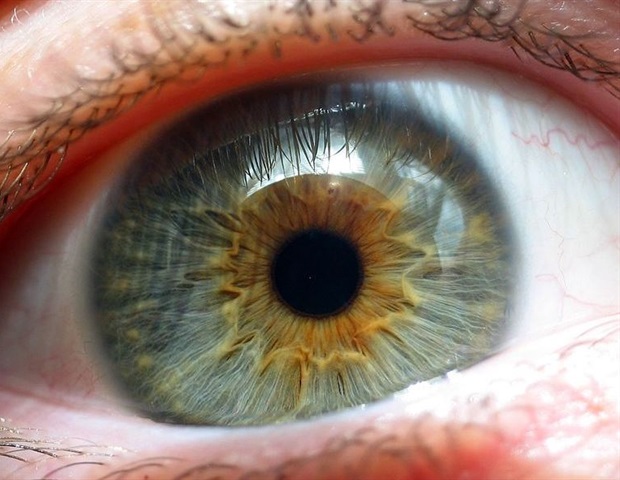
A groundbreaking development in vision restoration has emerged from a clinical trial involving a tiny wireless chip designed for patients suffering from advanced age-related macular degeneration (AMD). Researchers at Stanford Medicine, along with international collaborators, demonstrated that this innovative device, named PRIMA, has enabled a significant number of participants to regain the ability to read, marking a vital step in treating irreversible vision loss.
In the trial, which will be detailed in the New England Journal of Medicine on October 20, 2025, 27 out of 32 participants reported improvements in their reading abilities a year after receiving the device. Those who benefited from the chip experienced visual acuity comparable to 20/42 vision, thanks to digital enhancements like zoom and higher contrast.
Revolutionizing Vision with PRIMA
The PRIMA device is the first of its kind to restore functional sight, allowing patients to perceive shapes and patterns—often referred to as form vision. “All previous attempts to provide vision with prosthetic devices resulted in basically light sensitivity, not really form vision,” said Daniel Palanker, PhD, a professor of ophthalmology and co-senior author of the study. His colleague, José-Alain Sahel, MD, also contributed as a senior author, while Frank Holz, MD, led the research from the University of Bonn in Germany.
The two-part device consists of a small camera mounted on glasses that captures images and transmits them via infrared light to a chip implanted in the back of the eye. This chip converts the images into electrical signals, effectively replacing damaged photoreceptors. The development of the PRIMA device is the culmination of nearly two decades of research and testing, with Palanker initially envisioning the concept while exploring ophthalmic lasers.
Participants in this trial had geographic atrophy, a severe form of AMD that gradually diminishes central vision. This condition impacts over 5 million people worldwide and is a leading cause of irreversible blindness among the elderly. Although macular degeneration destroys light-sensitive photoreceptors in the retina, many patients retain some peripheral vision, which the PRIMA device leverages.
Patient Outcomes and Future Potential
The device, measuring just 2 by 2 millimeters, is implanted in the retina where photoreceptors have been lost. Unlike natural photoreceptors that respond to visible light, the PRIMA chip is sensitive to infrared light, ensuring that it does not interfere with any remaining functional photoreceptors. This design allows patients to utilize their peripheral vision alongside the newly restored central vision, enhancing their overall visual experience.
The recent trial involved 38 participants aged over 60 with a vision impairment worse than 20/320. After a few weeks of using the device, many patients noticed immediate improvements, while continued training led to further enhancements in visual acuity over several months. “It may take several months of training to reach top performance,” Palanker noted, drawing a parallel to the adaptation period required for users of cochlear implants.
Of the 32 participants who completed the one-year follow-up, 27 regained the ability to read, with 26 showing clinically meaningful improvements defined as reading at least two additional lines on a standard eye chart. On average, participants improved their visual acuity by five lines, with one individual improving by an impressive twelve lines. Many reported using the device in daily activities, such as reading books and food labels.
Despite a positive reception, some participants experienced side effects, including ocular hypertension and subretinal hemorrhage, though none were life-threatening and most resolved within two months.
Looking ahead, the PRIMA device currently provides only black-and-white vision without shades of gray. However, Palanker is actively developing software to enhance the device’s capabilities, including the ability to recognize faces—a feature highly desired by patients. Future iterations of the chip aim to improve resolution, currently limited by the size of the pixels, with plans to test versions featuring pixels as small as 20 microns.
“This is the first version of the chip, and resolution is relatively low,” Palanker stated. The anticipated enhancements could potentially allow patients to achieve 20/80 vision, with electronic zoom enabling near 20/20 vision.
The PRIMA device signifies a promising advancement in the field of ophthalmology, offering renewed hope for individuals with significant vision loss due to macular degeneration. As research continues, the potential for further innovations remains bright, aiming to restore not just vision, but quality of life for millions affected by this condition.

Welsh Ambulance Service Targets Frequent 999 Callers for Support

Welsh Ambulance Service Targets Frequent 999 Callers for Better Care

Bremen’s Marble Imaging Secures €5.3M for Revolutionary Satellites

WNBA and Players Association Secure 40-Day Extension on CBA Talks

Three Vacant West Midlands Homes Auctioned for £50,000 Each

Four Long-Standing Suspects Remain at Large on West Midlands List

Taste Test Reveals Best Mince Pies from Major UK Supermarkets

Baba Vanga Predicts Alien Contact and Global Upheaval in 2026

Astronomers Uncover the Pulsating Mystery of 3I/ATLAS

Iconic 90s TV Show House Hits Market for £1.1 Million

Milk Bank Urges Mothers to Donate for Premature Babies’ Health

Alessia Russo Signs Long-Term Deal with Arsenal Ahead of WSL Season

Shoppers Flock to Discounted Neck Pillow on Amazon for Travel Comfort

Museums Body Critiques EHRC Proposals on Gender Facilities

Trump Visits Europe: Business, Politics, or Leisure?

Japanese Teen Sorato Shimizu Breaks U18 100m Record in 10 Seconds

Couple Shares Inspiring Love Story Defying Height Stereotypes

Anglian Water Raises Concerns Over Proposed AI Data Centre
-
 Entertainment2 months ago
Iconic 90s TV Show House Hits Market for £1.1 Million
-
 Lifestyle4 months ago
Milk Bank Urges Mothers to Donate for Premature Babies’ Health
-
 Sports3 months ago
Alessia Russo Signs Long-Term Deal with Arsenal Ahead of WSL Season
-
 Lifestyle4 months ago
Shoppers Flock to Discounted Neck Pillow on Amazon for Travel Comfort
-
 Politics4 months ago
Museums Body Critiques EHRC Proposals on Gender Facilities
-
 Business4 months ago
Trump Visits Europe: Business, Politics, or Leisure?
-
 Lifestyle4 months ago
Japanese Teen Sorato Shimizu Breaks U18 100m Record in 10 Seconds
-
 Politics4 months ago
Couple Shares Inspiring Love Story Defying Height Stereotypes
-
 World4 months ago
Anglian Water Raises Concerns Over Proposed AI Data Centre
-

 Sports4 months ago
Bournemouth Dominates Everton with 3-0 Victory in Premier League Summer Series
-

 World4 months ago
Wreckage of Missing Russian Passenger Plane Discovered in Flames
-

 Lifestyle4 months ago
Shoppers Rave About Roman’s £42 Midi Dress, Calling It ‘Elegant’