
Politics
Developers Revive Plans for 16-Storey Student Block in Birmingham

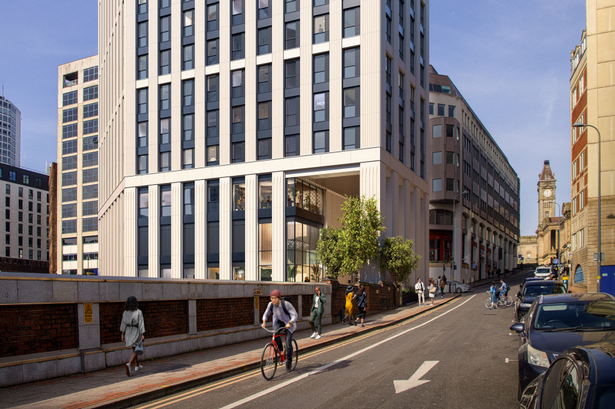
Plans to construct a 16-storey student accommodation block at the site of the former Golden Eagle pub in Birmingham will be reconsidered by the city’s planning committee. The proposal includes 263 student bed spaces and aims to integrate with the historical context of the location while providing economic, social, and environmental benefits.
Last month, the planning committee expressed concerns about the heritage implications of the development. Members ultimately voted against the plans, highlighting the importance of the site’s historical significance. The committee’s initial rejection raised questions about the balance between development and preservation in the city.
At the upcoming planning meeting, city officials will clarify the potential heritage impact of the project. According to a council officer, the benefits of the development may outweigh any heritage concerns. They noted, “There are enough public benefits to outweigh that [heritage] harm, including a demonstrated need for purpose-built student accommodation.”
Supporting this view, the applicant sought legal advice from a barrister, who confirmed that the heritage consultant’s assessment of “less than substantial” harm was appropriate. The officer recommended that the planning committee approve the proposal, while also outlining a reason for refusal based on potential heritage damage, should the committee choose not to follow their guidance.
The report previously acknowledged that the development could inflict “less than substantial/low level” harm on significant heritage sites, including the Town Hall and the Former General Post Office. The council’s findings indicate that the anticipated harm remains low, with conservation experts affirming the historic value of these assets.
Coun Lee Marsham, chair of the planning committee, stated that the developers had made commendable efforts to address heritage concerns. He emphasized the pressing need for student accommodations in the city, remarking, “We can’t theorise about whether a residential scheme would or wouldn’t be viable.”
The current proposal has evolved significantly from earlier versions, which included a 45-storey design. The developers have actively sought to reduce the building’s impact while ensuring it remains a viable project. The revised plans now propose shared internal amenity spaces and commercial use on the ground floor, aiming to enhance the regeneration of this part of Birmingham city centre.
As the planning committee prepares to revisit the proposal, the outcome could have lasting implications for both the city’s heritage and its ability to accommodate a growing student population.

Montenegrin Documentary “To Hold a Mountain” Premieres at Sundance

Causeway Coast Dog Rescue Raises Alarm Over ‘Disposable Dogs’

Clash Over Machynlleth Post Office Downgrade Sparks Outrage

Roche Unveils Promising Data for Giredestrant in Early Breast Cancer

Portsmouth’s Young Striker Shines on Loan While First Team Struggles

KLM Expands UK Operations with Up to 71 Daily Flights

Sarkozy Reflects on 20 Days in Prison in New Memoir

New Projects at Grangemouth Set to Create 460 Jobs

Spice Offers Alternative to Omeprazole for Heartburn Relief

Iconic 90s TV Show House Hits Market for £1.1 Million

Milk Bank Urges Mothers to Donate for Premature Babies’ Health

Alessia Russo Signs Long-Term Deal with Arsenal Ahead of WSL Season

Shoppers Flock to Discounted Neck Pillow on Amazon for Travel Comfort

Museums Body Critiques EHRC Proposals on Gender Facilities

Trump Visits Europe: Business, Politics, or Leisure?

Japanese Teen Sorato Shimizu Breaks U18 100m Record in 10 Seconds

Couple Shares Inspiring Love Story Defying Height Stereotypes

Anglian Water Raises Concerns Over Proposed AI Data Centre
-
 Entertainment3 months ago
Iconic 90s TV Show House Hits Market for £1.1 Million
-
 Lifestyle5 months ago
Milk Bank Urges Mothers to Donate for Premature Babies’ Health
-
 Sports3 months ago
Alessia Russo Signs Long-Term Deal with Arsenal Ahead of WSL Season
-
 Lifestyle4 months ago
Shoppers Flock to Discounted Neck Pillow on Amazon for Travel Comfort
-
 Politics5 months ago
Museums Body Critiques EHRC Proposals on Gender Facilities
-
 Business5 months ago
Trump Visits Europe: Business, Politics, or Leisure?
-
 Lifestyle5 months ago
Japanese Teen Sorato Shimizu Breaks U18 100m Record in 10 Seconds
-
 Politics4 months ago
Couple Shares Inspiring Love Story Defying Height Stereotypes
-
 World5 months ago
Anglian Water Raises Concerns Over Proposed AI Data Centre
-

 Sports4 months ago
Nathan Cleary’s Family Celebrates Engagement Amid Romance Rumors
-

 Sports5 months ago
Bournemouth Dominates Everton with 3-0 Victory in Premier League Summer Series
-

 World5 months ago
Wreckage of Missing Russian Passenger Plane Discovered in Flames