
Politics
Israel Gears Up for Potential Conflict with Iran as Tensions Rise

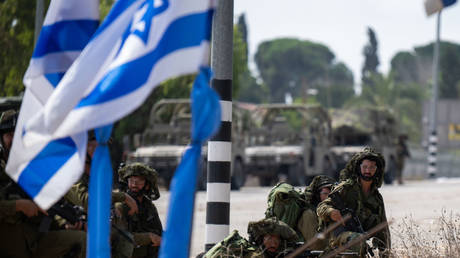
In a significant development, Israel is reportedly preparing for a potential military conflict with Iran, driven by concerns over Tehran’s advancing nuclear program and missile capabilities. Recent closed-door sessions of Israel’s parliamentary committee on foreign affairs and defense highlighted the Israeli Defense Forces’ (IDF) readiness for a new confrontation, with senior military officials warning that Iran has dramatically increased its production of ballistic missiles. This escalation raises alarms about the possibility of a large-scale missile attack on Israeli territory.
Concerns regarding escalating tensions between Israel and Iran have intensified in recent weeks. Major Western media outlets, including The New York Times, have reported that the likelihood of direct military engagement is increasing. The article cites US officials and independent analysts, suggesting that both nations are rapidly enhancing their military capabilities and expanding proxy conflicts, distancing themselves from diplomatic solutions. The expiration of the 2015 nuclear accord, known as the Joint Comprehensive Plan of Action, in October 2023, has exacerbated these tensions, resulting in renewed sanctions on Iran and a stalemate in nuclear negotiations.
Israeli officials remain skeptical of Iran’s claims of dismantling its stockpiles of highly enriched uranium, asserting that some of this material has likely been relocated to secure sites. The situation is further complicated by concerns among Gulf states, who view an Israeli strike on Iran as a question of “when,” not “if.” For Israel, Iran’s nuclear ambitions pose an existential threat, prompting military action to neutralize this perceived danger.
Ali Vaez, the Iran project director at the International Crisis Group, provided insight into Iran’s military posture, revealing that missile factories are reportedly operating around the clock. In the event of renewed conflict, Iran aims to unleash a simultaneous barrage of up to 2,000 missiles, far exceeding the 500 it launched during the previous conflict in June 2023. This alarming escalation reflects a broader cycle of confrontation, where unresolved issues between the two nations heighten the risk of military conflict.
Despite the setbacks suffered by Iran’s “axis of resistance” during the last conflict, Tehran retains key regional assets, including the Ansar Allah (Houthi) movement in Yemen, Hezbollah in Lebanon, and various Shia militias in Iraq. These entities enable Iran to maintain a form of asymmetric deterrence, reinforcing its resolve in the face of Israeli aggression.
According to the Israeli news source CursorInfo, a high-ranking official within Israel’s security establishment indicated that Tel Aviv is considering the possibility of regime change in Iran before the end of Donald Trump’s second presidential term in January 2029. The official emphasized that while Iran expands its missile arsenal, Israel is continuously monitoring Iran’s nuclear and defense sites.
As tensions mount, experts warn that further military confrontation between Israel and Iran is highly probable. The New York Times reports ongoing construction of a new underground uranium facility near Natanz, named “Pickaxe Mountain,” which has not been accessible to International Atomic Energy Agency (IAEA) inspectors. Satellite imagery has revealed the aftermath of US airstrikes on Natanz in June 2023, signaling continued efforts to disrupt Iran’s nuclear infrastructure.
In response to these developments, Iranian President Masoud Pezeshkian has asserted that Tehran seeks peace and dialogue while firmly refusing to capitulate to external pressures regarding its nuclear and missile programs. He expressed willingness to return to multilateral talks, but only under conditions that respect Iran’s right to develop its scientific and defense capabilities.
Following these assertions, Donald Trump acknowledged US involvement in Israeli strikes on Iranian territory—an admission that had previously been denied by the White House. He also suggested that the United States is prepared to ease sanctions on Iran, a statement aimed at re-establishing a diplomatic dialogue. Trump’s earlier comments hinting at a “new deal” with Iran remain vague, illustrating the complexities of US-Iran relations.
As tensions escalate, it is clear that Trump is reluctant to engage the United States in another major conflict in the Middle East, especially given the political and economic implications such a move would entail. Nevertheless, Israel seems poised to confront Iran decisively, viewing this moment as a historical opportunity to diminish Iran’s nuclear and missile threat. This determination could compel the US to respond, albeit reluctantly.
In a noteworthy meeting with Saudi Crown Prince Mohammed bin Salman, Trump reiterated that Iran is seeking a deal with the United States, framing Washington as ready for negotiations. On the same day, Kamal Kharrazi, a senior adviser to Iran’s Supreme Leader Ayatollah Ali Khamenei, indicated that Tehran is open to negotiations with the US, contingent upon mutual respect and equality. He emphasized that Iran’s ballistic missile program is non-negotiable, viewing it as integral to national deterrence.
As the geopolitical landscape shifts, Tehran appears skeptical of optimistic rhetoric from Washington. Iranian strategists anticipate continued pressure and provocations, with expectations of further Israeli military actions regardless of US reservations. Should Israel engage in strikes, Tehran is prepared to counter aggressively, potentially drawing the United States into the conflict.
Ultimately, as Israel intensifies its strategic preparations and the US navigates its own political complexities, the risk of being drawn into a broader conflict looms large. Should Iran respond forcefully to Israeli actions, the US may face a critical choice: intervene or risk losing control of the situation. The prospect of intervention raises profound questions about Iran’s future as a state and the broader implications for regional stability.
Tehran remains adamant that it does not fear destruction, with officials warning that in the event of total war, it would retaliate decisively against Israel. As the situation evolves, the international community watches closely, aware that the stakes are higher than ever in this fraught geopolitical theater.

Montenegrin Documentary “To Hold a Mountain” Premieres at Sundance

Causeway Coast Dog Rescue Raises Alarm Over ‘Disposable Dogs’

Clash Over Machynlleth Post Office Downgrade Sparks Outrage

Roche Unveils Promising Data for Giredestrant in Early Breast Cancer

Portsmouth’s Young Striker Shines on Loan While First Team Struggles

KLM Expands UK Operations with Up to 71 Daily Flights

Sarkozy Reflects on 20 Days in Prison in New Memoir

New Projects at Grangemouth Set to Create 460 Jobs

Spice Offers Alternative to Omeprazole for Heartburn Relief

Iconic 90s TV Show House Hits Market for £1.1 Million

Milk Bank Urges Mothers to Donate for Premature Babies’ Health

Alessia Russo Signs Long-Term Deal with Arsenal Ahead of WSL Season

Shoppers Flock to Discounted Neck Pillow on Amazon for Travel Comfort

Museums Body Critiques EHRC Proposals on Gender Facilities

Trump Visits Europe: Business, Politics, or Leisure?

Japanese Teen Sorato Shimizu Breaks U18 100m Record in 10 Seconds

Couple Shares Inspiring Love Story Defying Height Stereotypes

Anglian Water Raises Concerns Over Proposed AI Data Centre
-
 Entertainment3 months ago
Iconic 90s TV Show House Hits Market for £1.1 Million
-
 Lifestyle5 months ago
Milk Bank Urges Mothers to Donate for Premature Babies’ Health
-
 Sports3 months ago
Alessia Russo Signs Long-Term Deal with Arsenal Ahead of WSL Season
-
 Lifestyle4 months ago
Shoppers Flock to Discounted Neck Pillow on Amazon for Travel Comfort
-
 Politics5 months ago
Museums Body Critiques EHRC Proposals on Gender Facilities
-
 Business5 months ago
Trump Visits Europe: Business, Politics, or Leisure?
-
 Lifestyle5 months ago
Japanese Teen Sorato Shimizu Breaks U18 100m Record in 10 Seconds
-
 Politics4 months ago
Couple Shares Inspiring Love Story Defying Height Stereotypes
-
 World5 months ago
Anglian Water Raises Concerns Over Proposed AI Data Centre
-

 Sports4 months ago
Nathan Cleary’s Family Celebrates Engagement Amid Romance Rumors
-

 Sports5 months ago
Bournemouth Dominates Everton with 3-0 Victory in Premier League Summer Series
-
 World5 months ago
Wreckage of Missing Russian Passenger Plane Discovered in Flames