
Science
Astronomers Capture First X-Ray Emission from Interstellar Comet 3I/ATLAS

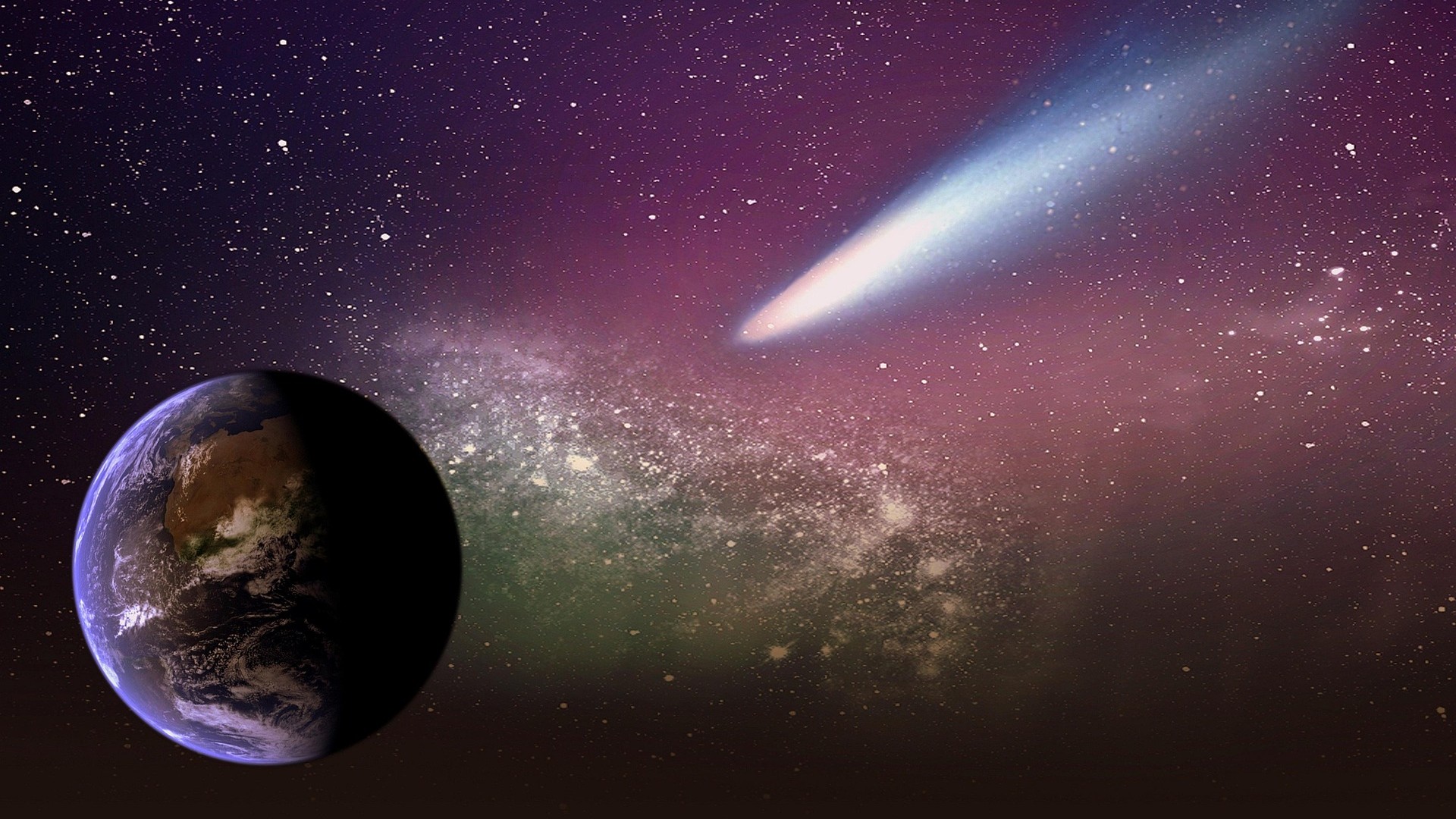
Astronomers have made a groundbreaking discovery by detecting a faint X-ray halo around the interstellar comet **3I/ATLAS**. This marks the first time high-energy X-ray emissions have been observed from a comet confirmed to have originated beyond our solar system. The detection was made possible through the **XRISM** (X-ray Imaging and Spectroscopy Mission), a collaborative effort between the **Japan Aerospace Exploration Agency (JAXA)** and **NASA**.
The observation reveals a significant interaction between the comet’s gaseous coma and the solar wind, extending well beyond its visible nucleus. For decades, researchers have observed comets within the solar system emitting X-rays due to the interaction of outgassed material with the solar wind. Yet, they had never definitively recorded such emissions from an interstellar comet before.
Early data from the XRISM mission indicates a faint X-ray glow spreading across hundreds of thousands of kilometres around the comet’s coma. Specifically, this glow extends approximately **5 arcminutes** from the nucleus, equating to a physical span of about **400,000 km**. This suggests a diffuse cloud of gas surrounding the comet, glowing weakly in X-rays, and significantly larger than the nucleus itself.
Understanding the X-Ray Emissions
X-ray emissions from comets in our solar system arise through a process known as solar wind charge exchange (SWCX). As a comet’s ices sublimate under solar heating, they release gas that forms a coma. This coma interacts with the solar wind—streams of charged particles emitted by the Sun. In a charge-exchange reaction, a highly charged ion from the solar wind collides with a neutral atom or molecule from the coma, resulting in the emission of an X-ray photon. This process turns the comet’s atmosphere into a source of fluorescence when struck by solar particles.
Analysis of the XRISM spectral data has revealed emission lines corresponding to elements like carbon, nitrogen, and oxygen. The presence of these elements provides a chemical fingerprint of the comet’s volatile inventory, offering insights into the protoplanetary disk from which **3I/ATLAS** formed billions of years ago. Importantly, these signatures do not match known background X-ray sources, such as galactic or atmospheric emissions, reinforcing the conclusion that the glow originates from the comet itself.
Implications for Future Interstellar Studies
**3I/ATLAS** is only the third confirmed interstellar object to pass through our solar system, following **1I/ʻOumuamua** and **2I/Borisov**. Since **July 2025**, astronomers have deployed numerous ground and space-based telescopes to gather extensive data on the comet. For instance, ultraviolet observations from the **Neil Gehrels Swift Observatory** confirmed water activity in the comet, indicating active outgassing at a distance of **3.51 AU** from the Sun.
Further analysis from the **Very Large Telescope (VLT)** has shown that the coma of **3I/ATLAS** exhibits an unusually strong negative polarization at small phase angles, a property not previously observed in comets or asteroids. This suggests that the dust and ices surrounding the comet may have unique compositions and structures, reflecting the environment in which it formed around a distant star.
Infrared measurements from the **James Webb Space Telescope** have indicated that the coma is rich in carbon dioxide, along with water, carbon monoxide, OCS, water ice, and dust. This points to a volatile-rich nucleus that differs significantly from typical solar system comets.
The detection of X-ray emissions from **3I/ATLAS** marks a new frontier in the study of interstellar objects. It indicates that the comet actively interacts with the Sun’s environment, differing from distant asteroids or inactive interstellar fragments. This new understanding allows scientists to explore the composition and structure of interstellar cometary comae in ways not achievable through optical or infrared observations alone. The emitted X-rays may provide insights into ionization processes, gas densities, and the distribution of volatile materials in the coma, shedding light on the formation conditions of **3I/ATLAS** and potentially its home system.
Moreover, the confirmation of X-ray emissions from an interstellar object suggests that other such visitors, whether icy comets or rocky fragments, could also produce detectable X-rays as they traverse our heliosphere. This validates the use of X-ray astronomy as a promising tool for identifying and characterizing future interstellar interlopers.
Despite these exciting findings, researchers remain cautious, noting that initial data from XRISM may be subject to instrumental effects, such as vignetting or detector noise, which could mimic diffuse structures. The XRISM team acknowledges that further rigorous analysis is necessary to definitively confirm the origin of the emissions.
As **3I/ATLAS** continues its outbound trajectory, never to return, the faint X-ray glow captured by XRISM may serve as a final farewell signal, offering a fleeting yet profound message from an object born around a distant star. This discovery not only enhances our understanding of interstellar comets but also opens new avenues for astronomical research.

Montenegrin Documentary “To Hold a Mountain” Premieres at Sundance

Causeway Coast Dog Rescue Raises Alarm Over ‘Disposable Dogs’

Clash Over Machynlleth Post Office Downgrade Sparks Outrage

Roche Unveils Promising Data for Giredestrant in Early Breast Cancer

Portsmouth’s Young Striker Shines on Loan While First Team Struggles

KLM Expands UK Operations with Up to 71 Daily Flights

Sarkozy Reflects on 20 Days in Prison in New Memoir

New Projects at Grangemouth Set to Create 460 Jobs

Spice Offers Alternative to Omeprazole for Heartburn Relief

Iconic 90s TV Show House Hits Market for £1.1 Million

Milk Bank Urges Mothers to Donate for Premature Babies’ Health

Alessia Russo Signs Long-Term Deal with Arsenal Ahead of WSL Season

Shoppers Flock to Discounted Neck Pillow on Amazon for Travel Comfort

Museums Body Critiques EHRC Proposals on Gender Facilities

Trump Visits Europe: Business, Politics, or Leisure?

Japanese Teen Sorato Shimizu Breaks U18 100m Record in 10 Seconds

Couple Shares Inspiring Love Story Defying Height Stereotypes

Anglian Water Raises Concerns Over Proposed AI Data Centre
-
 Entertainment3 months ago
Iconic 90s TV Show House Hits Market for £1.1 Million
-
 Lifestyle5 months ago
Milk Bank Urges Mothers to Donate for Premature Babies’ Health
-
 Sports3 months ago
Alessia Russo Signs Long-Term Deal with Arsenal Ahead of WSL Season
-
 Lifestyle4 months ago
Shoppers Flock to Discounted Neck Pillow on Amazon for Travel Comfort
-
 Politics5 months ago
Museums Body Critiques EHRC Proposals on Gender Facilities
-
 Business5 months ago
Trump Visits Europe: Business, Politics, or Leisure?
-
 Lifestyle5 months ago
Japanese Teen Sorato Shimizu Breaks U18 100m Record in 10 Seconds
-
 Politics4 months ago
Couple Shares Inspiring Love Story Defying Height Stereotypes
-
 World5 months ago
Anglian Water Raises Concerns Over Proposed AI Data Centre
-

 Sports4 months ago
Nathan Cleary’s Family Celebrates Engagement Amid Romance Rumors
-

 Sports5 months ago
Bournemouth Dominates Everton with 3-0 Victory in Premier League Summer Series
-

 World5 months ago
Wreckage of Missing Russian Passenger Plane Discovered in Flames