
World
Controversial Plans for Stables Raise Concerns Over Historic Burial Ground

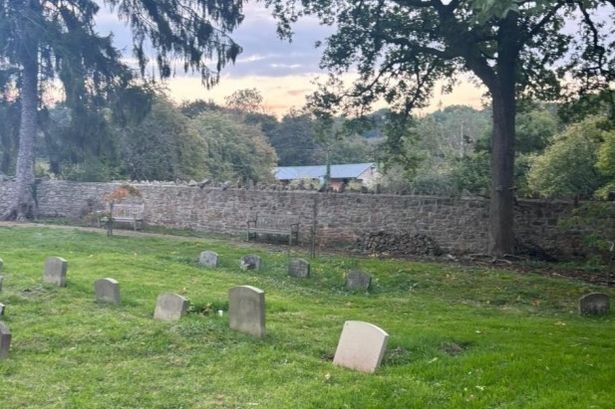
Plans to convert rural stables into a family home have sparked significant concerns regarding their potential impact on a historic Quaker burial ground in Alveston, located on Greenhill Lane. The burial site, in continuous use since the 17th century, is cherished for its serene countryside setting, which is central to Quaker traditions.
Recently, a family received approval from South Gloucestershire Council to transform the stables next to the burial ground into a three-bedroom residence. The decision by the development management committee, which passed with a vote of six to three, has raised alarm among local residents and Quaker representatives about the implications for the burial ground, deemed “nationally important.”
Local Quaker leader Paul Whitehouse expressed his concerns, emphasizing the significance of silence during funerals within Quaker practices. He stated, “What’s important to remember is that Quakers worship principally in silence, and when a funeral takes place, the silence that we have hitherto enjoyed in that burial ground—save perhaps for the birdsong—will no longer be possible.” Whitehouse underscored that maintaining the tranquil environment is crucial for the community’s ability to honor their deceased.
During the council meeting, Conservative Councillor Matthew Riddle, representing the Severn Vale ward, highlighted the unique historical significance of the burial ground. “It’s not only one of the very few Quaker burial grounds still in use, but also with a very long local history spanning hundreds of years and set in a wonderful, quiet, rural environment. It’s a pure gem for many reasons and an important part of our local heritage,” Riddle said.
The proposed plans do not involve constructing new buildings; rather, they focus solely on converting the existing stables into a family home. The family currently cares for three horses on the property, which they aim to keep close to their children for therapeutic benefits. To address concerns about privacy and noise, the family plans to plant three hornbeam trees along the boundary separating their home from the burial ground.
Representing the family, planning agent Will Collins read a letter from applicants Holly and Alan Mitchell, who articulated their intentions. The letter stated, “We’re a family with disabled children, and our intention to convert the stables is driven by a genuine need to provide a supportive and nurturing environment for our children who have emotional, social, and mental health needs. Living in close proximity to the horses on site is particularly important to us, as their presence is incredibly nurturing and therapeutic for our children.”
The Mitchells expressed their commitment to working with the community to ensure their plans address the needs and concerns of their neighbors. As discussions continue, the future of the stables and their conversion remains a focal point of contention between local families and the Quaker community.
As the situation develops, the community is urged to remain engaged and informed, with local news outlets providing updates on further proceedings and discussions.

Welsh Ambulance Service Targets Frequent 999 Callers for Support

Welsh Ambulance Service Targets Frequent 999 Callers for Better Care

Bremen’s Marble Imaging Secures €5.3M for Revolutionary Satellites

WNBA and Players Association Secure 40-Day Extension on CBA Talks

Three Vacant West Midlands Homes Auctioned for £50,000 Each

Four Long-Standing Suspects Remain at Large on West Midlands List

Taste Test Reveals Best Mince Pies from Major UK Supermarkets

Baba Vanga Predicts Alien Contact and Global Upheaval in 2026

Astronomers Uncover the Pulsating Mystery of 3I/ATLAS

Iconic 90s TV Show House Hits Market for £1.1 Million

Milk Bank Urges Mothers to Donate for Premature Babies’ Health

Alessia Russo Signs Long-Term Deal with Arsenal Ahead of WSL Season

Shoppers Flock to Discounted Neck Pillow on Amazon for Travel Comfort

Museums Body Critiques EHRC Proposals on Gender Facilities

Trump Visits Europe: Business, Politics, or Leisure?

Japanese Teen Sorato Shimizu Breaks U18 100m Record in 10 Seconds

Couple Shares Inspiring Love Story Defying Height Stereotypes

Anglian Water Raises Concerns Over Proposed AI Data Centre
-
 Entertainment2 months ago
Iconic 90s TV Show House Hits Market for £1.1 Million
-
 Lifestyle4 months ago
Milk Bank Urges Mothers to Donate for Premature Babies’ Health
-
 Sports3 months ago
Alessia Russo Signs Long-Term Deal with Arsenal Ahead of WSL Season
-
 Lifestyle4 months ago
Shoppers Flock to Discounted Neck Pillow on Amazon for Travel Comfort
-
 Politics4 months ago
Museums Body Critiques EHRC Proposals on Gender Facilities
-
 Business4 months ago
Trump Visits Europe: Business, Politics, or Leisure?
-
 Lifestyle4 months ago
Japanese Teen Sorato Shimizu Breaks U18 100m Record in 10 Seconds
-
 Politics4 months ago
Couple Shares Inspiring Love Story Defying Height Stereotypes
-
 World4 months ago
Anglian Water Raises Concerns Over Proposed AI Data Centre
-

 Sports4 months ago
Bournemouth Dominates Everton with 3-0 Victory in Premier League Summer Series
-

 World4 months ago
Wreckage of Missing Russian Passenger Plane Discovered in Flames
-

 Lifestyle4 months ago
Shoppers Rave About Roman’s £42 Midi Dress, Calling It ‘Elegant’