
World
Putin Faces Heavy Casualties in Bid to Capture Entire Donbas

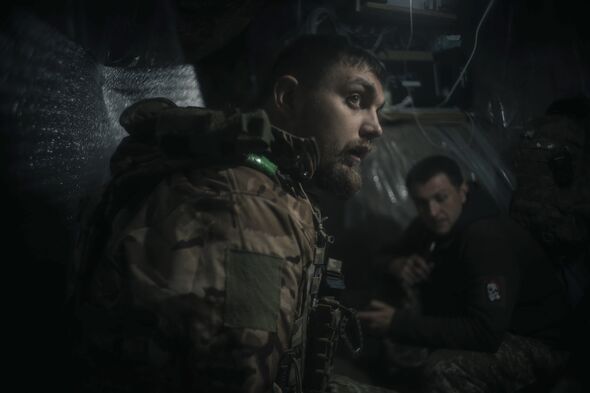
Russian President Vladimir Putin may need to sacrifice between 500,000 and one million soldiers to fully seize the Donbas region of Ukraine, according to military analyst Professor Michael Clarke. This figure comes in the wake of over one million casualties—comprising both deaths and serious injuries—suffered by Russian forces since the onset of the conflict in February 2022.
As it stands, Russia occupies approximately 20 percent of Ukraine, with the Donbas now serving as the focal point of Putin’s military objectives. Professor Clarke noted that Russian forces currently control at least 90 percent of the resource-rich Donbas, which includes the Donetsk and Luhansk regions. The Institute for the Study of War estimated in October 2025 that Ukraine retains around 6,500 square kilometers of territory in Donetsk, accounting for about a quarter of the region. This area includes strategically important “fortress cities” such as Kostiantynivka, Kramatorsk, Druzhkivka, and Sloviansk.
The ongoing conflict has exacted a heavy toll on Russian troops, particularly in their attempts to gain control over the city of Pokrovsk. Clarke elaborated on the situation during an interview with Sky News, indicating that should Russia continue its current offensive strategy, the military could face substantial additional casualties. “If the Russians continue this grinding offensive and if they are prepared to take another half a million or a million casualties by, let’s say, September next year, then they probably get the Donbas,” he stated.
By “casualties,” Clarke emphasized that this includes not only deaths but also life-changing injuries that remove soldiers from active duty. He estimated that Russian casualties have surpassed one million, while Ukrainian losses are believed to be between 300,000 and 400,000.
Control Dynamics in Eastern Ukraine
Russian forces have also managed to secure certain pockets of territory along the Ukrainian border, particularly in the Sumy and Kharkiv regions. Following advances from Luhansk, Moscow has captured portions of Kharkiv, as well as minor territories in the southern Mykolaiv and Dnipropetrovsk regions, which are adjacent to Donetsk.
Despite the grim outlook for Russian forces, there are positive developments for Ukraine. Clarke pointed out that the war has reached a stalemate in some respects while remaining dynamic in others. “The Ukrainians are doing well in the Black Sea; they are doing quite well economically, and they can probably get through this winter,” he explained.
He noted that Ukraine’s resilience is bolstered by increased independent energy generation capabilities, as they successfully integrate into the west European energy grid. This adaptability may allow Ukraine to weather the challenging winter months ahead.
Clarke further observed that winter conditions traditionally favor defensive strategies over offensive operations. “If you are on the defensive, you are dug in wherever you are and you don’t have to move; you just have to hold your ground,” he said. In contrast, attackers must advance and establish new positions, making it more difficult to maintain momentum in harsh winter conditions.
The conflict continues to evolve, with both sides facing numerous challenges as the war drags on. The human cost remains staggering, and the future of the Donbas hangs in a precarious balance. As the situation develops, the international community watches closely, aware of the profound implications for regional stability and security.

Welsh Ambulance Service Targets Frequent 999 Callers for Support

Welsh Ambulance Service Targets Frequent 999 Callers for Better Care

Bremen’s Marble Imaging Secures €5.3M for Revolutionary Satellites

WNBA and Players Association Secure 40-Day Extension on CBA Talks

Three Vacant West Midlands Homes Auctioned for £50,000 Each

Four Long-Standing Suspects Remain at Large on West Midlands List

Taste Test Reveals Best Mince Pies from Major UK Supermarkets

Baba Vanga Predicts Alien Contact and Global Upheaval in 2026

Astronomers Uncover the Pulsating Mystery of 3I/ATLAS

Iconic 90s TV Show House Hits Market for £1.1 Million

Milk Bank Urges Mothers to Donate for Premature Babies’ Health

Alessia Russo Signs Long-Term Deal with Arsenal Ahead of WSL Season

Shoppers Flock to Discounted Neck Pillow on Amazon for Travel Comfort

Museums Body Critiques EHRC Proposals on Gender Facilities

Trump Visits Europe: Business, Politics, or Leisure?

Japanese Teen Sorato Shimizu Breaks U18 100m Record in 10 Seconds

Couple Shares Inspiring Love Story Defying Height Stereotypes

Anglian Water Raises Concerns Over Proposed AI Data Centre
-
 Entertainment2 months ago
Iconic 90s TV Show House Hits Market for £1.1 Million
-
 Lifestyle4 months ago
Milk Bank Urges Mothers to Donate for Premature Babies’ Health
-
 Sports3 months ago
Alessia Russo Signs Long-Term Deal with Arsenal Ahead of WSL Season
-
 Lifestyle4 months ago
Shoppers Flock to Discounted Neck Pillow on Amazon for Travel Comfort
-
 Politics4 months ago
Museums Body Critiques EHRC Proposals on Gender Facilities
-
 Business4 months ago
Trump Visits Europe: Business, Politics, or Leisure?
-
 Lifestyle4 months ago
Japanese Teen Sorato Shimizu Breaks U18 100m Record in 10 Seconds
-
 Politics4 months ago
Couple Shares Inspiring Love Story Defying Height Stereotypes
-
 World4 months ago
Anglian Water Raises Concerns Over Proposed AI Data Centre
-

 Sports4 months ago
Bournemouth Dominates Everton with 3-0 Victory in Premier League Summer Series
-

 World4 months ago
Wreckage of Missing Russian Passenger Plane Discovered in Flames
-

 Lifestyle4 months ago
Shoppers Rave About Roman’s £42 Midi Dress, Calling It ‘Elegant’