
Top Stories
Councillors Examine Wrexham Markets’ Challenges and Future

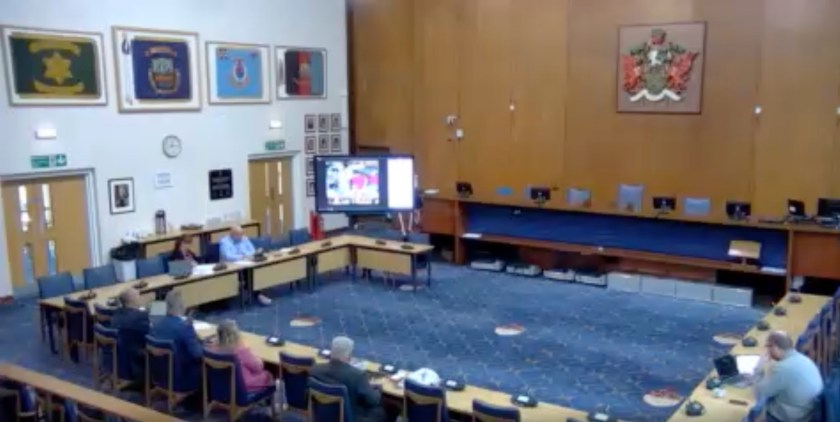
Councillors in Wrexham have engaged in a comprehensive discussion about the challenges facing the city’s historic markets, particularly the Butchers’ Market and General Market. During a session of the Employment, Business and Investment Scrutiny Committee, various factors were scrutinized, including potential design flaws, economic shifts, competition from online retailers like Amazon, and changing public shopping habits. This review marks the first assessment since the significant refurbishment of the markets, which reopened in November 2023, following a multi-million-pound restoration funded by the National Lottery Heritage Fund and the Welsh Government.
The meeting was led by committee chair Cllr Bill Baldwin, who invited Cllr Nigel Williams, the Lead Member for the Economy, to present the Wrexham Markets Progress Update report. Cllr Williams described the refurbishment as a “complex project years in the making.” He pointed out that both the Butchers’ Market and the General Market now feature more rentable units than before, with current occupancy rates reported at 70 percent for the Butchers’ Market and 64 percent for the General Market, compared to 21 percent and 53 percent respectively before closure.
Despite the project being hailed as a significant achievement, the discussion quickly turned critical as councillors raised concerns about unresolved issues. Cllr Andy Gallanders highlighted complaints from traders regarding the market’s flooring, citing trip hazards and unfinished surfaces that could pose safety risks. “The floor looks dirty. It looks unfinished. Parts are concrete, some parts slate, some stone. To be honest, it brings down the quality of the rest of the workmanship,” he stated.
In response, a senior council officer defended the project, acknowledging ongoing work and emphasizing adherence to conservation standards, which dictated the preservation of the historic flooring. Despite this, Cllr Gallanders reiterated his concerns, insisting that the appearance of the floor undermines the substantial investment made in the restoration.
As discussions continued, councillors examined the lack of permanent tenants in the Butchers’ Market, despite an allocated budget of £10,000 to £20,000 for butchery equipment. Cllr Gallanders expressed frustration over the failure to attract tenants, questioning the suitability of the installed equipment for butchers. “Clearly the biggest issue for the public is the Butchers Market – why have we installed equipment that isn’t fit for butchery?” he asked.
Cllr Williams defended the council’s approach, explaining that the layout allows potential tenants the flexibility to design their stalls according to their business needs. He acknowledged the changing landscape of the butchery sector, noting that traditional butchers face significant challenges in a market increasingly dominated by supermarkets and online shopping. “The days of having multiple butchers dotted around town, it’s not that anymore,” he said.
The committee also discussed the declining appeal of the Monday Market, which has struggled to regain its former popularity. Cllr Williams noted that the council has extended free trading opportunities through 2025 to encourage new traders, yet interest remains low. He expressed a desire for community support to revitalize the market, urging residents to engage with local vendors.
Cllr Gallanders suggested re-evaluating the market’s operation days, proposing a shift to weekends, but acknowledged the potential risks of alienating existing traders. Cllr Baldwin emphasized the impact of online shopping and market competition on foot traffic, while Cllr Dana Davies challenged the notion that the public is solely to blame for the market’s struggles.
Amidst the back-and-forth, the meeting concluded with recommendations for further actions, including a call for detailed financial reports on the markets and strategies to lower upfront costs for new traders. The committee also acknowledged the absence of direct trader input during the meeting and committed to inviting them to future discussions.
As the council continues to navigate the complexities of revitalizing Wrexham’s markets, the emphasis remains on fostering community support and addressing operational challenges to ensure the longevity of these historic assets. The future of Wrexham’s markets will depend not only on council initiatives but also on the engagement and participation of local residents and traders alike.

Cattle Showcases Thrive at RUAS Winter Fair 2023

UK and US Strike Zero Tariff Agreement on Pharmaceuticals

Maya Jama Stuns in Strapless Ensemble at Qatar Grand Prix

Russia and Saudi Arabia Launch Visa-Free Travel Agreement

ISOLDE Facility Marks 10 Years of Advancements in Nuclear Research

Voters Demand Resignation of Chancellor Rachel Reeves Over Tax Hikes

Shoppers Save 30% on Marks & Spencer’s Viral Velvet Dress

Health Campaigners Urge End to Smoking Exemption for Lounges

Charity Shop Surprise: Woman Finds Joggers Worth £2,000 for £8

Iconic 90s TV Show House Hits Market for £1.1 Million

Milk Bank Urges Mothers to Donate for Premature Babies’ Health

Alessia Russo Signs Long-Term Deal with Arsenal Ahead of WSL Season

Shoppers Flock to Discounted Neck Pillow on Amazon for Travel Comfort

Museums Body Critiques EHRC Proposals on Gender Facilities

Trump Visits Europe: Business, Politics, or Leisure?

Japanese Teen Sorato Shimizu Breaks U18 100m Record in 10 Seconds

Couple Shares Inspiring Love Story Defying Height Stereotypes

Anglian Water Raises Concerns Over Proposed AI Data Centre
-
 Entertainment2 months ago
Iconic 90s TV Show House Hits Market for £1.1 Million
-
 Lifestyle4 months ago
Milk Bank Urges Mothers to Donate for Premature Babies’ Health
-
 Sports3 months ago
Alessia Russo Signs Long-Term Deal with Arsenal Ahead of WSL Season
-
 Lifestyle4 months ago
Shoppers Flock to Discounted Neck Pillow on Amazon for Travel Comfort
-
 Politics4 months ago
Museums Body Critiques EHRC Proposals on Gender Facilities
-
 Business4 months ago
Trump Visits Europe: Business, Politics, or Leisure?
-
 Lifestyle4 months ago
Japanese Teen Sorato Shimizu Breaks U18 100m Record in 10 Seconds
-
 Politics4 months ago
Couple Shares Inspiring Love Story Defying Height Stereotypes
-
 World4 months ago
Anglian Water Raises Concerns Over Proposed AI Data Centre
-

 Sports4 months ago
Bournemouth Dominates Everton with 3-0 Victory in Premier League Summer Series
-

 World4 months ago
Wreckage of Missing Russian Passenger Plane Discovered in Flames
-

 Lifestyle4 months ago
Shoppers Rave About Roman’s £42 Midi Dress, Calling It ‘Elegant’