
Politics
Israel’s Knesset Opens Winter Session Amid Political Turmoil

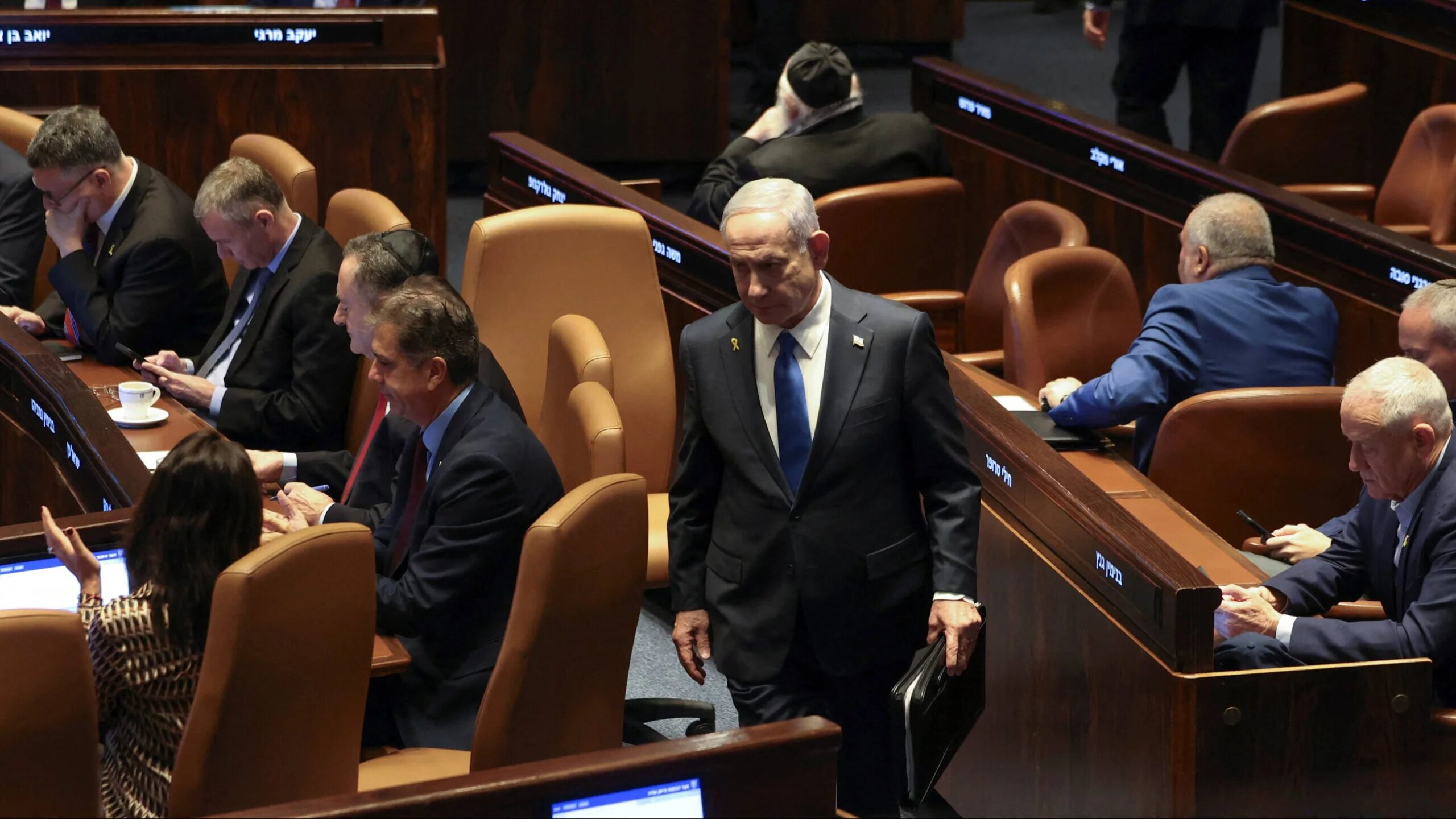
Israel’s parliament, the Knesset, commenced its winter session on Monday, facing significant political tensions. This session is particularly crucial as it is the last before the next general elections, currently scheduled for October 2026, though that date may still change. Coalition lawmakers are preparing to challenge the Supreme Court and the judiciary, provoking strong objections from opposition members.
During a debate in the Knesset, opposition leader Yair Lapid, head of the centrist Yesh Atid party, described the current political climate as “the most serious political crisis in its history.” He asserted that “everything happens when the current government has lost control.” As the session unfolds, one of the pressing questions will be whether to proceed with the scheduled elections or to call for early votes. Prime Minister Benjamin Netanyahu has yet to make a decision on this matter, according to the Israeli news outlet TheMarker.
Contentious Bills on the Agenda
The winter session is expected to feature several contentious bills that could have far-reaching implications. Among these proposals are two bills aimed at applying Israeli sovereignty over the occupied West Bank. One bill, introduced by lawmaker Limor Son Har-Melech from the Jewish Power party, asserts that “the State of Israel will apply its laws and sovereignty to the West Bank” to establish these areas as an integral part of Israel. Another proposal, from opposition leader Avigdor Lieberman of the Yisrael Beitenu party, specifically seeks to apply sovereignty over the Israeli settlement of Ma’ale Adumim, located near Jerusalem. Lieberman’s bill states that Ma’ale Adumim has historically been a part of the Land of Israel and seeks to affirm its status as part of the state.
Another significant proposal is one that would impose the death penalty on individuals convicted of terrorism. This measure has garnered attention due to statements from Itamar Ben Gvir, the minister overseeing prison affairs, who has been a longtime advocate for such a policy. Ben Gvir’s bill, which aims to expedite the execution of Palestinian prisoners, faced opposition from Netanyahu last month but was reiterated by the minister this past Saturday when he demanded that the death penalty law for terrorists be implemented “now.”
Human rights organizations, including the Commission of Detainees and Ex-Detainees Affairs and the Palestinian Prisoners’ Club, have condemned the proposal as an “unprecedented act of savagery.”
Conscription, Religious Laws, and Judicial Changes
Another key issue on the Knesset’s agenda is the ultra-Orthodox conscription bill, which has sparked extensive public debate. This bill aims to exempt ultra-Orthodox men from mandatory military service, a demand central to religious parties. The bill’s failure to pass earlier in the year led to the withdrawal of ultra-Orthodox factions from the coalition, contributing to ongoing political instability. To facilitate the bill’s passage, Netanyahu replaced the chair of the parliament’s Foreign Affairs and Defence Committee, Yuli Edelstein, with his ally Boaz Bismuth. According to Ynet, Bismuth has submitted a draft agreement outlining enlistment terms between the government and ultra-Orthodox representatives.
Netanyahu’s government is also considering a bill aimed at preventing “anti-religious coercion.” Proposed by Likud lawmaker Galit Distel Atbaryan, this measure would mandate public institutions to install mezuzot, religious scrolls affixed to doorframes, and require judges to pass exams in Jewish law. Critics, including the parliament’s legal counsel, have warned that this bill could undermine freedom of religion and democratic values.
Additionally, a significant change proposed for the role of Gali Baharav-Miara, the attorney general, is expected to be advanced. This move, which seeks to split the attorney general’s responsibilities, aligns with the right-wing coalition’s broader agenda to diminish judicial authority. Prior to the current conflict in Gaza, similar initiatives had already incited mass protests, with hundreds of thousands rallying against what many viewed as a “judicial coup.”
As the Knesset’s winter session unfolds, the political landscape in Israel remains volatile, with the potential for legislative changes that may have lasting impacts on governance and society.

Marie Helvin Discusses Dating Challenges and Body Confidence at 73

Danny Morrison Reflects on United Ireland, Gerry Adams, and Stormont’s Future

Southampton University and Siemens Collaborate to Advance MEMS Technology

Barcelona’s Deco Highlights Rashford’s Burden at Manchester United

Rolls-Royce Shares Surge 77% in 2025: What’s Next for Investors?

Welsh Ambulance Service Targets Frequent 999 Callers for Support

Welsh Ambulance Service Targets Frequent 999 Callers for Better Care

Bremen’s Marble Imaging Secures €5.3M for Revolutionary Satellites

WNBA and Players Association Secure 40-Day Extension on CBA Talks

Iconic 90s TV Show House Hits Market for £1.1 Million

Milk Bank Urges Mothers to Donate for Premature Babies’ Health

Alessia Russo Signs Long-Term Deal with Arsenal Ahead of WSL Season

Shoppers Flock to Discounted Neck Pillow on Amazon for Travel Comfort

Museums Body Critiques EHRC Proposals on Gender Facilities

Trump Visits Europe: Business, Politics, or Leisure?

Japanese Teen Sorato Shimizu Breaks U18 100m Record in 10 Seconds

Couple Shares Inspiring Love Story Defying Height Stereotypes

Anglian Water Raises Concerns Over Proposed AI Data Centre
-
 Entertainment2 months ago
Iconic 90s TV Show House Hits Market for £1.1 Million
-
 Lifestyle4 months ago
Milk Bank Urges Mothers to Donate for Premature Babies’ Health
-
 Sports3 months ago
Alessia Russo Signs Long-Term Deal with Arsenal Ahead of WSL Season
-
 Lifestyle4 months ago
Shoppers Flock to Discounted Neck Pillow on Amazon for Travel Comfort
-
 Politics4 months ago
Museums Body Critiques EHRC Proposals on Gender Facilities
-
 Business4 months ago
Trump Visits Europe: Business, Politics, or Leisure?
-
 Lifestyle4 months ago
Japanese Teen Sorato Shimizu Breaks U18 100m Record in 10 Seconds
-
 Politics4 months ago
Couple Shares Inspiring Love Story Defying Height Stereotypes
-
 World4 months ago
Anglian Water Raises Concerns Over Proposed AI Data Centre
-

 Sports4 months ago
Bournemouth Dominates Everton with 3-0 Victory in Premier League Summer Series
-

 World4 months ago
Wreckage of Missing Russian Passenger Plane Discovered in Flames
-

 Lifestyle4 months ago
Shoppers Rave About Roman’s £42 Midi Dress, Calling It ‘Elegant’