
World
Ghost Town Granadilla: A Tragic Legacy of Forced Eviction

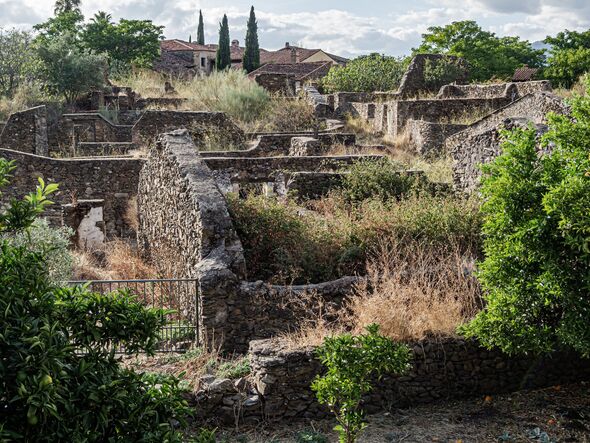
Granadilla, a remote town in the hills of Extremadura, western Spain, stands frozen in time, a haunting reminder of a past marked by forced evacuation. Almost 70 years ago, the community was uprooted due to a government blunder under the regime of Fascist dictator Francisco Franco. Founded in the 9th century by the Moors, Granadilla was known as Granada until it was renamed “little Granada” after the Christian reconquest, and it became a significant defensive outpost along the historic Vía de la Plata trade route.
In 1955, the Spanish government ordered the evacuation of Granadilla’s residents, claiming that the construction of the Gabriel y Galán Reservoir would submerge the town. Families were compelled to abandon their homes and relocate to nearby villages. Between 1959 and 1969, approximately 1,000 residents were evicted, with many receiving no compensation until 1973. Ironically, the water levels never reached Granadilla, which remained perched safely above the floodplain.
As the waters around Granadilla rose for two years, the town briefly became an island, but it was never submerged. By the time officials recognized the error, the evacuation had been completed. The government refused to allow the former inhabitants to return, sealing the town’s fate. Following the last departures in the 1960s, Granadilla fell into disrepair.
Restoration Efforts and Ongoing Hope
In 1980, Granadilla was designated a Historic-Artistic Site, prompting efforts for restoration. The Spanish government initiated a youth program in the 1980s, enabling students and volunteers to contribute to the town’s rebuilding. Despite these efforts, Granadilla remains uninhabited today.
Tourists now explore the abandoned streets, wander through the dilapidated houses, and climb the castle tower for stunning views of the surrounding landscape. Former residents and their descendants gather annually to remember their lost village, keeping the spirit of Granadilla alive. Many still harbor hopes of returning to their ancestral home.
Eugenio Jimenéz, president of the Sons of Granadilla association, has campaigned tirelessly for the return of residents. He describes the situation as akin to a “Greek tragedy,” stating, “the living were pushed out and the dead were denied the right to sleep in their village forever.” Jimenéz reflects on the injustices faced during the Franco regime, lamenting, “They kicked us out, claiming the dam would flood the town, which was impossible because the town is higher than the dam.”
Despite the transition to democracy, Jimenéz expresses frustration over the lack of response from the government regarding Granadilla’s recovery. He hopes to be buried in the town, asserting, “The only way I’ll be able to return to my village would be when I pass away. In the place where I grew up, I’ll sleep forever.”
Granadilla remains a poignant symbol of loss and resilience, capturing the struggles of its former residents and their enduring connection to a place that, despite its abandonment, continues to evoke powerful memories and aspirations for the future.

Marie Helvin Discusses Dating Challenges and Body Confidence at 73

Danny Morrison Reflects on United Ireland, Gerry Adams, and Stormont’s Future

Southampton University and Siemens Collaborate to Advance MEMS Technology

Barcelona’s Deco Highlights Rashford’s Burden at Manchester United

Rolls-Royce Shares Surge 77% in 2025: What’s Next for Investors?

Welsh Ambulance Service Targets Frequent 999 Callers for Support

Welsh Ambulance Service Targets Frequent 999 Callers for Better Care

Bremen’s Marble Imaging Secures €5.3M for Revolutionary Satellites

WNBA and Players Association Secure 40-Day Extension on CBA Talks

Iconic 90s TV Show House Hits Market for £1.1 Million

Milk Bank Urges Mothers to Donate for Premature Babies’ Health

Alessia Russo Signs Long-Term Deal with Arsenal Ahead of WSL Season

Shoppers Flock to Discounted Neck Pillow on Amazon for Travel Comfort

Museums Body Critiques EHRC Proposals on Gender Facilities

Trump Visits Europe: Business, Politics, or Leisure?

Japanese Teen Sorato Shimizu Breaks U18 100m Record in 10 Seconds

Couple Shares Inspiring Love Story Defying Height Stereotypes

Anglian Water Raises Concerns Over Proposed AI Data Centre
-
 Entertainment2 months ago
Iconic 90s TV Show House Hits Market for £1.1 Million
-
 Lifestyle4 months ago
Milk Bank Urges Mothers to Donate for Premature Babies’ Health
-
 Sports3 months ago
Alessia Russo Signs Long-Term Deal with Arsenal Ahead of WSL Season
-
 Lifestyle4 months ago
Shoppers Flock to Discounted Neck Pillow on Amazon for Travel Comfort
-
 Politics4 months ago
Museums Body Critiques EHRC Proposals on Gender Facilities
-
 Business4 months ago
Trump Visits Europe: Business, Politics, or Leisure?
-
 Lifestyle4 months ago
Japanese Teen Sorato Shimizu Breaks U18 100m Record in 10 Seconds
-
 Politics4 months ago
Couple Shares Inspiring Love Story Defying Height Stereotypes
-
 World4 months ago
Anglian Water Raises Concerns Over Proposed AI Data Centre
-

 Sports4 months ago
Bournemouth Dominates Everton with 3-0 Victory in Premier League Summer Series
-
 World4 months ago
Wreckage of Missing Russian Passenger Plane Discovered in Flames
-

 Lifestyle4 months ago
Shoppers Rave About Roman’s £42 Midi Dress, Calling It ‘Elegant’