
Science
Harvard Scientist Proposes Alien Probe Theory for New Asteroid

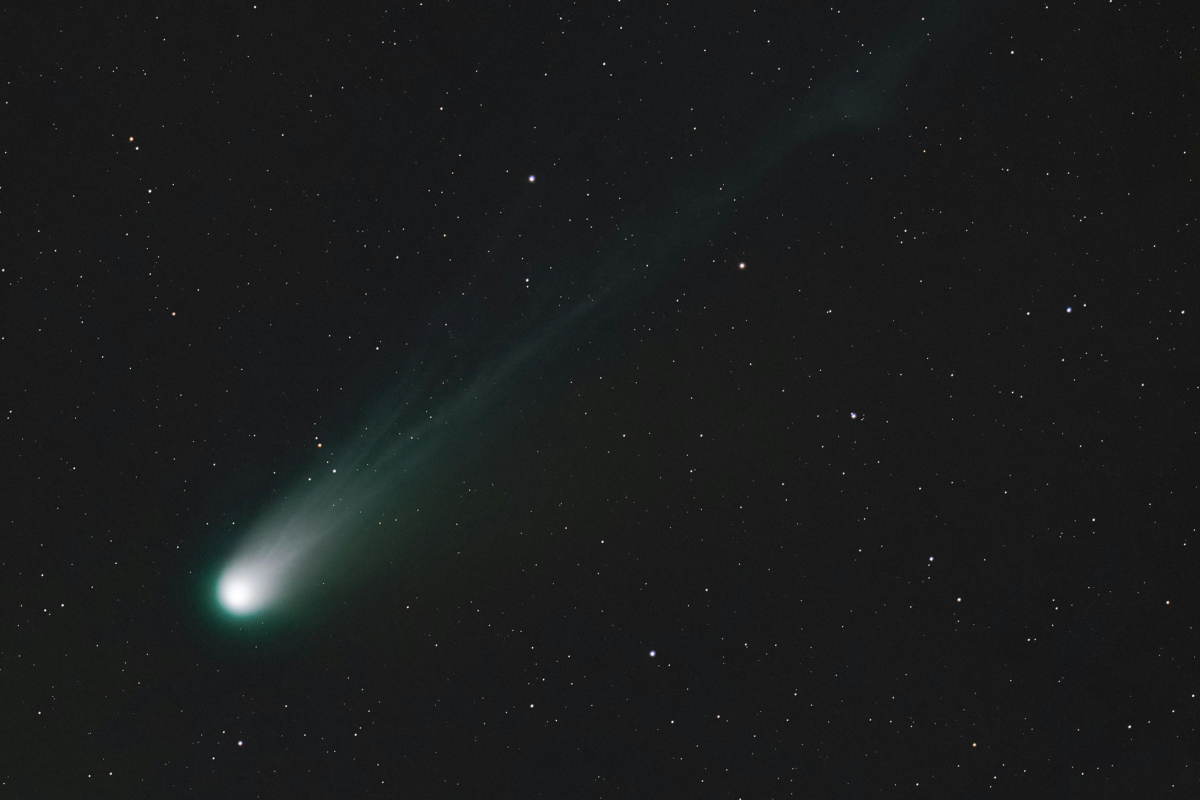
A newly discovered asteroid, designated 2025 PN7, has captured significant attention from both scientists and the public. This “quasi-moon,” temporarily captured by Earth’s gravity, raises intriguing questions about the potential for extraterrestrial life. Notably, renowned Harvard astrophysicist Avi Loeb posits that the asteroid could be an artificial probe sent by an advanced civilization.
Loeb suggests that humanity’s recorded history, spanning merely 8,000 years, is insignificant compared to the 13.8 billion years that the Milky Way has existed. He argues that intelligent life could have evolved long before humans emerged, leading to the possibility that advanced civilizations are observing us from a distance. This hypothesis positions 2025 PN7 as a prime candidate for a monitoring device placed in our vicinity.
Discovery and Characteristics of 2025 PN7
Discovered by the Pan-STARRS observatory in Hawaii on August 29, 2025, 2025 PN7 has been orbiting Earth for approximately 60 years and is projected to remain for another 60 years. Astrophysicists describe the asteroid as being “roughly the size of a small office building,” though it is considered too small to influence Earth’s tides or other significant effects. While the consensus among scientists is that it is merely a temporary asteroid, Loeb believes thorough investigation is needed to determine its true nature.
The discovery of 2025 PN7 coincides with another significant event in our Solar System. NASA is currently tracking Comet 3I/ATLAS, which is the third known object to arrive from interstellar space. Discovered on July 1, 2025, by the ATLAS survey in Chile, this comet is expected to pass Earth at a distance of approximately 170 million miles around October 30, 2025. It follows the notable discoveries of ‘Oumuamua in 2017 and 2I/Borisov in 2019.
Implications of Interstellar Objects
The arrival of interstellar visitors, including both 2025 PN7 and Comet 3I/ATLAS, supports Loeb’s argument about the frequency of such objects traversing our Solar System. He posits that many interstellar entities may have crossed our path long before humans could document them, suggesting a galaxy teeming with activity.
NASA missions, including the Hubble Space Telescope and the James Webb Space Telescope, are focused on studying Comet 3I/ATLAS, while a range of other missions, such as the Perseverance and Curiosity rovers, are also tracking its trajectory. Meanwhile, Loeb continues his investigation into 2025 PN7, driven by the desire to uncover whether it is simply a natural rock or evidence that humanity is being observed by advanced civilizations.
As these discoveries unfold, the debate surrounding the existence of extraterrestrial life intensifies, inviting both excitement and skepticism within the scientific community and beyond. The implications of these findings could reshape our understanding of humanity’s place in the universe.

Cattle Showcases Thrive at RUAS Winter Fair 2023

UK and US Strike Zero Tariff Agreement on Pharmaceuticals

Maya Jama Stuns in Strapless Ensemble at Qatar Grand Prix

Russia and Saudi Arabia Launch Visa-Free Travel Agreement

ISOLDE Facility Marks 10 Years of Advancements in Nuclear Research

Voters Demand Resignation of Chancellor Rachel Reeves Over Tax Hikes

Shoppers Save 30% on Marks & Spencer’s Viral Velvet Dress

Health Campaigners Urge End to Smoking Exemption for Lounges

Charity Shop Surprise: Woman Finds Joggers Worth £2,000 for £8

Iconic 90s TV Show House Hits Market for £1.1 Million

Milk Bank Urges Mothers to Donate for Premature Babies’ Health

Alessia Russo Signs Long-Term Deal with Arsenal Ahead of WSL Season

Shoppers Flock to Discounted Neck Pillow on Amazon for Travel Comfort

Museums Body Critiques EHRC Proposals on Gender Facilities

Trump Visits Europe: Business, Politics, or Leisure?

Japanese Teen Sorato Shimizu Breaks U18 100m Record in 10 Seconds

Couple Shares Inspiring Love Story Defying Height Stereotypes

Anglian Water Raises Concerns Over Proposed AI Data Centre
-
 Entertainment2 months ago
Iconic 90s TV Show House Hits Market for £1.1 Million
-
 Lifestyle4 months ago
Milk Bank Urges Mothers to Donate for Premature Babies’ Health
-
 Sports3 months ago
Alessia Russo Signs Long-Term Deal with Arsenal Ahead of WSL Season
-
 Lifestyle4 months ago
Shoppers Flock to Discounted Neck Pillow on Amazon for Travel Comfort
-
 Politics4 months ago
Museums Body Critiques EHRC Proposals on Gender Facilities
-
 Business4 months ago
Trump Visits Europe: Business, Politics, or Leisure?
-
 Lifestyle4 months ago
Japanese Teen Sorato Shimizu Breaks U18 100m Record in 10 Seconds
-
 Politics4 months ago
Couple Shares Inspiring Love Story Defying Height Stereotypes
-
 World4 months ago
Anglian Water Raises Concerns Over Proposed AI Data Centre
-

 Sports4 months ago
Bournemouth Dominates Everton with 3-0 Victory in Premier League Summer Series
-

 World4 months ago
Wreckage of Missing Russian Passenger Plane Discovered in Flames
-

 Lifestyle4 months ago
Shoppers Rave About Roman’s £42 Midi Dress, Calling It ‘Elegant’