
Politics
American Military Officers Face Evolving Post-Liberal Landscape

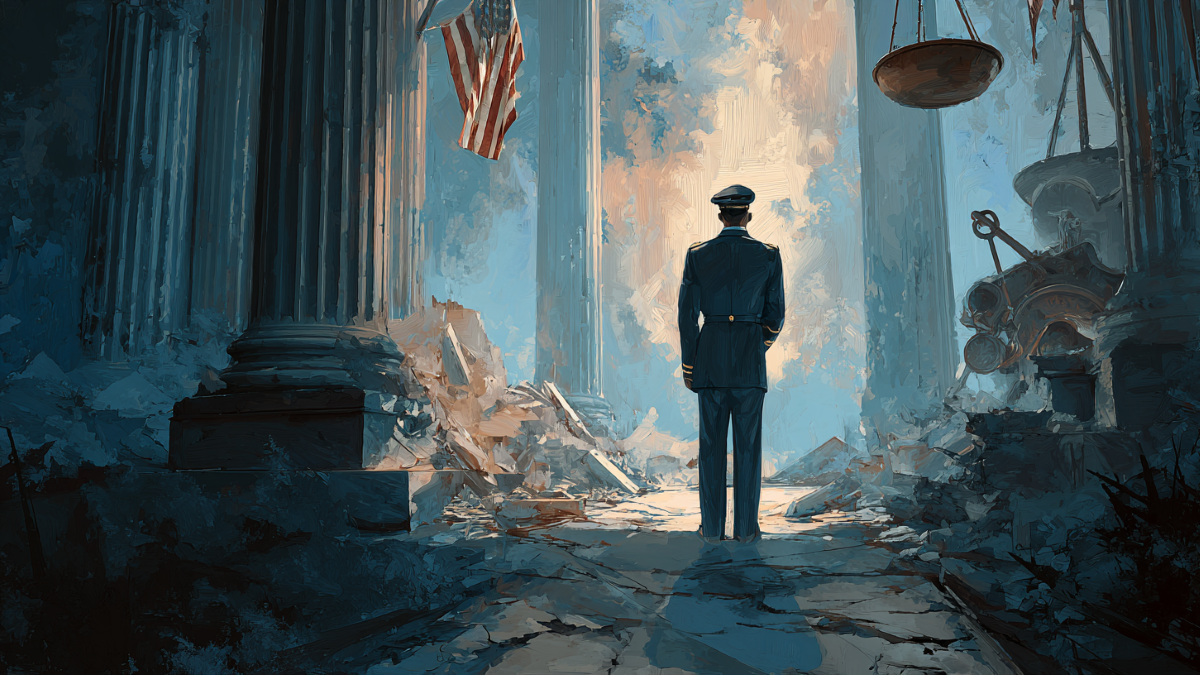
The American military profession is at a crossroads as discussions about the future of liberalism intensify. In various intellectual circles, ranging from academia to government, there is a growing debate on what comes after liberalism. However, within military ranks, this critical discourse is often overlooked, raising questions about how the military might adapt to a potential post-liberal political order.
Historically, the military has drawn its legitimacy from the civic order it serves. As noted by the political theorist Otto Hintze, military organization reflects the state’s political structure. This means that if liberalism weakens, the military will inevitably redefine its norms and professionalism in light of whatever replaces it.
The framework established by Samuel P. Huntington in his seminal work, The Soldier and the State, articulated a model of military professionalism based on expertise, responsibility, and corporateness. Huntington characterized the military officer as a neutral expert, skilled in violence management and insulated from partisan politics. Yet, his theories were rooted in the context of a robust liberal democracy during the Cold War, a time when liberal institutions seemed both stable and inevitable.
As James Burk and others have highlighted, the notion of military professionalism is dynamic, influenced by the prevailing political culture. The correlation between military conduct and civil society suggests that if liberalism falters, so too will the traditional concepts of military professionalism.
Challenges to Liberalism
Increasingly, citizens perceive their governments as distant and unresponsive, leading to a rise in populism and political unrest. This crisis of legitimacy is exacerbated by growing inequalities and the failures of globalized markets. The very fabric of liberal society, which promises individual rights and freedoms, is under strain, giving rise to skepticism about the foundational principles of liberalism itself.
Moreover, the current military leadership often adheres to Huntingtonian ideals, yet many critiques suggest that these norms are becoming increasingly hollow. Critics argue that officers may hide behind outdated notions of neutrality while the environment surrounding them becomes ever more politicized.
The implications of this shift are profound. If liberal norms erode, the military may find itself adapting to a new set of expectations and responsibilities, which could include a reconfiguration of civil-military relations. As thinkers like Peter Feaver and Risa Brooks point out, the military’s role in governance and its relationship with civilian authorities are not static but rather contingent upon societal values and structures.
Exploring Potential Futures for the Military
As debates on the future of liberalism continue, various models of potential military professionalism emerge. These models range from a neo-Prussian alignment, where loyalty to a charismatic leader supersedes institutional allegiance, to a mercenary framework that would see military responsibilities outsourced to private entities.
The Heinleian model proposes a military that serves as a gatekeeper to citizenship, where military service becomes a prerequisite for civic rights. This would fundamentally alter the relationship between the military and the civilian population. Conversely, the patrimonial model raises concerns about the politicization of the military, where loyalty to a political faction could dictate promotions and responsibilities.
The military may also face an identity crisis if it becomes increasingly influenced by ideological frameworks that prioritize cultural conformity over established professional norms. This could lead to a military that is both insulated from society through technical jargon and deeply entangled in the prevailing political climate.
In the face of such uncertainty, military officers must remain intellectually and ethically prepared for a range of futures that could diverge significantly from the current Huntingtonian baseline. The profession must reflect on how it will navigate the complexities of this evolving landscape, acknowledging that the legacy of liberalism may not be the guiding principle for the military in the years to come.
Ultimately, the erosion of liberalism could signal a profound transformation in the American military, reshaping its values, responsibilities, and relationship with the state. As Peter Mitchell suggests, the military must engage with these possibilities proactively rather than reactively to ensure it remains a relevant and effective institution in any political order that may emerge.

Marie Helvin Discusses Dating Challenges and Body Confidence at 73

Danny Morrison Reflects on United Ireland, Gerry Adams, and Stormont’s Future

Southampton University and Siemens Collaborate to Advance MEMS Technology

Barcelona’s Deco Highlights Rashford’s Burden at Manchester United

Rolls-Royce Shares Surge 77% in 2025: What’s Next for Investors?

Welsh Ambulance Service Targets Frequent 999 Callers for Support

Welsh Ambulance Service Targets Frequent 999 Callers for Better Care

Bremen’s Marble Imaging Secures €5.3M for Revolutionary Satellites

WNBA and Players Association Secure 40-Day Extension on CBA Talks

Iconic 90s TV Show House Hits Market for £1.1 Million

Milk Bank Urges Mothers to Donate for Premature Babies’ Health

Alessia Russo Signs Long-Term Deal with Arsenal Ahead of WSL Season

Shoppers Flock to Discounted Neck Pillow on Amazon for Travel Comfort

Museums Body Critiques EHRC Proposals on Gender Facilities

Trump Visits Europe: Business, Politics, or Leisure?

Japanese Teen Sorato Shimizu Breaks U18 100m Record in 10 Seconds

Couple Shares Inspiring Love Story Defying Height Stereotypes

Anglian Water Raises Concerns Over Proposed AI Data Centre
-
 Entertainment2 months ago
Iconic 90s TV Show House Hits Market for £1.1 Million
-
 Lifestyle4 months ago
Milk Bank Urges Mothers to Donate for Premature Babies’ Health
-
 Sports3 months ago
Alessia Russo Signs Long-Term Deal with Arsenal Ahead of WSL Season
-
 Lifestyle4 months ago
Shoppers Flock to Discounted Neck Pillow on Amazon for Travel Comfort
-
 Politics4 months ago
Museums Body Critiques EHRC Proposals on Gender Facilities
-
 Business4 months ago
Trump Visits Europe: Business, Politics, or Leisure?
-
 Lifestyle4 months ago
Japanese Teen Sorato Shimizu Breaks U18 100m Record in 10 Seconds
-
 Politics4 months ago
Couple Shares Inspiring Love Story Defying Height Stereotypes
-
 World4 months ago
Anglian Water Raises Concerns Over Proposed AI Data Centre
-

 Sports4 months ago
Bournemouth Dominates Everton with 3-0 Victory in Premier League Summer Series
-

 World4 months ago
Wreckage of Missing Russian Passenger Plane Discovered in Flames
-

 Lifestyle4 months ago
Shoppers Rave About Roman’s £42 Midi Dress, Calling It ‘Elegant’