
Science
NASA Discovers Water on Interstellar Comet 3I/ATLAS

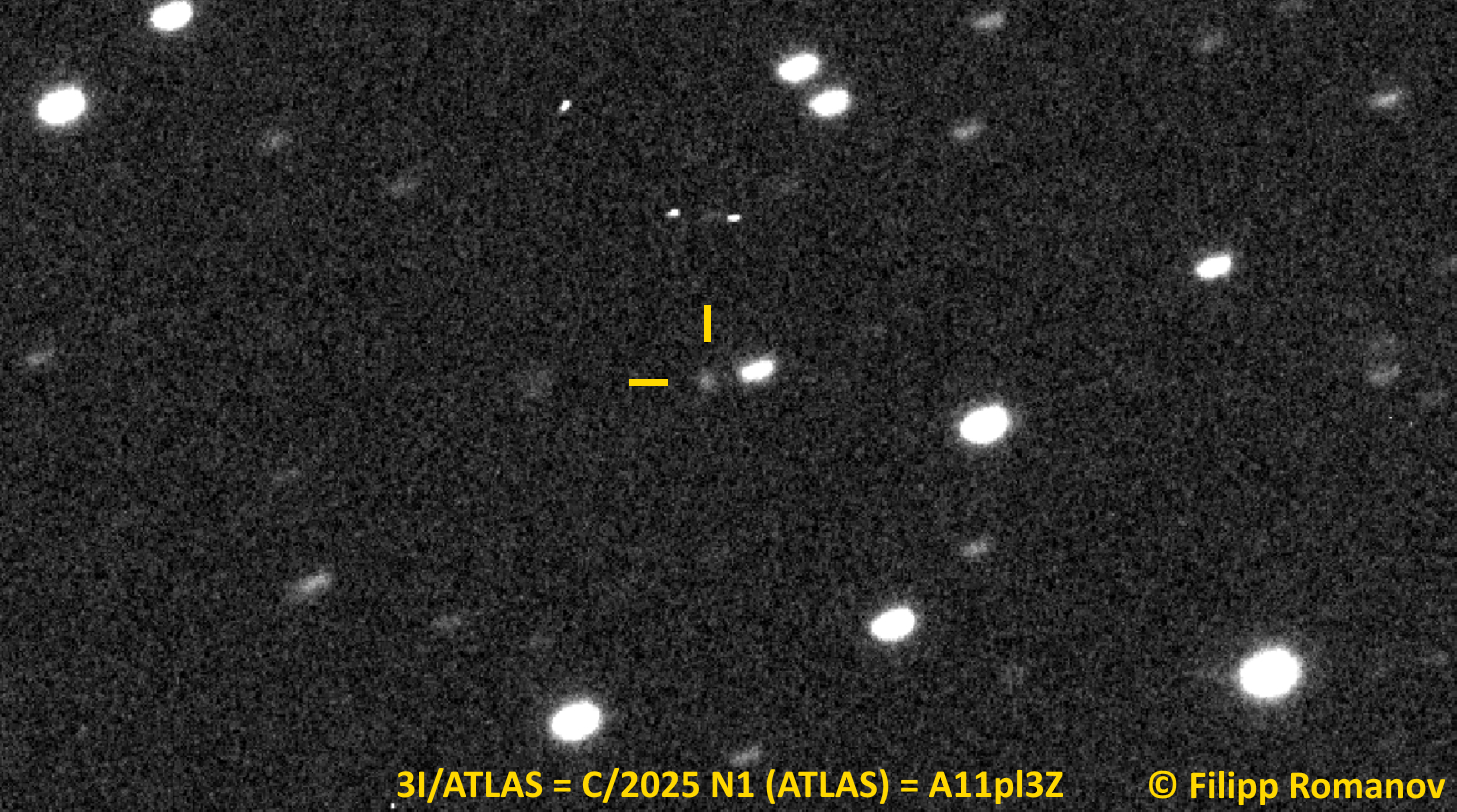
NASA has made a groundbreaking discovery by detecting the chemical signature of water on the interstellar comet 3I/ATLAS. This comet, which was discovered on July 1, 2025, is an extraordinary visitor from another star system, estimated to be at least 7 billion years old. The findings have significant implications for our understanding of comet evolution and planetary formation across the galaxy.
Unlike typical comets that orbit the Sun, 3I/ATLAS is a rare interstellar comet, one of only three identified to date. It entered our Solar System from an unknown origin and will eventually exit, never to return. This uniqueness has driven astronomers to study it intensively while it is in proximity to Earth.
A team of astronomers from Auburn University utilized NASA’s Neil Gehrels Swift Observatory to observe the comet. Their study revealed the presence of hydroxyl (OH) gas, a chemical indicator of water, by capturing a faint ultraviolet glow that ground-based observatories could not detect. This discovery allows scientists to analyze 3I/ATLAS using the same criteria applied to comets originating within our Solar System.
Unprecedented Findings and Implications
The detection of water activity at such a significant distance from the Sun—almost three times further than Earth—has surprised researchers. Typically, at such distances, comets are relatively inactive. The team measured a loss rate of about 40 kg of water per second from 3I/ATLAS, suggesting that extraordinary processes may be occurring within the comet.
One hypothesis posits that sunlight is heating small icy grains released from the comet’s nucleus, which then vaporize and contribute to the surrounding gas cloud. This phenomenon presents an opportunity to explore the chemical dynamics of cometary bodies in interstellar environments.
According to Dennis Bodewits, a professor of physics at Auburn, “When we detect water—or even its faint ultraviolet echo, OH—from an interstellar comet, we’re reading a note from another planetary system.” He emphasized that these findings indicate that the building blocks for life’s chemistry are not exclusive to our Solar System.
The lead author of the study, Zexi Xing, noted the surprising nature of interstellar comets. The previous interstellar visitors, Oumuamua and Borisov, exhibited vastly different characteristics. “Each one is rewriting what we thought we knew about how planets and comets form around stars,” Xing stated.
Future Observations and Ongoing Research
While 3I/ATLAS has faded from view, it will become observable again after mid-November 2025. This upcoming opportunity will enable astronomers to monitor the comet’s activity as it approaches the Sun.
The study of interstellar comets like 3I/ATLAS provides vital insights into the chemical processes involved in planet formation beyond our Solar System. Each of these cosmic visitors contributes unique information about the diversity of planetary systems and the potential for life elsewhere in the galaxy.
As this ancient comet prepares for its return to view, it presents a tantalizing glimpse into the complexities of cosmic chemistry. The ongoing research promises to deepen our understanding of the universe and its myriad of planetary systems.

Liverpool Activates Backup Plan as Man City Targets Antoine Semenyo

British Father Drowns in Thailand After Being Swept Away by Waves

TorroFX Set to Transform Trading Landscape with Launch on December 1, 2025

BBC Breakfast’s Sally Nugent Apologizes for News Disruption

Recognize Bowel Cancer Signs During Festive Overindulgence

Marie Helvin Discusses Dating Challenges and Body Confidence at 73

Danny Morrison Reflects on United Ireland, Gerry Adams, and Stormont’s Future

Southampton University and Siemens Collaborate to Advance MEMS Technology

Barcelona’s Deco Highlights Rashford’s Burden at Manchester United

Iconic 90s TV Show House Hits Market for £1.1 Million

Milk Bank Urges Mothers to Donate for Premature Babies’ Health

Alessia Russo Signs Long-Term Deal with Arsenal Ahead of WSL Season

Shoppers Flock to Discounted Neck Pillow on Amazon for Travel Comfort

Museums Body Critiques EHRC Proposals on Gender Facilities

Trump Visits Europe: Business, Politics, or Leisure?

Japanese Teen Sorato Shimizu Breaks U18 100m Record in 10 Seconds

Couple Shares Inspiring Love Story Defying Height Stereotypes

Anglian Water Raises Concerns Over Proposed AI Data Centre
-
 Entertainment2 months ago
Iconic 90s TV Show House Hits Market for £1.1 Million
-
 Lifestyle4 months ago
Milk Bank Urges Mothers to Donate for Premature Babies’ Health
-
 Sports3 months ago
Alessia Russo Signs Long-Term Deal with Arsenal Ahead of WSL Season
-
 Lifestyle4 months ago
Shoppers Flock to Discounted Neck Pillow on Amazon for Travel Comfort
-
 Politics4 months ago
Museums Body Critiques EHRC Proposals on Gender Facilities
-
 Business4 months ago
Trump Visits Europe: Business, Politics, or Leisure?
-
 Lifestyle4 months ago
Japanese Teen Sorato Shimizu Breaks U18 100m Record in 10 Seconds
-
 Politics4 months ago
Couple Shares Inspiring Love Story Defying Height Stereotypes
-
 World4 months ago
Anglian Water Raises Concerns Over Proposed AI Data Centre
-

 Sports4 months ago
Bournemouth Dominates Everton with 3-0 Victory in Premier League Summer Series
-

 World4 months ago
Wreckage of Missing Russian Passenger Plane Discovered in Flames
-

 Lifestyle4 months ago
Shoppers Rave About Roman’s £42 Midi Dress, Calling It ‘Elegant’