
Top Stories
Stormont Minister Criticizes Listing of Co Armagh’s ‘Big Brute’

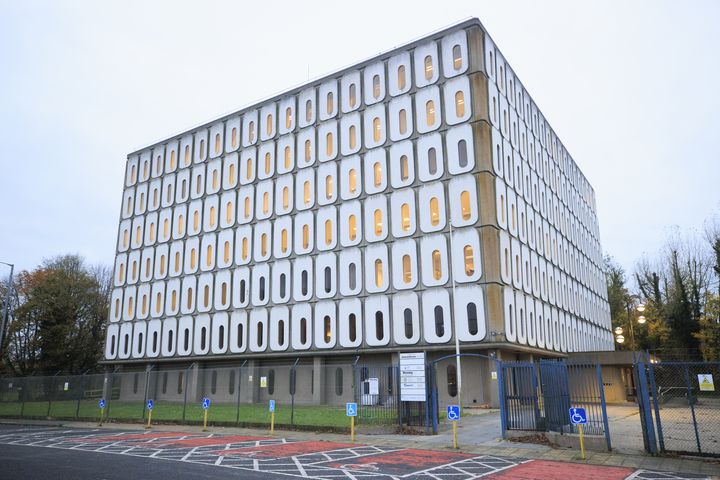
Stormont Finance Minister John O’Dowd has expressed his disappointment regarding the recent decision to list Marlborough House, a notable brutalist-style office building located in Co Armagh. The building, often referred to as the “big brute,” was constructed between 1973 and 1977 as part of a plan to develop the new city of Craigavon, named after Northern Ireland’s first prime minister, Sir James Craig.
During a session in the Assembly on Tuesday, Justin McNulty, a Member of the Legislative Assembly (MLA) from the Social Democratic and Labour Party (SDLP), criticized the decision to list the building. He described it as an “eyesore” and highlighted its negative visual impact on the area. The debate has sparked discussions around the value of preserving such structures, with opinions divided on their architectural significance versus aesthetic appeal.
The listing of Marlborough House aims to protect its unique architectural style, which is characteristic of the brutalist movement popular during the 1970s. Despite its controversial reputation, proponents argue that the building represents an important chapter in Northern Ireland’s urban development history. The local community remains divided, with some viewing the building as a relic of a bygone era, while others appreciate its distinction.
O’Dowd’s comments reflect a broader sentiment among some local leaders who are concerned about the implications of preserving structures that are seen as unattractive. He emphasized the need for a balanced approach to heritage conservation, one that considers both historical significance and contemporary urban aesthetics.
As Northern Ireland continues to navigate its complex identity, the discussion surrounding Marlborough House serves as a microcosm of larger debates about preservation, modernization, and the cultural landscape. The outcome of this listing may influence future decisions regarding similar buildings in the region.
In the coming weeks, further discussions are expected as community members and political representatives weigh the pros and cons of the building’s status. The future of Marlborough House remains uncertain, but the dialogue it has sparked will likely contribute to a deeper understanding of Northern Ireland’s architectural heritage.

Cattle Showcases Thrive at RUAS Winter Fair 2023

UK and US Strike Zero Tariff Agreement on Pharmaceuticals

Maya Jama Stuns in Strapless Ensemble at Qatar Grand Prix

Russia and Saudi Arabia Launch Visa-Free Travel Agreement

ISOLDE Facility Marks 10 Years of Advancements in Nuclear Research

Voters Demand Resignation of Chancellor Rachel Reeves Over Tax Hikes

Shoppers Save 30% on Marks & Spencer’s Viral Velvet Dress

Health Campaigners Urge End to Smoking Exemption for Lounges

Charity Shop Surprise: Woman Finds Joggers Worth £2,000 for £8

Iconic 90s TV Show House Hits Market for £1.1 Million

Milk Bank Urges Mothers to Donate for Premature Babies’ Health

Alessia Russo Signs Long-Term Deal with Arsenal Ahead of WSL Season

Shoppers Flock to Discounted Neck Pillow on Amazon for Travel Comfort

Museums Body Critiques EHRC Proposals on Gender Facilities

Trump Visits Europe: Business, Politics, or Leisure?

Japanese Teen Sorato Shimizu Breaks U18 100m Record in 10 Seconds

Couple Shares Inspiring Love Story Defying Height Stereotypes

Anglian Water Raises Concerns Over Proposed AI Data Centre
-
 Entertainment2 months ago
Iconic 90s TV Show House Hits Market for £1.1 Million
-
 Lifestyle4 months ago
Milk Bank Urges Mothers to Donate for Premature Babies’ Health
-
 Sports3 months ago
Alessia Russo Signs Long-Term Deal with Arsenal Ahead of WSL Season
-
 Lifestyle4 months ago
Shoppers Flock to Discounted Neck Pillow on Amazon for Travel Comfort
-
 Politics4 months ago
Museums Body Critiques EHRC Proposals on Gender Facilities
-
 Business4 months ago
Trump Visits Europe: Business, Politics, or Leisure?
-
 Lifestyle4 months ago
Japanese Teen Sorato Shimizu Breaks U18 100m Record in 10 Seconds
-
 Politics4 months ago
Couple Shares Inspiring Love Story Defying Height Stereotypes
-
 World4 months ago
Anglian Water Raises Concerns Over Proposed AI Data Centre
-

 Sports4 months ago
Bournemouth Dominates Everton with 3-0 Victory in Premier League Summer Series
-

 World4 months ago
Wreckage of Missing Russian Passenger Plane Discovered in Flames
-

 Lifestyle4 months ago
Shoppers Rave About Roman’s £42 Midi Dress, Calling It ‘Elegant’