
Business
Richard Tice Proposes Major Overhaul of UK Financial Regulations

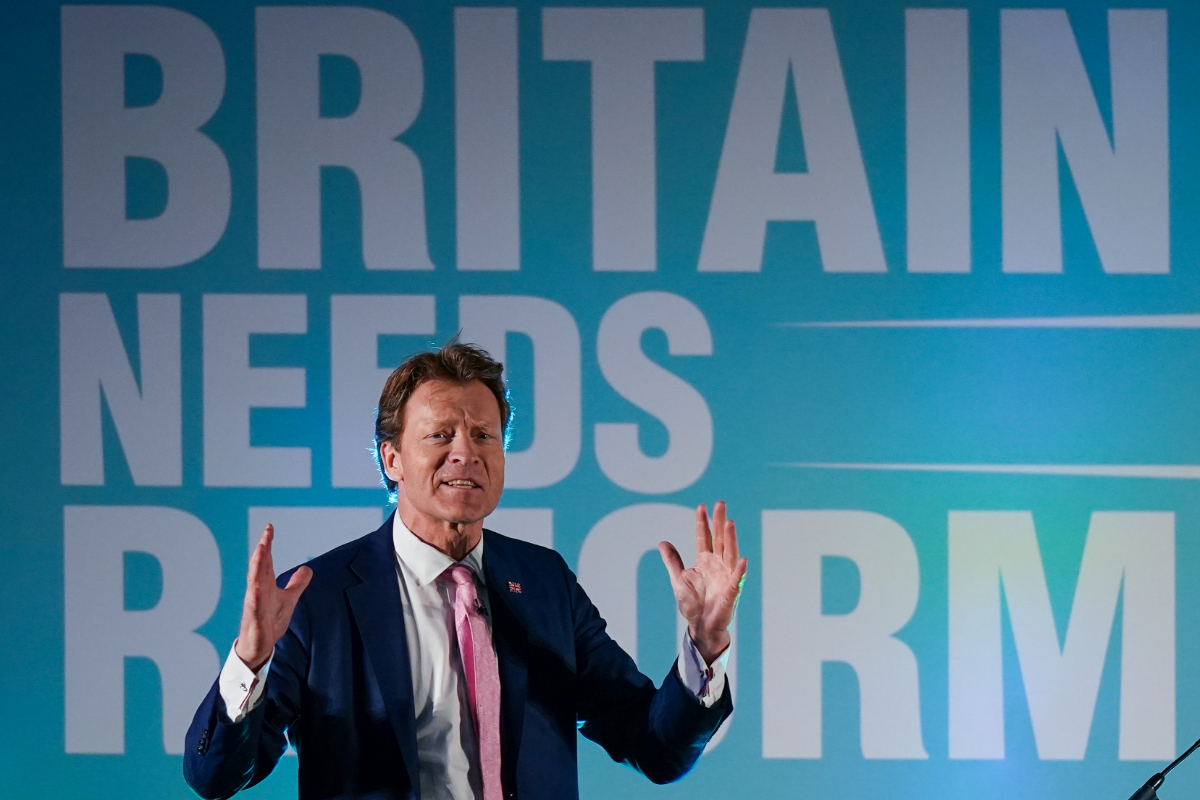
Richard Tice, the deputy leader of Reform UK, has called for a comprehensive reform of financial regulations in the UK, aiming to stimulate economic growth and avoid a looming debt crisis. Speaking at Bloomberg’s London offices, Tice emphasized the need for drastic changes in the financial services sector, reminiscent of former Prime Minister Margaret Thatcher’s Big Bang deregulation initiative.
Tice’s proposals are driven by alarming forecasts from the Office for Budget Responsibility (OBR), which predict that by 2050, the UK’s debt-to-GDP ratio could exceed 200 percent. He warned that this trajectory is unsustainable and could lead the country towards bankruptcy. “We cannot tolerate this and we cannot ignore these figures,” he stated.
In his address, Tice pointed to four critical areas that require urgent reform: regulation, growth capital for small businesses, pension savings, and the tax code. He proposed a radical reduction in regulatory complexity, suggesting that the current 30,000 pages of regulations from the Financial Conduct Authority (FCA) could be condensed into a mere 500-page code. Similar streamlining would apply to the tax code.
Tice also expressed concerns about the public sector’s financial health, particularly regarding pension schemes. He highlighted that unfunded public sector pension liabilities are estimated at around £2.5 trillion, advocating for an end to “gold-plated” defined benefit pension schemes for civil servants.
While he did not provide specific policy proposals, Tice indicated that working groups would be established to formulate ideas for reform. His remarks included a critical view of the Bank of England’s Monetary Policy Committee (MPC) and other financial institutions, which he believes have failed to prevent financial crises.
Tice’s statements align with a broader agenda from Reform UK, which aims to challenge established economic policies. Notably, he suggested that Treasury officials be included in the MPC to enhance decision-making. His critique extended to the Bank of England’s practice of quantitative tightening, which he argues has contributed to rising borrowing costs.
The political landscape appears tense, as Tice’s ideas come on the heels of a speech by fellow party member Nigel Farage, who has called for a cautious approach to fiscal policy, stressing the need for economic stability before implementing significant tax cuts. “We can’t have massive tax cuts until the markets can see we’ve at least got these things in hand,” Farage remarked during his address, suggesting that the next General Election could be anticipated in 2027 due to potential economic collapse.
As Reform UK seeks to establish its economic credibility, Tice’s proposals have drawn scrutiny from analysts. Critics, including Simon French of Panmure Liberum, have cautioned that the party’s tax and spending plans could destabilize bond markets. Tice faces opposition within his own party as well, with Conservative MPs labeling Farage as a “socialist” for his support of nationalization measures and changes to family benefit policies.
In concluding his address, Nick Candy, chair of Reform UK, expressed curiosity about Tice’s potential future as Chancellor, indicating the party’s ambitions to reshape the UK’s economic landscape. As discussions progress within the party, the focus on fiscal policies and regulatory reforms continues to evolve, with the potential for significant implications for the UK economy in the years to come.

Marie Helvin Discusses Dating Challenges and Body Confidence at 73

Danny Morrison Reflects on United Ireland, Gerry Adams, and Stormont’s Future

Southampton University and Siemens Collaborate to Advance MEMS Technology

Barcelona’s Deco Highlights Rashford’s Burden at Manchester United

Rolls-Royce Shares Surge 77% in 2025: What’s Next for Investors?

Welsh Ambulance Service Targets Frequent 999 Callers for Support

Welsh Ambulance Service Targets Frequent 999 Callers for Better Care

Bremen’s Marble Imaging Secures €5.3M for Revolutionary Satellites

WNBA and Players Association Secure 40-Day Extension on CBA Talks

Iconic 90s TV Show House Hits Market for £1.1 Million

Milk Bank Urges Mothers to Donate for Premature Babies’ Health

Alessia Russo Signs Long-Term Deal with Arsenal Ahead of WSL Season

Shoppers Flock to Discounted Neck Pillow on Amazon for Travel Comfort

Museums Body Critiques EHRC Proposals on Gender Facilities

Trump Visits Europe: Business, Politics, or Leisure?

Japanese Teen Sorato Shimizu Breaks U18 100m Record in 10 Seconds

Couple Shares Inspiring Love Story Defying Height Stereotypes

Anglian Water Raises Concerns Over Proposed AI Data Centre
-
 Entertainment2 months ago
Iconic 90s TV Show House Hits Market for £1.1 Million
-
 Lifestyle4 months ago
Milk Bank Urges Mothers to Donate for Premature Babies’ Health
-
 Sports3 months ago
Alessia Russo Signs Long-Term Deal with Arsenal Ahead of WSL Season
-
 Lifestyle4 months ago
Shoppers Flock to Discounted Neck Pillow on Amazon for Travel Comfort
-
 Politics4 months ago
Museums Body Critiques EHRC Proposals on Gender Facilities
-
 Business4 months ago
Trump Visits Europe: Business, Politics, or Leisure?
-
 Lifestyle4 months ago
Japanese Teen Sorato Shimizu Breaks U18 100m Record in 10 Seconds
-
 Politics4 months ago
Couple Shares Inspiring Love Story Defying Height Stereotypes
-
 World4 months ago
Anglian Water Raises Concerns Over Proposed AI Data Centre
-

 Sports4 months ago
Bournemouth Dominates Everton with 3-0 Victory in Premier League Summer Series
-

 World4 months ago
Wreckage of Missing Russian Passenger Plane Discovered in Flames
-

 Lifestyle4 months ago
Shoppers Rave About Roman’s £42 Midi Dress, Calling It ‘Elegant’