
Science
Astronomers Stunned as Comet 3I/ATLAS Defies Expectations

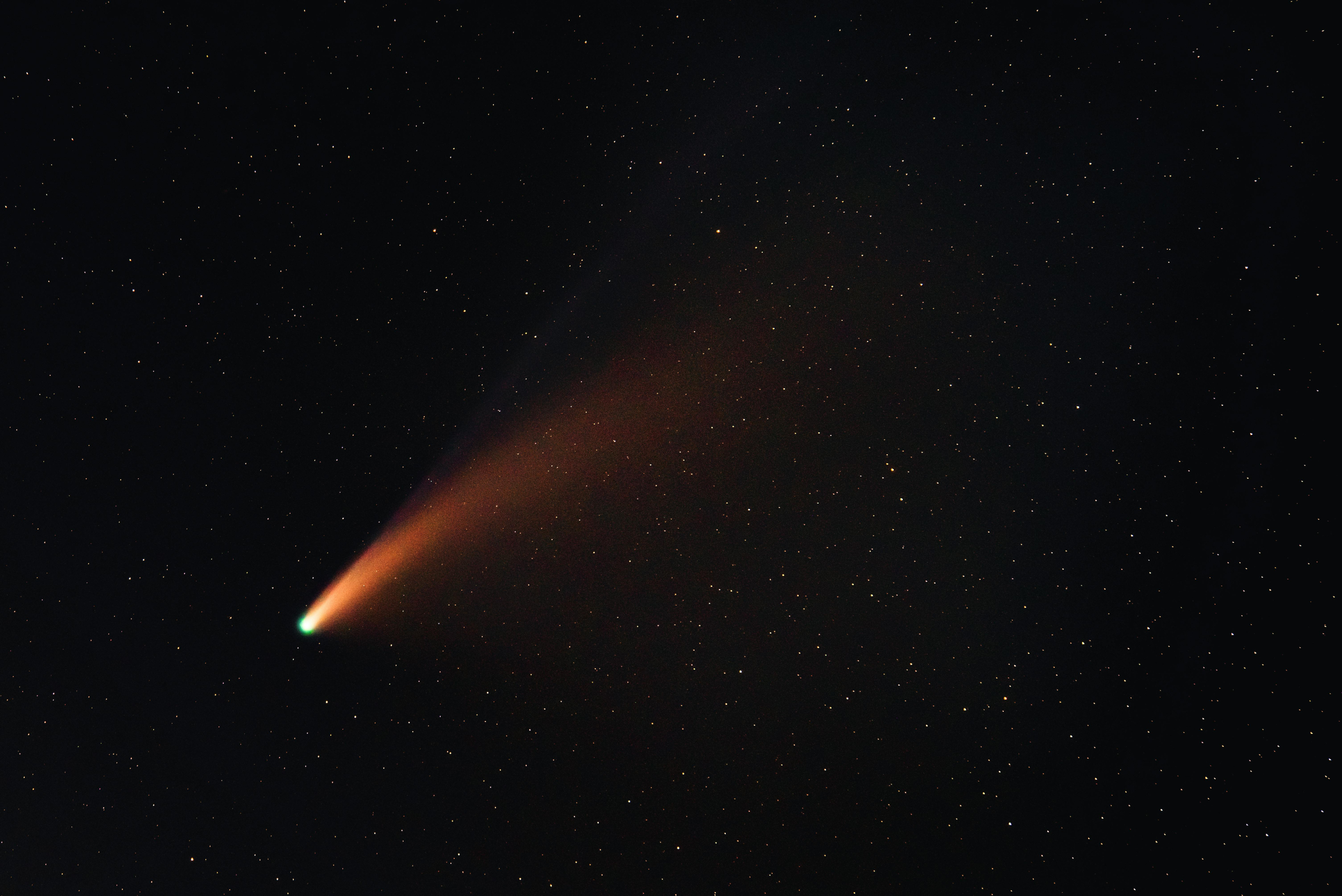
The interstellar comet 3I/ATLAS is captivating astronomers with its unexpected behaviour as it passes near the Sun. Initially observed as a typical icy body from the depths of space, the comet’s peculiar speed, trajectory, and composition have led scientists to reconsider its origins. There are growing suspicions that it might even date back to a time before our Solar System was formed.
Upon its discovery, 3I/ATLAS was presumed to be another comet from the far reaches of the universe. However, as it approached the Sun, instead of disintegrating or decelerating, the comet accelerated and brightened, a phenomenon rarely observed in similar celestial objects. NASA’s early assessments revealed that the comet’s brightness did not arise from solar heating. Instead, it appeared to be releasing large amounts of gas and ice trapped beneath its surface.
Unusual Composition Raises Questions
Astronomers now theorize that 3I/ATLAS may have originated from beyond the boundaries of our Solar System, potentially from another star system. While the famous Oumuamua sparked debates about extraterrestrial technology due to its unusual shape and motion, 3I/ATLAS seems more comet-like in its appearance. Yet, its exceptional speed and resilience present a puzzle.
Data from the James Webb Space Telescope indicates that the materials comprising 3I/ATLAS could be older than Earth itself, possibly dating back over seven billion years, prior to the formation of our Sun. This theory that the comet predates the Solar System is gaining traction as experts analyse its composition. Spectral analysis has revealed molecular patterns unlike any previously identified in comets, particularly in the ratios of volatile gases and dust grains. These indicators suggest that 3I/ATLAS may have formed in a colder, darker environment, likely far from our Sun’s gravitational pull, challenging long-standing beliefs about cosmic evolution.
This comet’s remarkable durability in the face of solar radiation and intense gravitational forces further sets it apart. Unlike typical comets that disintegrate under such conditions, 3I/ATLAS has maintained its integrity, raising intriguing questions about its structural strength.
Trajectory and Monitoring Efforts Intensify
After its swing around the Sun, 3I/ATLAS did not follow a predictable parabolic trajectory. Instead, it altered its course slightly, suggesting internal forces may be at work. Some researchers propose that rapid ice sublimation—the process of ice transforming directly into gas—could be creating powerful jets that propel the comet forward.
Following recent fluctuations in its flight path, NASA and several international space agencies have stepped up monitoring efforts. The agency has activated a temporary observation and defence protocol, though officials have assured that there is no risk of collision with Earth. The aim is to track the comet’s speed and determine if it will shed additional material as it travels through the inner Solar System.
The James Webb Space Telescope, along with various ground-based observatories, is collaborating to gather more data before 3I/ATLAS moves beyond detection capability. Its trajectory suggests that it will soon venture back into deep space, potentially never to return.
For amateur astronomers, 3I/ATLAS remains faintly visible through powerful telescopes, particularly in areas with low light pollution. Observers in the Northern Hemisphere have reported sightings near the horizon before dawn, with its tail shimmering in a bluish hue. Scientists encourage ongoing observation in the coming weeks, as the comet’s brightness shows unpredictable variations.
As 3I/ATLAS departs toward the outer reaches of the Solar System, it leaves behind an array of unanswered questions. The behaviours exhibited by this interstellar wanderer, coupled with its ancient composition and resilience, suggest it is no ordinary comet. Instead, it serves as a living remnant of the universe’s earliest epochs, offering insights into conditions that shaped early galaxies.
In its brief visit, 3I/ATLAS challenges existing paradigms about comets, space, and time, reminding humanity of the vast mysteries that remain to be uncovered among the stars.

Moyes Faces Referee Controversy Ahead of Everton vs Chelsea Clash

Man Hospitalised After Assault Outside Shop in Sandwell

Fred MacAulay and Ally McCoist Reunite for Special World Cup Show

NoOnes Targets $1 Trillion Gift Card Market to Enhance Crypto Access

Beloved Actor Matt Clark Passes Away at 89, Fans Mourn Loss

Discover How Milk Thistle Supplements Enhance Liver Health

Irish Community Care Celebrates 60 Years of Support in Liverpool

New Affordable Housing Development Planned for Crawley Site

Millions of Parking Tickets Issued Amid Calls for Reform

Claire Tomlinson Bids Farewell to Sky Sports After 27 Years

Iconic 90s TV Show House Hits Market for £1.1 Million

Nathan Cleary’s Family Celebrates Engagement Amid Romance Rumors

Tributes Flow for Kerry Gentle, Beloved RNLI Volunteer and Artist

Milk Bank Urges Mothers to Donate for Premature Babies’ Health

Shoppers Flock to Discounted Neck Pillow on Amazon for Travel Comfort

Alessia Russo Signs Long-Term Deal with Arsenal Ahead of WSL Season

Nuneaton Town FC Advances Plans for New Stadium in Stockingford

Exploring England’s Cathedrals: A Journey Through History and Architecture
-
 Lifestyle8 months ago
Claire Tomlinson Bids Farewell to Sky Sports After 27 Years
-
 Entertainment11 months ago
Iconic 90s TV Show House Hits Market for £1.1 Million
-
 Sports1 year ago
Nathan Cleary’s Family Celebrates Engagement Amid Romance Rumors
-
 Lifestyle8 months ago
Tributes Flow for Kerry Gentle, Beloved RNLI Volunteer and Artist
-
 Lifestyle1 year ago
Milk Bank Urges Mothers to Donate for Premature Babies’ Health
-
 Lifestyle1 year ago
Shoppers Flock to Discounted Neck Pillow on Amazon for Travel Comfort
-
 Sports12 months ago
Alessia Russo Signs Long-Term Deal with Arsenal Ahead of WSL Season
-
 Sports9 months ago
Nuneaton Town FC Advances Plans for New Stadium in Stockingford
-
 Lifestyle1 year ago
Exploring England’s Cathedrals: A Journey Through History and Architecture
-

 Politics1 year ago
Museums Body Critiques EHRC Proposals on Gender Facilities
-

 Business1 year ago
Trump Visits Europe: Business, Politics, or Leisure?
-

 Lifestyle1 year ago
Japanese Teen Sorato Shimizu Breaks U18 100m Record in 10 Seconds