
Science
Dublin Universities Secure €684 Million in ERC Synergy Grants

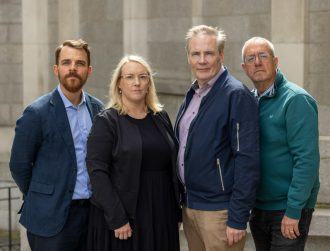
Three universities in Dublin have been awarded significant funding as part of the latest round of Synergy Grants from the European Research Council (ERC). A total of €684 million has been allocated to 239 research teams across Europe, with projects from University College Dublin (UCD), Trinity College Dublin, and Dublin City University (DCU) among the recipients.
The ERC’s Synergy Grants, which provide approximately €10.3 million each for six-year projects, are designed to promote collaboration among top researchers. This year, only about one in ten proposals were successful, reflecting the competitive nature of the funding process. The ERC aims to facilitate groundbreaking scientific research by encouraging interdisciplinary teamwork among principal investigators (PIs) from various fields.
This round of grants has a notable international dimension, with more than 40 percent of the funded projects involving PIs based outside the European Union or associated countries. The ERC noted that the current cohort of awardees includes only 25 percent women, highlighting ongoing gender disparities in research funding.
Prof Maria Leptin, president of the ERC, emphasized the importance of collaboration in driving scientific advancements. “The competition was fierce, with many outstanding proposals left unfunded. With more funds, the ERC could fully capitalise on this wealth of first-class science,” she stated.
Two projects involving Irish researchers have been funded in this round. At UCD, Prof Anding Zhu and Prof Bogdan Staszewski are participating in the international project ‘Disrupt,’ led by Prof Leo de Vreede from TU Delft. This initiative aims to develop a fully digital radio-frequency (RF) power architecture to reduce wireless network emissions by up to 50 percent. The team argues that wireless network emissions currently contribute to 2-3 percent of global carbon dioxide emissions, a figure expected to rise with the expansion of 5G and future 6G systems.
Prof Zhu, who heads the RF and Microwave Research Group at UCD, expressed enthusiasm about the recognition that the ERC grant brings. “This €10 million grant empowers us to push the frontiers of wireless technology by combining advanced materials science, semiconductor device innovation, and RF system architecture in a truly transformative way,” he said.
Staszewski, also a professor at UCD, noted that the grant represents a progression from his earlier ERC Starting Grant, allowing the team to tackle even greater challenges in their research.
Meanwhile, DCU’s Prof Yvonne Daly and Trinity’s Prof Shane O’Mara are part of the ‘Justice’ project, which aims to improve interrogation practices through a multidisciplinary approach. This team is investigating coercive and abusive interrogation techniques, seeking to develop more humane and effective interviewing methods.
Daly, a professor of criminal law and evidence at DCU, expressed excitement about the collaborative nature of the project. “We’ve already learned so much from one another in devising our cross-disciplinary work programme and look forward to growing a strong team to undertake this ambitious research,” she said.
Project lead O’Mara, a professor of experimental brain research at Trinity, highlighted the project’s goal of shifting the focus from confession-seeking to truth-seeking in interrogations. “By combining law, psychology, neuroscience, and data science, we’ll attempt to pinpoint when and why coercion creeps into interviews and devise practical ways to prevent it,” he explained.
The Justice team also includes Prof Dave Walsh from De Montfort University and Dr Bennett Kleinberg from Tilburg University, showcasing the project’s broad collaborative scope.
In a statement regarding the announcement on November 6, 2023, Ekaterina Zaharieva, the European Commissioner for Start-ups, Research, and Innovation, remarked on the international composition of this year’s awardees. “Europe’s frontier research has never been so international,” she stated. “This global collaboration strengthens European science, gives our researchers access to world-class expertise and infrastructure, and brings leading scientists from around the world closer to Europe.”
The successful allocation of these grants not only underscores the innovative research being conducted in Dublin but also reinforces the vital role of collaboration in advancing scientific knowledge across disciplines.

Moyes Faces Referee Controversy Ahead of Everton vs Chelsea Clash

Man Hospitalised After Assault Outside Shop in Sandwell

Fred MacAulay and Ally McCoist Reunite for Special World Cup Show

NoOnes Targets $1 Trillion Gift Card Market to Enhance Crypto Access

Beloved Actor Matt Clark Passes Away at 89, Fans Mourn Loss

Discover How Milk Thistle Supplements Enhance Liver Health

Irish Community Care Celebrates 60 Years of Support in Liverpool

New Affordable Housing Development Planned for Crawley Site

Millions of Parking Tickets Issued Amid Calls for Reform

Claire Tomlinson Bids Farewell to Sky Sports After 27 Years

Iconic 90s TV Show House Hits Market for £1.1 Million

Nathan Cleary’s Family Celebrates Engagement Amid Romance Rumors

Tributes Flow for Kerry Gentle, Beloved RNLI Volunteer and Artist

Milk Bank Urges Mothers to Donate for Premature Babies’ Health

Shoppers Flock to Discounted Neck Pillow on Amazon for Travel Comfort

Alessia Russo Signs Long-Term Deal with Arsenal Ahead of WSL Season

Nuneaton Town FC Advances Plans for New Stadium in Stockingford

Exploring England’s Cathedrals: A Journey Through History and Architecture
-
 Lifestyle8 months ago
Claire Tomlinson Bids Farewell to Sky Sports After 27 Years
-
 Entertainment11 months ago
Iconic 90s TV Show House Hits Market for £1.1 Million
-
 Sports1 year ago
Nathan Cleary’s Family Celebrates Engagement Amid Romance Rumors
-
 Lifestyle8 months ago
Tributes Flow for Kerry Gentle, Beloved RNLI Volunteer and Artist
-
 Lifestyle1 year ago
Milk Bank Urges Mothers to Donate for Premature Babies’ Health
-
 Lifestyle1 year ago
Shoppers Flock to Discounted Neck Pillow on Amazon for Travel Comfort
-
 Sports12 months ago
Alessia Russo Signs Long-Term Deal with Arsenal Ahead of WSL Season
-
 Sports9 months ago
Nuneaton Town FC Advances Plans for New Stadium in Stockingford
-
 Lifestyle1 year ago
Exploring England’s Cathedrals: A Journey Through History and Architecture
-

 Politics1 year ago
Museums Body Critiques EHRC Proposals on Gender Facilities
-

 Business1 year ago
Trump Visits Europe: Business, Politics, or Leisure?
-

 Lifestyle1 year ago
Japanese Teen Sorato Shimizu Breaks U18 100m Record in 10 Seconds