
Science
Scientists Unlock 39,000-Year-Old Woolly Mammoth RNA, Paving Way for De-Extinction

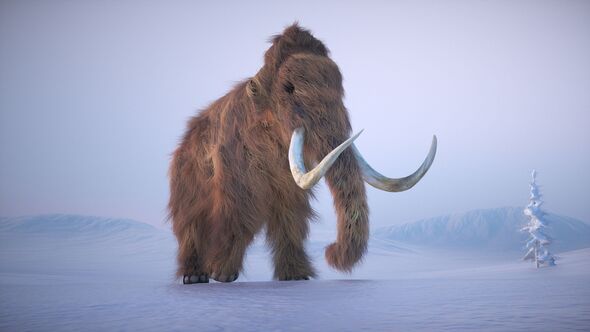
Researchers have successfully extracted the world’s oldest RNA from a woolly mammoth preserved in Siberian permafrost, advancing efforts toward de-extinction. This groundbreaking achievement, involving a 39,000-year-old male mammoth named Yuka, was detailed in a study published on March 15, 2024, in the journal Cell. The intact RNA molecules provide insights into the mammal’s genetics and its biological functions at the time of its death.
The team from Stockholm University analyzed muscle tissue from Yuka, which was discovered in 2010 near the Laptev Sea. This analysis revealed over 300 protein-coding RNAs and 60 microRNAs, many of which are previously unknown and possibly unique to the species. Lead author Dr. Emilio Marmol Sanchez, now affiliated with Copenhagen’s Globe Institute, stated, “With RNA, we can obtain direct evidence of which genes are ‘turned on’, offering a glimpse into the final moments of life of a mammoth that walked the Earth during the last Ice Age.”
The sequencing indicates that Yuka had endurance muscles adapted for long-distance travel across frozen landscapes, rather than for sprinting. Traces of cellular stress found in the samples suggest he may have died due to predation or environmental trauma. Unlike DNA, which reveals genetic potential, RNA reflects real-time gene expression, making this discovery particularly valuable.
Potential for De-Extinction Efforts
The implications of this research extend to companies like Colossal Biosciences, which aims to resurrect the woolly mammoth by engineering Asian elephants with mammoth-like traits. These traits include thick, woolly coats, cold-resistant fat, and curved tusks, with a goal to achieve this by 2028. The company has raised £200 million and employs approximately 80 scientists in Texas and Melbourne.
Professor Love Dalan, a co-author at the Centre for Palaeogenetics, remarked that the findings “push the boundaries of what we thought possible with ancient biomolecules.” This research builds on earlier advancements in gene editing. In 2021, geneticist George Church identified key genes that enable cold adaptation in mammoths. More recently, Colossal announced the creation of “woolly mouse” embryos with edited haemoglobin for low-oxygen environments.
Dr. Marmol Sanchez emphasized the importance of the regulatory molecules found in the research. “RNAs that do not encode for proteins, such as microRNAs, were among the most exciting findings. These regulatory molecules fine-tune how traits are expressed – exactly what de-extinction engineers need,” he stated.
Future Directions and Ecological Impact
The permafrost in Siberia serves as a natural freezer, preserving these ancient specimens. Yet, climate change poses a significant threat, rapidly thawing the ice and risking the loss of thousands of historical specimens. Yuka’s preservation is exceptional, as most samples yield only fragments of genetic material.
Colossal’s roadmap includes producing a calf with 60 mammoth edits by 2028, followed by plans to reintroduce herds to the Arctic steppe. This initiative aims not only to restore the ecosystem but also to combat climate change by sequestering carbon in the soil. Dr. Beth Shapiro, chief scientific officer at Colossal and a palaeogeneticist at the University of California, highlighted the feasibility of this project. She noted, “The technologies definitely exist. The idea is that we have to tweak all of these technologies to make them useful for non-model organisms.”
The vision for a “mammophant,” as some proponents call it, could help fill an ecological niche lost since the Pleistocene era, grazing on vast grasslands that once played a crucial role in carbon sequestration. The researchers in Stockholm are planning to sequence RNA from other megafauna, including cave bears and giant sloths, further expanding our understanding of these ancient creatures.
This discovery not only sheds light on the biology of the woolly mammoth but also opens new avenues for scientific exploration and ecological restoration. The ongoing research into ancient biomolecules continues to reveal the complexities of life that existed thousands of years ago, while also addressing contemporary challenges in conservation and climate change.

Marie Helvin Discusses Dating Challenges and Body Confidence at 73

Danny Morrison Reflects on United Ireland, Gerry Adams, and Stormont’s Future

Southampton University and Siemens Collaborate to Advance MEMS Technology

Barcelona’s Deco Highlights Rashford’s Burden at Manchester United

Rolls-Royce Shares Surge 77% in 2025: What’s Next for Investors?

Welsh Ambulance Service Targets Frequent 999 Callers for Support

Welsh Ambulance Service Targets Frequent 999 Callers for Better Care

Bremen’s Marble Imaging Secures €5.3M for Revolutionary Satellites

WNBA and Players Association Secure 40-Day Extension on CBA Talks

Iconic 90s TV Show House Hits Market for £1.1 Million

Milk Bank Urges Mothers to Donate for Premature Babies’ Health

Alessia Russo Signs Long-Term Deal with Arsenal Ahead of WSL Season

Shoppers Flock to Discounted Neck Pillow on Amazon for Travel Comfort

Museums Body Critiques EHRC Proposals on Gender Facilities

Trump Visits Europe: Business, Politics, or Leisure?

Japanese Teen Sorato Shimizu Breaks U18 100m Record in 10 Seconds

Couple Shares Inspiring Love Story Defying Height Stereotypes

Anglian Water Raises Concerns Over Proposed AI Data Centre
-
 Entertainment2 months ago
Iconic 90s TV Show House Hits Market for £1.1 Million
-
 Lifestyle4 months ago
Milk Bank Urges Mothers to Donate for Premature Babies’ Health
-
 Sports3 months ago
Alessia Russo Signs Long-Term Deal with Arsenal Ahead of WSL Season
-
 Lifestyle4 months ago
Shoppers Flock to Discounted Neck Pillow on Amazon for Travel Comfort
-
 Politics4 months ago
Museums Body Critiques EHRC Proposals on Gender Facilities
-
 Business4 months ago
Trump Visits Europe: Business, Politics, or Leisure?
-
 Lifestyle4 months ago
Japanese Teen Sorato Shimizu Breaks U18 100m Record in 10 Seconds
-
 Politics4 months ago
Couple Shares Inspiring Love Story Defying Height Stereotypes
-
 World4 months ago
Anglian Water Raises Concerns Over Proposed AI Data Centre
-

 Sports4 months ago
Bournemouth Dominates Everton with 3-0 Victory in Premier League Summer Series
-

 World4 months ago
Wreckage of Missing Russian Passenger Plane Discovered in Flames
-

 Lifestyle4 months ago
Shoppers Rave About Roman’s £42 Midi Dress, Calling It ‘Elegant’