
Science
Dcubed to Launch Innovative In-Space Solar Array in 2027

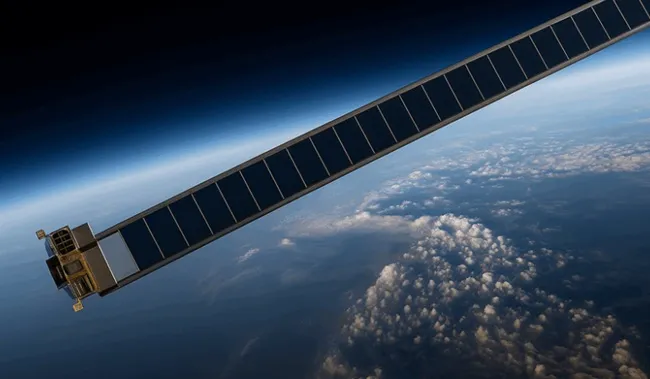
Dcubed, a company focused on advanced space technologies, has announced plans to develop in-space manufacturing systems for solar arrays. This initiative aims to support power beaming and directed energy applications. The project will be realized in collaboration with Astro Digital and is scheduled for launch on a SpaceX Rideshare mission targeted for the first quarter of 2027, facilitated by Maverick Space Systems.
Dr. Thomas Sinn, CEO of Dcubed, expressed his commitment to pioneering power generation in orbit. “My involvement in a NASA NIAC study on space-based solar power more than 15 years ago set this journey in motion,” he stated. He further emphasized that the company has been progressively developing the necessary technologies to transform in-space energy into a practical reality. The project, named ARAQYS, combines years of innovation to create large-scale power solutions tailored for the growing demands of the space economy.
The ARAQYS initiative encompasses various space power solutions. This includes traditional deployable solar arrays and proprietary in-space-manufactured kilowatt solar array subsystems. The ultimate goal is to enable spacecraft to construct, assemble, and power themselves and others directly in orbit.
Innovative Mission Plans
The upcoming mission will not only showcase the in-space solar array but will also demonstrate the craft’s electric propulsion-enabled delta-v capabilities. Dcubed is headquartered in Munich and has an additional office in Berthoud, Colorado, which is located just a few miles from Astro Digital, the provider of the mission’s spacecraft bus.
Chris Biddy, CEO of Astro Digital, expressed enthusiasm about the partnership. “We’re excited to partner with Dcubed on this groundbreaking mission,” he remarked. “The ARAQYS-D3 satellite will demonstrate how in-space manufacturing and large-scale economic power generation can unlock a new class of small satellites — capable of generating, storing, and transmitting the energy required for the next generation of orbital missions.”
The ARAQYS-D3 mission will build on two preceding missions, both scheduled for launch in the first quarter of 2026. The ARAQYS-D1 mission involves a 3U satellite designed to manufacture a 60 cm in-space-manufactured boom directly in free space. Meanwhile, ARAQYS-D2 will focus on printing and deploying a 1 m-long in-space solar array during Exotrail’s next SpaceVan mission.
In its own words, Dcubed aims to dramatically reduce the cost per kilowatt, laying the groundwork for future space infrastructure and directed-energy platforms. The company’s advancements could potentially reshape the landscape of energy generation in space, paving the way for a sustainable future in orbital operations.
With initiatives like ARAQYS, the prospect of in-space energy generation is becoming increasingly tangible, marking a significant step forward in the evolution of space technology.

Cattle Showcases Thrive at RUAS Winter Fair 2023

UK and US Strike Zero Tariff Agreement on Pharmaceuticals

Maya Jama Stuns in Strapless Ensemble at Qatar Grand Prix

Russia and Saudi Arabia Launch Visa-Free Travel Agreement

ISOLDE Facility Marks 10 Years of Advancements in Nuclear Research

Voters Demand Resignation of Chancellor Rachel Reeves Over Tax Hikes

Shoppers Save 30% on Marks & Spencer’s Viral Velvet Dress

Health Campaigners Urge End to Smoking Exemption for Lounges

Charity Shop Surprise: Woman Finds Joggers Worth £2,000 for £8

Iconic 90s TV Show House Hits Market for £1.1 Million

Milk Bank Urges Mothers to Donate for Premature Babies’ Health

Alessia Russo Signs Long-Term Deal with Arsenal Ahead of WSL Season

Shoppers Flock to Discounted Neck Pillow on Amazon for Travel Comfort

Museums Body Critiques EHRC Proposals on Gender Facilities

Trump Visits Europe: Business, Politics, or Leisure?

Japanese Teen Sorato Shimizu Breaks U18 100m Record in 10 Seconds

Couple Shares Inspiring Love Story Defying Height Stereotypes

Anglian Water Raises Concerns Over Proposed AI Data Centre
-
 Entertainment2 months ago
Iconic 90s TV Show House Hits Market for £1.1 Million
-
 Lifestyle4 months ago
Milk Bank Urges Mothers to Donate for Premature Babies’ Health
-
 Sports3 months ago
Alessia Russo Signs Long-Term Deal with Arsenal Ahead of WSL Season
-
 Lifestyle4 months ago
Shoppers Flock to Discounted Neck Pillow on Amazon for Travel Comfort
-
 Politics4 months ago
Museums Body Critiques EHRC Proposals on Gender Facilities
-
 Business4 months ago
Trump Visits Europe: Business, Politics, or Leisure?
-
 Lifestyle4 months ago
Japanese Teen Sorato Shimizu Breaks U18 100m Record in 10 Seconds
-
 Politics4 months ago
Couple Shares Inspiring Love Story Defying Height Stereotypes
-
 World4 months ago
Anglian Water Raises Concerns Over Proposed AI Data Centre
-

 Sports4 months ago
Bournemouth Dominates Everton with 3-0 Victory in Premier League Summer Series
-

 World4 months ago
Wreckage of Missing Russian Passenger Plane Discovered in Flames
-

 Lifestyle4 months ago
Shoppers Rave About Roman’s £42 Midi Dress, Calling It ‘Elegant’