
Science
China Advances Lunar Construction with Return of Soil Brick Samples

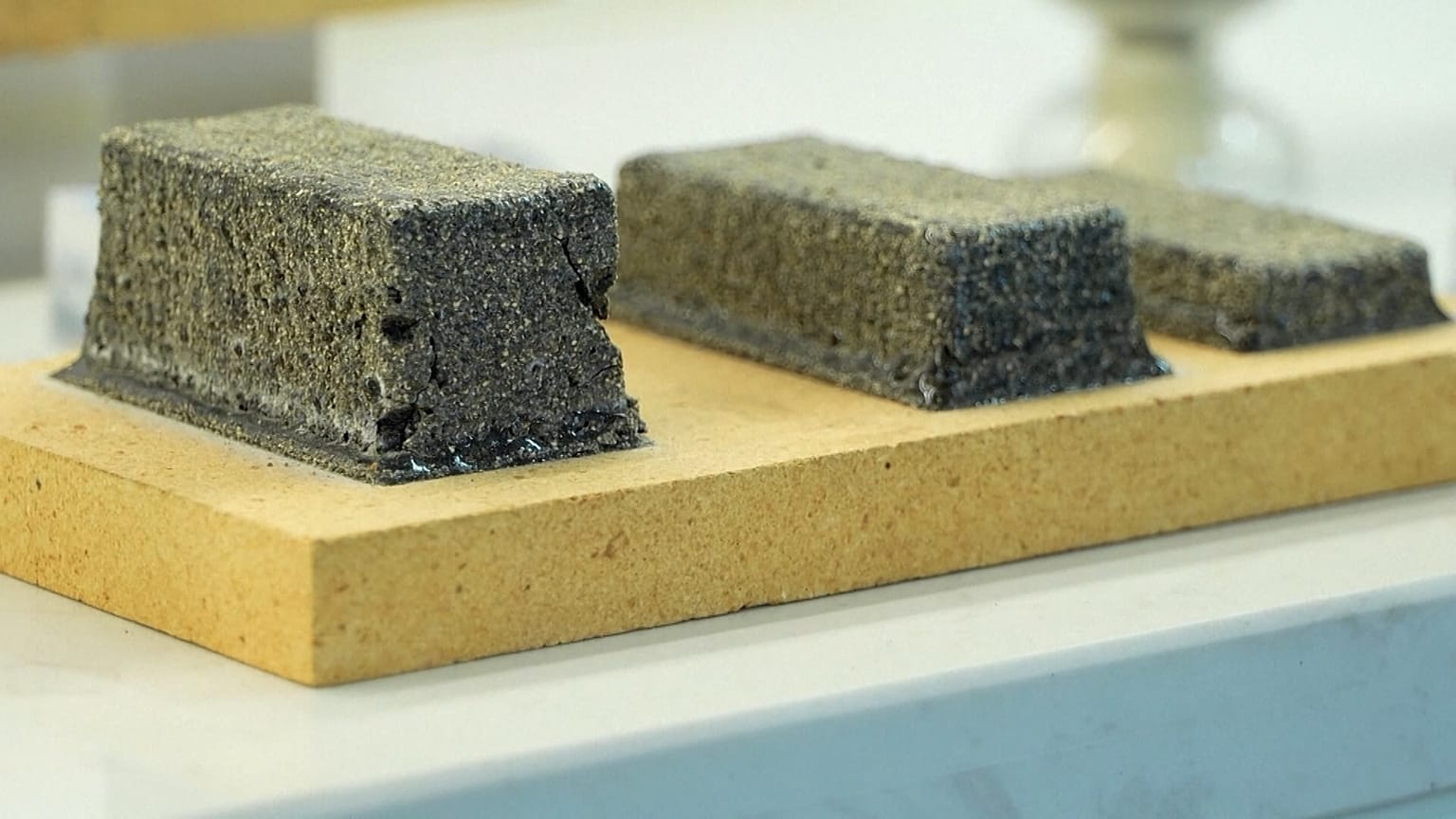
China has made significant progress toward its goal of building infrastructure on the Moon, with the return of experimental ‘lunar soil bricks’ from space. The specially engineered blocks arrived back on Earth last week aboard the Shenzhou-21 spacecraft, which also carried three astronauts concluding a six-month mission. These samples spent a year exposed to the harsh conditions of outer space as part of a pioneering experiment conducted on China’s space station.
Initial assessments indicate that the 34 returned bricks, each weighing approximately 100 grams, survived their time in orbit remarkably well. Researchers describe this as an encouraging proof-of-concept for future lunar construction. “Upon opening the lid, we found that the samples were in good condition. There were no dents, holes, or other visible defects that we thought they might have because of impacts by meteorites or space debris,” stated Zhou Yan, an associate professor at Huazhong University of Science and Technology in Wuhan. He added that the colours of the bricks appeared slightly lighter than before, although further analysis is required to understand this change.
Innovative Techniques for Lunar Bricks
The bricks were produced using materials that mimic the composition of lunar regolith, the layer of loose, fragmented material covering the Moon’s surface. They were compacted through advanced methods including hot pressing, electromagnetic induction, and microwave sintering. These techniques enhance the bricks’ compressive strength, making them roughly three times stronger than standard bricks, and therefore more suitable for the extreme lunar environment.
The experiment also focuses on the mechanical properties of the bricks over time. “Some of the samples that we sent into space were complete, while some had 45-degree symmetrical seams that we made in advance. By doing so, we wanted to see what changes they will undergo in terms of their mechanical properties after a year on the space station,” explained Qin Yiheng, a graduate student involved in the project. Alongside mechanical strength, the researchers are assessing the thermal behaviour and radiation resistance of the bricks after prolonged exposure to space conditions.
Future Implications for Lunar Infrastructure
A parallel control group on Earth is being monitored to help researchers understand precisely how the conditions in space alter the material properties of the bricks. As Zhou Yan noted, “After the return of the third batch of samples, based on more horizontal comparisons, we may be able to discover a pattern and ultimately build a model. This could help us predict what they will look like after five, 10, or even 20 years of service.”
China’s lunar ambitions include landing astronauts on the Moon by 2030 and constructing a basic version of its planned International Lunar Research Station by 2035. To minimize the substantial costs associated with transporting materials from Earth, the country aims to utilize in-situ resources, including lunar soil, solar energy, and surface minerals.
This groundbreaking research represents a crucial step in China’s vision of establishing a lunar base, known as the Guanghan Palace. The successful return of these lunar soil bricks not only enhances scientific understanding but also brings the prospect of sustainable lunar construction closer to reality.

Cattle Showcases Thrive at RUAS Winter Fair 2023

UK and US Strike Zero Tariff Agreement on Pharmaceuticals

Maya Jama Stuns in Strapless Ensemble at Qatar Grand Prix

Russia and Saudi Arabia Launch Visa-Free Travel Agreement

ISOLDE Facility Marks 10 Years of Advancements in Nuclear Research

Voters Demand Resignation of Chancellor Rachel Reeves Over Tax Hikes

Shoppers Save 30% on Marks & Spencer’s Viral Velvet Dress

Health Campaigners Urge End to Smoking Exemption for Lounges

Charity Shop Surprise: Woman Finds Joggers Worth £2,000 for £8

Iconic 90s TV Show House Hits Market for £1.1 Million

Milk Bank Urges Mothers to Donate for Premature Babies’ Health

Alessia Russo Signs Long-Term Deal with Arsenal Ahead of WSL Season

Shoppers Flock to Discounted Neck Pillow on Amazon for Travel Comfort

Museums Body Critiques EHRC Proposals on Gender Facilities

Trump Visits Europe: Business, Politics, or Leisure?

Japanese Teen Sorato Shimizu Breaks U18 100m Record in 10 Seconds

Couple Shares Inspiring Love Story Defying Height Stereotypes

Anglian Water Raises Concerns Over Proposed AI Data Centre
-
 Entertainment2 months ago
Iconic 90s TV Show House Hits Market for £1.1 Million
-
 Lifestyle4 months ago
Milk Bank Urges Mothers to Donate for Premature Babies’ Health
-
 Sports3 months ago
Alessia Russo Signs Long-Term Deal with Arsenal Ahead of WSL Season
-
 Lifestyle4 months ago
Shoppers Flock to Discounted Neck Pillow on Amazon for Travel Comfort
-
 Politics4 months ago
Museums Body Critiques EHRC Proposals on Gender Facilities
-
 Business4 months ago
Trump Visits Europe: Business, Politics, or Leisure?
-
 Lifestyle4 months ago
Japanese Teen Sorato Shimizu Breaks U18 100m Record in 10 Seconds
-
 Politics4 months ago
Couple Shares Inspiring Love Story Defying Height Stereotypes
-
 World4 months ago
Anglian Water Raises Concerns Over Proposed AI Data Centre
-

 Sports4 months ago
Bournemouth Dominates Everton with 3-0 Victory in Premier League Summer Series
-

 World4 months ago
Wreckage of Missing Russian Passenger Plane Discovered in Flames
-

 Lifestyle4 months ago
Shoppers Rave About Roman’s £42 Midi Dress, Calling It ‘Elegant’