
Business
France and Germany Progress in Defence Cooperation, Face Challenges

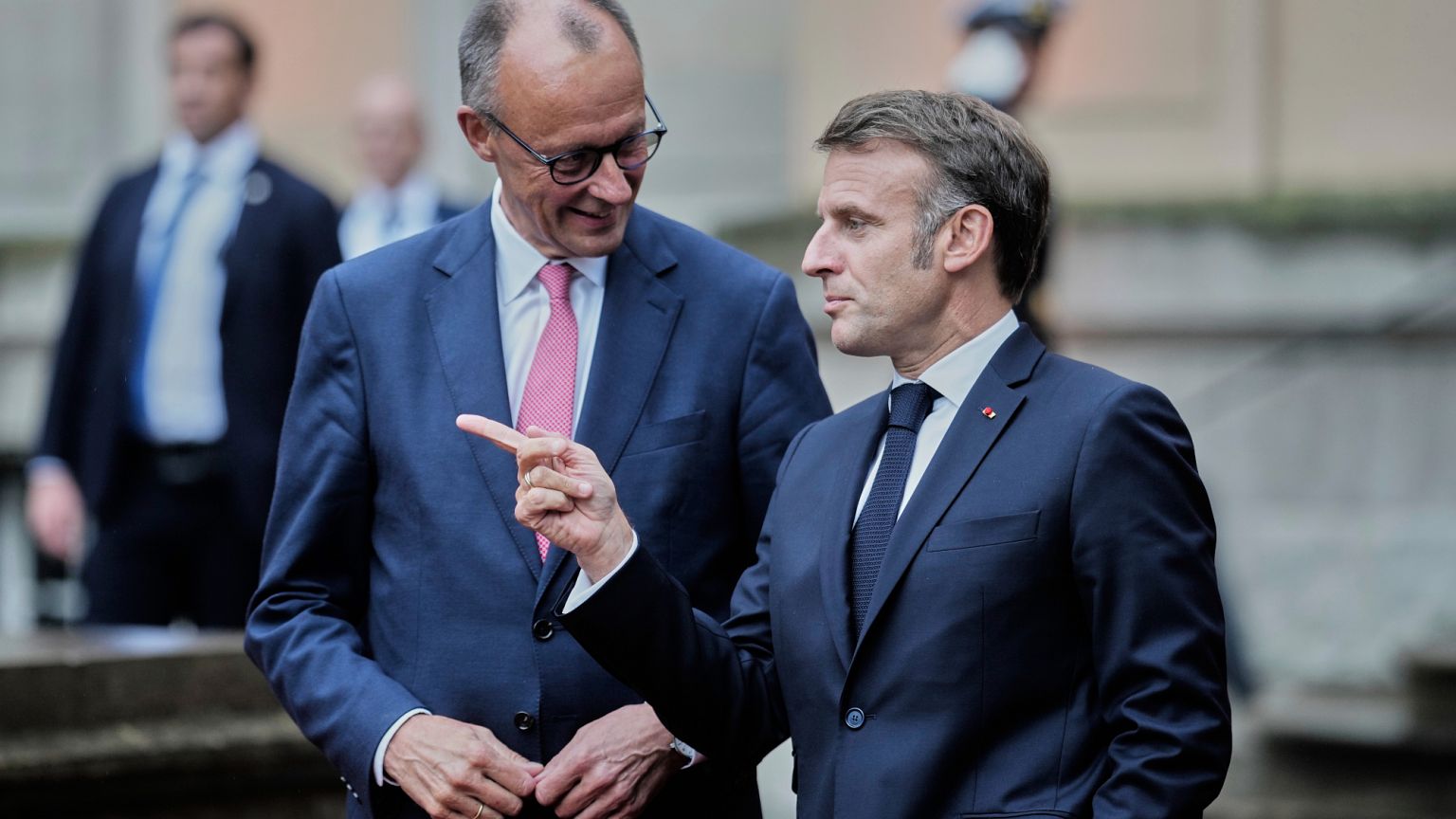
Germany and France are moving closer in defence cooperation, though significant challenges remain. Both nations recognize the urgent need to enhance their military capabilities, driven by shared concerns over Russian aggression and shifting global security dynamics. Yet, their differing fiscal situations and strategic perspectives hinder the potential for a unified approach to European defence.
Historically, the convergence between the two countries is reportedly greater than it has been for decades, according to Jacob F. Kirkegaard, a senior fellow at the Brussels-based Bruegel think tank. Both capitals regard Russia as the most significant long-term threat, committing to invest hundreds of billions of euros into their military frameworks. In Germany, this shift is termed “Zeitenwende” (historical turning point), while France emphasizes its latest military programming law as “the ultimate strategic move.”
The ongoing conflict in Ukraine has underscored the necessity for renewed military strategies. The leadership change in Germany, marked by Friedrich Merz assuming the chancellorship, has been pivotal. Merz has articulated a need for Europe to prepare for a future without a consistent U.S. security guarantee, a stance reminiscent of former French President Charles de Gaulle.
Despite these advancements, the recent discussions between French President Emmanuel Macron and Merz highlighted the complexities of their collaboration, particularly concerning a joint €100 billion project to develop a sixth-generation fighter jet. Central to the dispute is France’s insistence on securing 80% of the workshare for the Future Combat Air System (FCAS), which contradicts previous agreements for equal distribution among France, Germany, and Spain.
As noted by Rafael Loss, a policy fellow at the European Council on Foreign Relations, France’s military strategy is deeply intertwined with its national foreign policy. The French armed forces operate with a global perspective, driven by its nuclear capabilities and overseas territories. This approach fosters a preference for unilateral action, diverging from Germany’s more collaborative military stance within NATO and the EU.
Yet, Loss emphasizes that France is indeed moving closer to Germany, recognizing the need to invest in European partnerships, especially with Eastern European nations.
Despite these developments, significant fiscal disparities present a major obstacle to their joint defence objectives. Germany’s debt-to-Gross Domestic Product (GDP) ratio was recorded at 62.3% in the first quarter of the year, while France’s stood at a concerning 114.1%, exceeding the EU’s stipulated maximum of 60%. This divergence means that as European countries strive to enhance their defence capabilities, Germany has the fiscal capacity to invest heavily, while France faces constraints.
Germany is poised to utilize a proposal from Brussels aimed at loosening fiscal rules for defence spending, a flexibility that France, currently under excessive deficit scrutiny, cannot access. The German government has initiated a significant increase in defence funding, including a €500 billion fund to bolster military and infrastructure investments. This financial strategy positions Germany to catch up rapidly, while France’s longstanding defence investments leave it with less room for immediate expansion.
At the EU level, these fiscal differences place the two nations at opposing ends of negotiations. The European Commission has outlined a plan to rearm Europe, with a goal of encouraging member states to invest up to €800 billion by 2030. However, much of this funding is expected to come from national budgets, which in France’s case, are considerably strained.
In light of these circumstances, Macron has proposed innovative financing solutions, including the possibility of joint EU borrowing. Germany has firmly opposed this approach, which underscores the ongoing challenges in achieving a cohesive defence strategy within the EU framework.
Kirkegaard expressed concern that the current crisis triggered by Russia’s actions in Ukraine represents “a big wasted opportunity” for the EU. He suggested that while the war may lead to some expansion of the bloc, particularly with the inclusion of Ukraine and potentially other nations, it is unlikely to yield significant institutional or fiscal integration within the EU itself.
As France and Germany navigate their evolving defence relationship, the road ahead appears fraught with both promise and complexity, reflecting the broader challenges facing European unity in the face of growing geopolitical tensions.

Marie Helvin Discusses Dating Challenges and Body Confidence at 73

Danny Morrison Reflects on United Ireland, Gerry Adams, and Stormont’s Future

Southampton University and Siemens Collaborate to Advance MEMS Technology

Barcelona’s Deco Highlights Rashford’s Burden at Manchester United

Rolls-Royce Shares Surge 77% in 2025: What’s Next for Investors?

Welsh Ambulance Service Targets Frequent 999 Callers for Support

Welsh Ambulance Service Targets Frequent 999 Callers for Better Care

Bremen’s Marble Imaging Secures €5.3M for Revolutionary Satellites

WNBA and Players Association Secure 40-Day Extension on CBA Talks

Iconic 90s TV Show House Hits Market for £1.1 Million

Milk Bank Urges Mothers to Donate for Premature Babies’ Health

Alessia Russo Signs Long-Term Deal with Arsenal Ahead of WSL Season

Shoppers Flock to Discounted Neck Pillow on Amazon for Travel Comfort

Museums Body Critiques EHRC Proposals on Gender Facilities

Trump Visits Europe: Business, Politics, or Leisure?

Japanese Teen Sorato Shimizu Breaks U18 100m Record in 10 Seconds

Couple Shares Inspiring Love Story Defying Height Stereotypes

Anglian Water Raises Concerns Over Proposed AI Data Centre
-
 Entertainment2 months ago
Iconic 90s TV Show House Hits Market for £1.1 Million
-
 Lifestyle4 months ago
Milk Bank Urges Mothers to Donate for Premature Babies’ Health
-
 Sports3 months ago
Alessia Russo Signs Long-Term Deal with Arsenal Ahead of WSL Season
-
 Lifestyle4 months ago
Shoppers Flock to Discounted Neck Pillow on Amazon for Travel Comfort
-
 Politics4 months ago
Museums Body Critiques EHRC Proposals on Gender Facilities
-
 Business4 months ago
Trump Visits Europe: Business, Politics, or Leisure?
-
 Lifestyle4 months ago
Japanese Teen Sorato Shimizu Breaks U18 100m Record in 10 Seconds
-
 Politics4 months ago
Couple Shares Inspiring Love Story Defying Height Stereotypes
-
 World4 months ago
Anglian Water Raises Concerns Over Proposed AI Data Centre
-

 Sports4 months ago
Bournemouth Dominates Everton with 3-0 Victory in Premier League Summer Series
-

 World4 months ago
Wreckage of Missing Russian Passenger Plane Discovered in Flames
-

 Lifestyle4 months ago
Shoppers Rave About Roman’s £42 Midi Dress, Calling It ‘Elegant’