
Science
Android Phones Transform Earthquake Alerts with Early Warning System

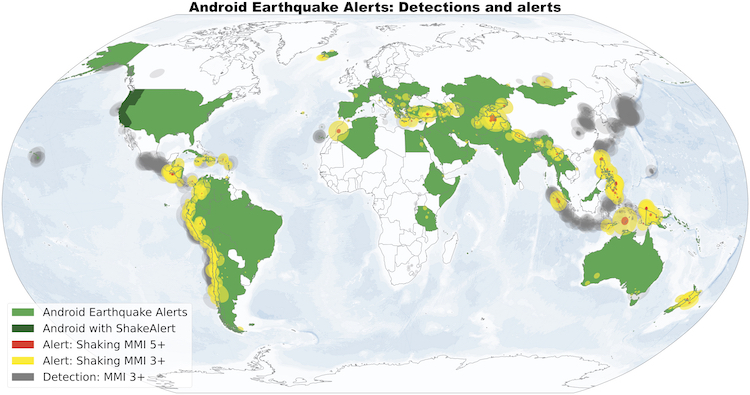
The global network of Android smartphones is evolving into an effective early warning system for earthquakes, providing users with critical seconds to respond before seismic activity begins. This finding emerges from a comprehensive three-year study conducted by researchers at Google, involving millions of devices across 98 countries. The research highlights the potential of leveraging existing smartphone technology in areas lacking traditional earthquake warning systems.
New Insights from the Android Earthquake Alert System
According to Richard Allen, a co-leader of the study and director of the Berkeley Seismological Laboratory at the University of California, Berkeley, the Android Earthquake Alert (AEA) system has the capability to offer life-saving warnings in regions where conventional systems are absent. “By using Android smartphones, which represent approximately 70% of the global smartphone market, we can significantly enhance earthquake preparedness,” Allen stated.
Conventional earthquake warning systems typically rely on a network of specialized seismic sensors, first implemented in countries like Mexico and Japan. These systems quickly detect seismic activity close to the epicenter, issuing alerts that can save lives. Even a few seconds of prior warning allows individuals to take necessary protective actions, such as the recommended “drop, cover, and hold on” (DCHO) method. However, establishing such networks is costly, prompting scientists to explore the potential of smartphones, which have become ubiquitous.
Smartphones contain built-in accelerometers, and as their popularity increased in the 2010s, researchers began to investigate their utility for earthquake detection. Although the accelerometers in smartphones are less sensitive than those in traditional seismic instruments, they can still effectively detect tremors during significant earthquakes. Allen noted, “These devices can sense movements and vibrations, making them a valuable tool in earthquake-prone areas.”
Deployment and Impact of the AEA System
By late 2010s, various teams had developed smartphone applications capable of detecting earthquakes, with notable examples like SkyAlert in Mexico and ShakeAlert from Berkeley. The latest study advances this concept further. Allen explained, “By utilizing smartphone accelerometers as a seismic array, we can now provide alerts in regions where they were previously unavailable.”
Between 2021 and 2024, Allen and his colleagues, including principal software engineer Marc Stogaitis, tested the AEA system. Over this period, the application detected an average of 312 earthquakes per month, with magnitudes ranging from 1.9 to 7.8. The system issued “TakeAction” alerts for earthquakes of magnitude 4.5 or higher, prompting users to take immediate protective actions. On average, the system sent out these alerts 60 times per month, reaching approximately 18 million individuals.
In addition, the AEA system also provided “BeAware” alerts for regions expected to experience shaking intensity of levels 3 or 4. To evaluate the effectiveness of these alerts, researchers utilized Google Search to gather feedback from users through surveys. From February 5, 2023, to April 30, 2024, over 1,555,006 individuals responded to the survey after receiving alerts. The results indicated that 85% of respondents experienced shaking, with 36% receiving alerts before the ground began to move.
Allen emphasized the significance of these findings, stating, “We are able to gather real-time feedback and improve our detection systems as we learn from each seismic event.” This innovative approach not only enhances earthquake preparedness but also contributes to ongoing research in the field of seismology.
How the System Works
The AEA system operates on principles similar to traditional earthquake detection methodologies. When an Android smartphone is stationary, the system analyzes the accelerometer data to identify sudden accelerations that correspond to seismic activity. Once a pattern indicating an earthquake is detected, the smartphone transmits the data, including the location, to Google servers. The servers then correlate this information with potential seismic sources to confirm the earthquake.
Stogaitis elaborated, “When a candidate earthquake source matches the observed data with sufficient confidence, we declare the event, estimating its magnitude and origin based on the P and S-waves’ arrival times.” This detection capability is integrated into the core system software of Google Play Services, making it accessible on most Android devices.
The implications of this system are significant, particularly in regions with limited resources for traditional seismic monitoring. “With billions of Android phones in circulation, this system can provide earthquake detection capabilities globally, benefiting both affluent and under-resourced nations,” Allen added.
Looking ahead, the researchers aim to enhance the AEA system further. They envision developing additional tools to mitigate hazards, such as creating maps detailing ground shaking to aid emergency response efforts post-earthquake. As the research team continues to refine the AEA system, they remain committed to improving the quality of earthquake detections and the delivery of effective alerts.
These findings were published in the journal Science, marking a significant step forward in leveraging technology for disaster preparedness and response.

Moyes Faces Referee Controversy Ahead of Everton vs Chelsea Clash

Man Hospitalised After Assault Outside Shop in Sandwell

Fred MacAulay and Ally McCoist Reunite for Special World Cup Show

NoOnes Targets $1 Trillion Gift Card Market to Enhance Crypto Access

Beloved Actor Matt Clark Passes Away at 89, Fans Mourn Loss

Discover How Milk Thistle Supplements Enhance Liver Health

Irish Community Care Celebrates 60 Years of Support in Liverpool

New Affordable Housing Development Planned for Crawley Site

Millions of Parking Tickets Issued Amid Calls for Reform

Claire Tomlinson Bids Farewell to Sky Sports After 27 Years

Iconic 90s TV Show House Hits Market for £1.1 Million

Nathan Cleary’s Family Celebrates Engagement Amid Romance Rumors

Tributes Flow for Kerry Gentle, Beloved RNLI Volunteer and Artist

Milk Bank Urges Mothers to Donate for Premature Babies’ Health

Shoppers Flock to Discounted Neck Pillow on Amazon for Travel Comfort

Alessia Russo Signs Long-Term Deal with Arsenal Ahead of WSL Season

Nuneaton Town FC Advances Plans for New Stadium in Stockingford

Exploring England’s Cathedrals: A Journey Through History and Architecture
-
 Lifestyle8 months ago
Claire Tomlinson Bids Farewell to Sky Sports After 27 Years
-
 Entertainment11 months ago
Iconic 90s TV Show House Hits Market for £1.1 Million
-
 Sports1 year ago
Nathan Cleary’s Family Celebrates Engagement Amid Romance Rumors
-
 Lifestyle8 months ago
Tributes Flow for Kerry Gentle, Beloved RNLI Volunteer and Artist
-
 Lifestyle1 year ago
Milk Bank Urges Mothers to Donate for Premature Babies’ Health
-
 Lifestyle1 year ago
Shoppers Flock to Discounted Neck Pillow on Amazon for Travel Comfort
-
 Sports12 months ago
Alessia Russo Signs Long-Term Deal with Arsenal Ahead of WSL Season
-
 Sports9 months ago
Nuneaton Town FC Advances Plans for New Stadium in Stockingford
-
 Lifestyle1 year ago
Exploring England’s Cathedrals: A Journey Through History and Architecture
-

 Politics1 year ago
Museums Body Critiques EHRC Proposals on Gender Facilities
-

 Business1 year ago
Trump Visits Europe: Business, Politics, or Leisure?
-

 Lifestyle1 year ago
Japanese Teen Sorato Shimizu Breaks U18 100m Record in 10 Seconds