
Science
Antarctic Researcher Turns Blizzard into Viral TikTok Sensation

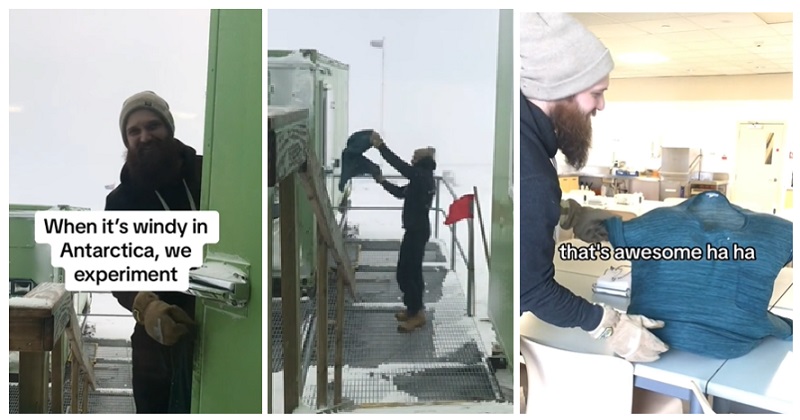
A project manager at a scientific research facility in Antarctica has captured the attention of social media users with a light-hearted take on a blizzard. Matty Jordan recently shared a TikTok video showcasing how he creatively embraces the harsh weather conditions by playing with a t-shirt during a snowstorm. The video, which quickly garnered significant views, demonstrates the unique spirit of those working in one of the most challenging environments on Earth.
Jordan’s entertaining stunt took place amidst a fierce Antarctic blizzard, where strong winds and snow create extreme conditions. In the video, he showcases the power of the wind by holding up a t-shirt, humorously highlighting how it flutters in the frigid air. The TikTok post features the caption, “When there’s a blizzard outside, we play,” inviting viewers to share in the fun of the moment.
The lighthearted nature of the video resonated with TikTok users, generating a flurry of comments and interactions. Users reacted with amusement, with one commenting, “That’s just cool, well cold anyway,” while another quipped, “So scientific, lol.” The playful engagement underscores the camaraderie among researchers who find ways to maintain morale in an environment that can be isolating and harsh.
Creative Solutions in Harsh Conditions
Working in Antarctica often requires scientists to adapt creatively to their environment. While rigorous research and data collection are central to their work, moments of levity, such as Jordan’s t-shirt antics, serve as a reminder of the human spirit. The Antarctic landscape, with its stunning beauty and extreme challenges, provides a backdrop for both serious scientific inquiry and light-hearted moments.
Jordan’s video has sparked conversations not only about life in Antarctica but also about how similar antics can be replicated in different climates. A user named Sassy Ginger humorously noted that such creative experiments are not limited to polar regions, mentioning similar activities in North Dakota. The exchange highlights the universal appeal of finding joy and amusement, regardless of location.
The Impact of Social Media on Remote Research Communities
As social media continues to influence how people perceive remote research communities, videos like Jordan’s offer insight into the unique experiences of those stationed in extreme conditions. The ability to share moments of fun and creativity contributes to a broader understanding of life in Antarctica, challenging preconceived notions about isolation and hardship.
In addition to entertainment, these platforms allow researchers to document their work, share scientific findings, and connect with a global audience. The intersection of science and social media can enhance public engagement, fostering interest in scientific research conducted in some of the world’s most inhospitable environments.
Matty Jordan’s playful approach during a blizzard serves not only as a source of amusement but also as a reminder of the resilience and creativity of individuals working in extreme conditions. As the viral video continues to circulate, it brings a refreshing perspective on the lighter side of life in Antarctica, ultimately enriching the narrative surrounding scientific research in remote locations.

Marie Helvin Discusses Dating Challenges and Body Confidence at 73

Danny Morrison Reflects on United Ireland, Gerry Adams, and Stormont’s Future

Southampton University and Siemens Collaborate to Advance MEMS Technology

Barcelona’s Deco Highlights Rashford’s Burden at Manchester United

Rolls-Royce Shares Surge 77% in 2025: What’s Next for Investors?

Welsh Ambulance Service Targets Frequent 999 Callers for Support

Welsh Ambulance Service Targets Frequent 999 Callers for Better Care

Bremen’s Marble Imaging Secures €5.3M for Revolutionary Satellites

WNBA and Players Association Secure 40-Day Extension on CBA Talks

Iconic 90s TV Show House Hits Market for £1.1 Million

Milk Bank Urges Mothers to Donate for Premature Babies’ Health

Alessia Russo Signs Long-Term Deal with Arsenal Ahead of WSL Season

Shoppers Flock to Discounted Neck Pillow on Amazon for Travel Comfort

Museums Body Critiques EHRC Proposals on Gender Facilities

Trump Visits Europe: Business, Politics, or Leisure?

Japanese Teen Sorato Shimizu Breaks U18 100m Record in 10 Seconds

Couple Shares Inspiring Love Story Defying Height Stereotypes

Anglian Water Raises Concerns Over Proposed AI Data Centre
-
 Entertainment2 months ago
Iconic 90s TV Show House Hits Market for £1.1 Million
-
 Lifestyle4 months ago
Milk Bank Urges Mothers to Donate for Premature Babies’ Health
-
 Sports3 months ago
Alessia Russo Signs Long-Term Deal with Arsenal Ahead of WSL Season
-
 Lifestyle4 months ago
Shoppers Flock to Discounted Neck Pillow on Amazon for Travel Comfort
-
 Politics4 months ago
Museums Body Critiques EHRC Proposals on Gender Facilities
-
 Business4 months ago
Trump Visits Europe: Business, Politics, or Leisure?
-
 Lifestyle4 months ago
Japanese Teen Sorato Shimizu Breaks U18 100m Record in 10 Seconds
-
 Politics4 months ago
Couple Shares Inspiring Love Story Defying Height Stereotypes
-
 World4 months ago
Anglian Water Raises Concerns Over Proposed AI Data Centre
-

 Sports4 months ago
Bournemouth Dominates Everton with 3-0 Victory in Premier League Summer Series
-

 World4 months ago
Wreckage of Missing Russian Passenger Plane Discovered in Flames
-

 Lifestyle4 months ago
Shoppers Rave About Roman’s £42 Midi Dress, Calling It ‘Elegant’