
Health
Doctor Explains Why You Jolt Awake When Falling Asleep

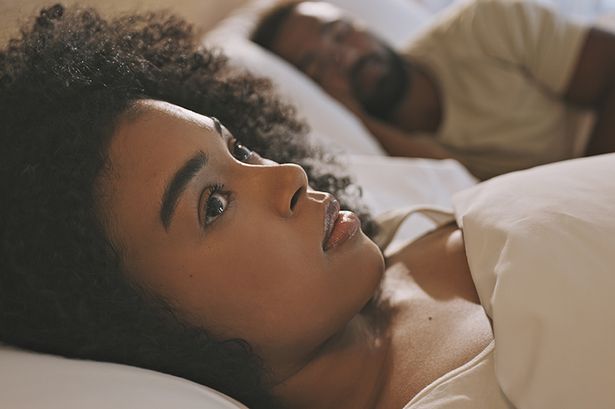
Dr. Amir Khan, a prominent physician known for his appearances on ITV’s *Lorraine*, has shed light on a common phenomenon that leaves many feeling alarmed during their transition to sleep. He explains the reason behind the unsettling experience of jolting awake, which often feels as though one is falling.
Many individuals have experienced that moment of drifting off, only to suddenly awaken with a racing heart, fearing a potential fall. This occurrence, known as a hypnic jerk, is a normal physiological response that can be disconcerting but is typically harmless.
Understanding the Hypnic Jerk
Dr. Khan elaborates that a hypnic jerk, sometimes referred to as a sleep start, occurs as one begins to fall asleep. According to the National Health Service (NHS), this reaction is widespread and may be accompanied by the sensation of falling or a sudden loud noise or flash of light. The body, particularly the legs, may twitch involuntarily during this brief episode.
These jerking movements can be exacerbated by factors such as sleep deprivation, high levels of stress, or consumption of caffeine. Dr. Khan clarifies, “As you drift into sleep, your muscles relax, and sometimes your brain misinterprets this relaxation as a signal that you are falling. It then sends a quick signal to your body to ‘catch’ you, resulting in the sudden wake-up.”
Interestingly, some researchers propose that this reflex may be an evolutionary remnant, designed to protect our ancestors from falling out of trees while they slept.
Addressing Concerns and Misunderstandings
Dr. Khan reassures viewers that hypnic jerks are “totally harmless” and that they are more common in individuals who are stressed, consume caffeine late in the day, or are simply overtired. “So, next time it happens, don’t panic; it’s just your brain being quirky. Totally normal, totally harmless,” he concluded in his video.
In response to Dr. Khan’s explanation, many viewers took to social media, sharing their experiences. Some expressed relief at understanding the phenomenon, stating, “I’m sure many will be reassured by this, as I know for some people they worry when it happens.” Others described their hypnic jerks as intense, with one user noting, “That was a very gentle jolt compared to mine! I think I actually leave four inches off the bed and I’m shaken after and can’t sleep.”
For those who find themselves regularly disturbed by these occurrences or have other sleep-related concerns, Dr. Khan advises consulting a general practitioner for further guidance.
Understanding the science behind sleep can alleviate unnecessary anxiety and promote a healthier approach to rest. With knowledge comes reassurance, allowing individuals to embrace sleep without the fear of sudden awakenings.

Liverpool Activates Backup Plan as Man City Targets Antoine Semenyo

British Father Drowns in Thailand After Being Swept Away by Waves

TorroFX Set to Transform Trading Landscape with Launch on December 1, 2025

BBC Breakfast’s Sally Nugent Apologizes for News Disruption

Recognize Bowel Cancer Signs During Festive Overindulgence

Marie Helvin Discusses Dating Challenges and Body Confidence at 73

Danny Morrison Reflects on United Ireland, Gerry Adams, and Stormont’s Future

Southampton University and Siemens Collaborate to Advance MEMS Technology

Barcelona’s Deco Highlights Rashford’s Burden at Manchester United

Iconic 90s TV Show House Hits Market for £1.1 Million

Milk Bank Urges Mothers to Donate for Premature Babies’ Health

Alessia Russo Signs Long-Term Deal with Arsenal Ahead of WSL Season

Shoppers Flock to Discounted Neck Pillow on Amazon for Travel Comfort

Museums Body Critiques EHRC Proposals on Gender Facilities

Trump Visits Europe: Business, Politics, or Leisure?

Japanese Teen Sorato Shimizu Breaks U18 100m Record in 10 Seconds

Couple Shares Inspiring Love Story Defying Height Stereotypes

Anglian Water Raises Concerns Over Proposed AI Data Centre
-
 Entertainment2 months ago
Iconic 90s TV Show House Hits Market for £1.1 Million
-
 Lifestyle4 months ago
Milk Bank Urges Mothers to Donate for Premature Babies’ Health
-
 Sports3 months ago
Alessia Russo Signs Long-Term Deal with Arsenal Ahead of WSL Season
-
 Lifestyle4 months ago
Shoppers Flock to Discounted Neck Pillow on Amazon for Travel Comfort
-
 Politics4 months ago
Museums Body Critiques EHRC Proposals on Gender Facilities
-
 Business4 months ago
Trump Visits Europe: Business, Politics, or Leisure?
-
 Lifestyle4 months ago
Japanese Teen Sorato Shimizu Breaks U18 100m Record in 10 Seconds
-
 Politics4 months ago
Couple Shares Inspiring Love Story Defying Height Stereotypes
-
 World4 months ago
Anglian Water Raises Concerns Over Proposed AI Data Centre
-

 Sports4 months ago
Bournemouth Dominates Everton with 3-0 Victory in Premier League Summer Series
-

 World4 months ago
Wreckage of Missing Russian Passenger Plane Discovered in Flames
-

 Lifestyle4 months ago
Shoppers Rave About Roman’s £42 Midi Dress, Calling It ‘Elegant’