
Politics
UK Media Faces Backlash Over Coverage of Manchester Attack

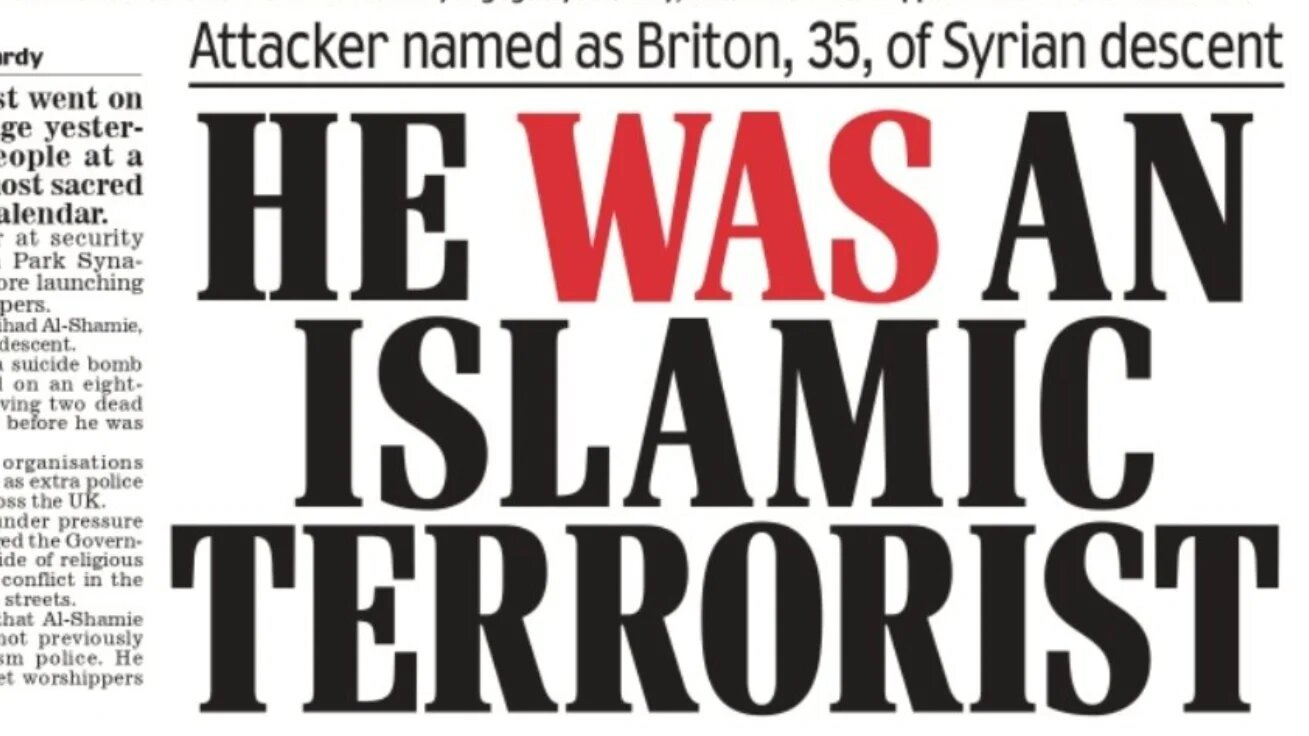
A man attacked worshippers at a synagogue in Manchester on Yom Kippur, resulting in a significant outcry from various communities. The incident, characterized as an act of terror, has sparked a contentious debate about media responsibility and representation, particularly regarding the portrayal of Muslims and Islam in the wake of such violence.
In the hours following the attack, much of the media coverage shifted focus from the crime itself to implications about Islam and the broader Muslim community. The Daily Mail prominently featured the incident on its front page, framing it in a manner that many critics argue unfairly associated the actions of an individual with the faith of over two billion people worldwide. This framing echoes patterns observed in previous incidents, where the actions of a single perpetrator are generalized to implicate an entire community.
While some outlets characterized the attack as terrorism, the language used has raised concerns about the potential for stigmatizing an entire religion. Critics contend that labeling the perpetrator as an “Islamic terrorist” is misleading, given that Islamic teachings explicitly forbid extrajudicial killings and the targeting of innocents. This misrepresentation, they argue, serves to deepen societal divides and perpetuate harmful stereotypes about Muslims.
The media’s response is not a new phenomenon. Following the attacks led by Hamas on October 7, 2023, certain UK Jewish publications attributed blame to Muslim culture. Before the Manchester attacker was even identified, a commentator on GB News claimed that Islam itself was at fault. Such statements, made without challenge, reflect a troubling trend where media platforms provide a stage for Islamophobic rhetoric.
The coverage contrasts sharply with how incidents involving far-right violence are reported. For instance, after the Christchurch mosque attack in 2019, where white supremacist Brenton Tarrant killed worshippers, the Daily Mirror focused on Tarrant’s childhood and his transformation into a killer, downplaying his extremist ideology. This editorial choice arguably legitimized Tarrant’s motivations while obscuring the harmful implications of his actions.
Research from the Centre for Media Monitoring indicates that between 2015 and 2019, over half of all terrorism references in mainstream UK media were linked to Muslims or Islam, while only six percent referred to far-right ideologies. This disparity highlights a pattern where acts of violence committed by Muslims are viewed through a lens of collective blame, whereas far-right terrorism is frequently treated as isolated incidents.
In the wake of the Manchester attack, some media figures suggested that Muslims should prove their loyalty, further compounding the narrative of suspicion. Comments about funding disparities between Muslim and Jewish community support have also emerged, with one presenter on GB News claiming that Muslims were favored in terms of resources allocated for community safety.
These narratives contribute to a pervasive atmosphere of fear and division, where Muslims are often depicted as a threat rather than as members of the community. Historical context shows that incidents of anti-Muslim violence, such as the 2017 attack where a grandfather was deliberately run over, receive far less media attention compared to attacks involving Muslim perpetrators.
The media’s selective focus extends to the portrayal of Muslim communities and institutions. Myths about the influence of Islamic councils in the UK persist, despite evidence that these bodies operate within the framework of English law. Reporting on anti-Muslim abuses, such as recent incidents involving police misconduct, often neglects to address the broader issue of Islamophobia.
As the Manchester attack continues to be discussed, it is crucial for media outlets to provide balanced reporting that does not demonize entire communities. While solidarity with Jewish communities in the aftermath of such attacks is essential, it should not come at the expense of scapegoating Muslims.
The ongoing cycle of hate in media coverage poses risks not only to Muslims but also to the broader societal fabric. As the public grapples with these complex issues, responsible journalism is more important than ever to foster understanding rather than division.

Cattle Showcases Thrive at RUAS Winter Fair 2023

UK and US Strike Zero Tariff Agreement on Pharmaceuticals

Maya Jama Stuns in Strapless Ensemble at Qatar Grand Prix

Russia and Saudi Arabia Launch Visa-Free Travel Agreement

ISOLDE Facility Marks 10 Years of Advancements in Nuclear Research

Voters Demand Resignation of Chancellor Rachel Reeves Over Tax Hikes

Shoppers Save 30% on Marks & Spencer’s Viral Velvet Dress

Health Campaigners Urge End to Smoking Exemption for Lounges

Charity Shop Surprise: Woman Finds Joggers Worth £2,000 for £8

Iconic 90s TV Show House Hits Market for £1.1 Million

Milk Bank Urges Mothers to Donate for Premature Babies’ Health

Alessia Russo Signs Long-Term Deal with Arsenal Ahead of WSL Season

Shoppers Flock to Discounted Neck Pillow on Amazon for Travel Comfort

Museums Body Critiques EHRC Proposals on Gender Facilities

Trump Visits Europe: Business, Politics, or Leisure?

Japanese Teen Sorato Shimizu Breaks U18 100m Record in 10 Seconds

Couple Shares Inspiring Love Story Defying Height Stereotypes

Anglian Water Raises Concerns Over Proposed AI Data Centre
-
 Entertainment2 months ago
Iconic 90s TV Show House Hits Market for £1.1 Million
-
 Lifestyle4 months ago
Milk Bank Urges Mothers to Donate for Premature Babies’ Health
-
 Sports3 months ago
Alessia Russo Signs Long-Term Deal with Arsenal Ahead of WSL Season
-
 Lifestyle4 months ago
Shoppers Flock to Discounted Neck Pillow on Amazon for Travel Comfort
-
 Politics4 months ago
Museums Body Critiques EHRC Proposals on Gender Facilities
-
 Business4 months ago
Trump Visits Europe: Business, Politics, or Leisure?
-
 Lifestyle4 months ago
Japanese Teen Sorato Shimizu Breaks U18 100m Record in 10 Seconds
-
 Politics4 months ago
Couple Shares Inspiring Love Story Defying Height Stereotypes
-
 World4 months ago
Anglian Water Raises Concerns Over Proposed AI Data Centre
-

 Sports4 months ago
Bournemouth Dominates Everton with 3-0 Victory in Premier League Summer Series
-

 World4 months ago
Wreckage of Missing Russian Passenger Plane Discovered in Flames
-

 Lifestyle4 months ago
Shoppers Rave About Roman’s £42 Midi Dress, Calling It ‘Elegant’