
Science
NASA Unveils Potential Evidence of Ancient Life on Mars

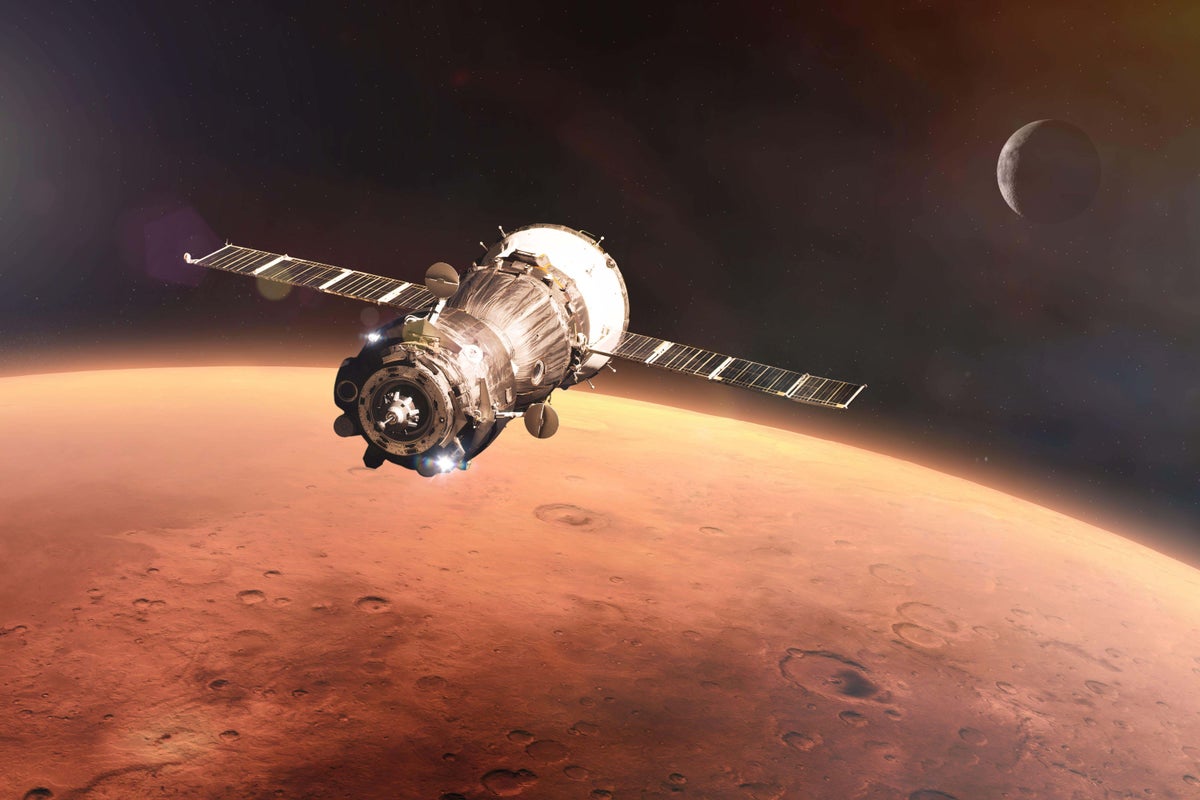
NASA has announced significant findings from Mars that could suggest the planet once harbored life. Scientists have identified unique mineral patterns, resembling “leopard spots,” in clay-rich rocks located at the edge of Jezero Crater. This crater, which is believed to have housed an ancient lake, has been the focal point of exploration by the NASA Perseverance Rover since its landing in February 2021.
These intriguing mineral patterns have drawn attention for their similarity to microbial traces found on Earth. While definitive proof of past life on Mars remains elusive, the discovery has reignited discussions about the potential for ancient microbial organisms to have existed on the planet. Experts agree that multiple lines of evidence will be necessary to draw any conclusions regarding life on Mars, but the prospect remains captivating.
The geological history of Mars shares parallels with early Earth, particularly in terms of atmospheric conditions and the presence of liquid water. Both planets possessed protective atmospheres and magnetic fields, which shielded them from harmful solar radiation. These conditions are thought to have facilitated the emergence of life on Earth, raising the possibility that similar processes could have occurred on Mars.
As Mars evolved, it lost its magnetic field due to a cooling core, exposing its surface to solar radiation. This led to the erosion of its atmosphere and a transition to the cold, dry environment it is today. Scientists are increasingly skeptical about finding living organisms on the Martian surface, given its harsh conditions. Instead, they focus on the potential for microbial life to exist in more sheltered environments, such as underground or in icy regions.
Locations of interest for potential Martian microbial life include subsurface caves, beneath polar ice sheets, and deep underground. These areas have Earth analogs that support microbial ecosystems, suggesting that if life ever began on Mars, it might still persist in these extreme niches. The Martian subsurface, extending from a few meters to several kilometers deep, is considered the most stable habitat on the planet.
Research indicates that the subsurface might provide more favorable conditions than the surface, which has been inhospitable for much of Martian history. On Earth, a significant portion of microbial life thrives underground, often residing in rock cracks. Lithoautotrophs, a type of microbe that derives energy from rocks, dominate these ecosystems. Methane, which can be produced by some lithoautotrophs, has also been detected on Mars, although it can be generated by non-biological processes as well.
The viability of a deep biosphere on Mars depends on several factors, including the availability of liquid water, energy sources, and appropriate temperatures. There are indications of liquid water existing below the Martian surface, although this remains a topic of debate. The presence of water-rock reactions could catalyze chemical processes that would sustain microbial life.
Scientists employ various Earth environments to understand the potential for life on Mars. While no single location on Earth can replicate all Martian conditions, sites such as the Atacama Desert, Lake Salda in Turkey, and Utah’s Pilot Valley offer insights into how life might adapt to extreme environments. Additionally, controlled laboratory experiments, including specialized “Mars chambers,” simulate Martian atmospheric conditions to study microbial survival.
Despite the promising findings of the “leopard spots,” there is currently no conclusive evidence of past or present life on Mars. The upcoming European Space Agency (ESA) ExoMars Rosalind Franklin rover aims to advance this research by drilling up to two meters beneath the Martian surface, providing a chance to explore the shallow subsurface for living microorganisms.
While this mission represents a significant step forward, the scientific community recognizes that deeper exploration will likely be necessary to uncover definitive evidence of life. Probing the Martian deep subsurface poses considerable challenges, yet it may hold the answers to understanding the potential for life beyond Earth.

Cattle Showcases Thrive at RUAS Winter Fair 2023

UK and US Strike Zero Tariff Agreement on Pharmaceuticals

Maya Jama Stuns in Strapless Ensemble at Qatar Grand Prix

Russia and Saudi Arabia Launch Visa-Free Travel Agreement

ISOLDE Facility Marks 10 Years of Advancements in Nuclear Research

Voters Demand Resignation of Chancellor Rachel Reeves Over Tax Hikes

Shoppers Save 30% on Marks & Spencer’s Viral Velvet Dress

Health Campaigners Urge End to Smoking Exemption for Lounges

Charity Shop Surprise: Woman Finds Joggers Worth £2,000 for £8

Iconic 90s TV Show House Hits Market for £1.1 Million

Milk Bank Urges Mothers to Donate for Premature Babies’ Health

Alessia Russo Signs Long-Term Deal with Arsenal Ahead of WSL Season

Shoppers Flock to Discounted Neck Pillow on Amazon for Travel Comfort

Museums Body Critiques EHRC Proposals on Gender Facilities

Trump Visits Europe: Business, Politics, or Leisure?

Japanese Teen Sorato Shimizu Breaks U18 100m Record in 10 Seconds

Couple Shares Inspiring Love Story Defying Height Stereotypes

Anglian Water Raises Concerns Over Proposed AI Data Centre
-
 Entertainment2 months ago
Iconic 90s TV Show House Hits Market for £1.1 Million
-
 Lifestyle4 months ago
Milk Bank Urges Mothers to Donate for Premature Babies’ Health
-
 Sports3 months ago
Alessia Russo Signs Long-Term Deal with Arsenal Ahead of WSL Season
-
 Lifestyle4 months ago
Shoppers Flock to Discounted Neck Pillow on Amazon for Travel Comfort
-
 Politics4 months ago
Museums Body Critiques EHRC Proposals on Gender Facilities
-
 Business4 months ago
Trump Visits Europe: Business, Politics, or Leisure?
-
 Lifestyle4 months ago
Japanese Teen Sorato Shimizu Breaks U18 100m Record in 10 Seconds
-
 Politics4 months ago
Couple Shares Inspiring Love Story Defying Height Stereotypes
-
 World4 months ago
Anglian Water Raises Concerns Over Proposed AI Data Centre
-

 Sports4 months ago
Bournemouth Dominates Everton with 3-0 Victory in Premier League Summer Series
-

 World4 months ago
Wreckage of Missing Russian Passenger Plane Discovered in Flames
-

 Lifestyle4 months ago
Shoppers Rave About Roman’s £42 Midi Dress, Calling It ‘Elegant’