
World
Manchester Derby Erupts into Violence: The Maine Road Massacre

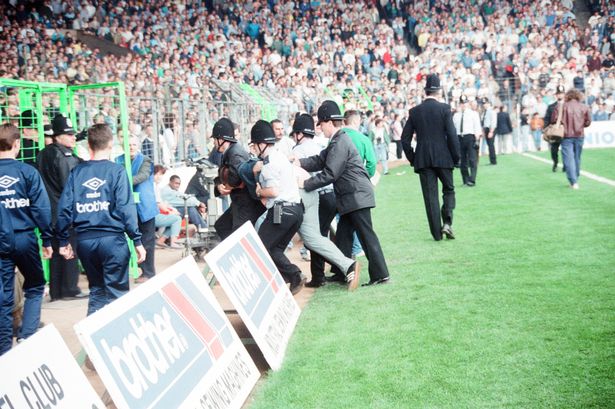
On September 23, 1989, a highly anticipated Manchester derby turned chaotic as violence erupted between rival fans, resulting in a scene described by witnesses as akin to “dogs fighting.” Immediately following the kick-off, approximately 1,000 supporters surged onto the pitch in an attempt to escape the turmoil, leading to an eight-minute suspension of play. This incident marked one of the most severe outbreaks of football violence Manchester had experienced in years, prompting police to initiate a crackdown on the rampant hooliganism that plagued English football.
The match was significant for both teams. After a prolonged absence from the top division, Manchester City was back in the Premier League, hosting their cross-city rivals at Maine Road for the first time in three years. Manchester United, bolstered by high-profile signings such as Paul Ince and Gary Pallister, were embarking on what would become a period of dominance under manager Sir Alex Ferguson. Anticipation was palpable, but so was apprehension, as the late 1980s were a tumultuous time for English football.
Concerns regarding potential violence had been raised in the days leading up to the match. According to a report in the Manchester Evening News, there were warnings that a group of around 300 United fans had acquired tickets for the City end and were intent on causing trouble. One United supporter even contacted the newspaper, expressing concern about the situation and stating, “I want no part of this.”
As the match commenced, chaos ensued. United hooligan Tony O’Neill later recounted in his book, “The Men in Black,” that fans were instructed not to purchase tickets unless they were for the North Stand, suggesting a premeditated plan to infiltrate the City supporters. Once inside, the violence erupted, with O’Neill describing the scene as “utter chaos,” with fists flying and police struggling to maintain control.
Eventually, the situation was subdued, allowing the match to continue. In a stunning turn of events, Manchester City triumphed over United with a score of 5-1, a result that would be forever remembered as the “Maine Road Massacre.” Despite the resounding victory, the violent confrontations overshadowed the match itself, leaving a lasting impact on the football community.
Following the incident, 26 arrests were made, primarily for public order offenses, and numerous individuals received treatment for minor injuries. The fallout from the violence extended beyond the pitch, leading to a clash between United chairman Michael Knighton and City chairman Peter Swales over the police’s handling of the situation. Knighton criticized the police’s six-minute delay in responding to the violence, while Swales defended their actions, asserting that they managed the situation as best they could.
Chief Superintendent Ray Sherratt, who oversaw the police response, stated that officers were already addressing multiple fights throughout the ground when the trouble escalated. He maintained that the police were not slow to respond, but rather had been stretched thin across various sections of the stadium.
In a covert effort to tackle the hooligan problem, Greater Manchester Police (GMP) had initiated a secretive operation known as Operation Omega in 1987. This initiative aimed to dismantle the region’s notorious football firms, including the Guvnors and Young Guvnors. Following the violence at Maine Road, police shifted their focus to the United fan base, launching Operation Mars in December 1989.
The operation quickly identified O’Neill as a key target, assigning him the codename “Target Kilo.” Over the next year, officers worked to infiltrate United’s hooligan factions in an attempt to gather evidence for prosecution. On November 22, 1990, the day of Margaret Thatcher’s resignation, police executed a series of dawn raids, arresting more than 30 suspected hooligans, including O’Neill.
Despite the extensive efforts, the outcome of Operation Mars was far less successful than its predecessor. Although 28 individuals were charged, the case encountered significant legal hurdles, primarily revolving around the use of undercover officers’ testimony. Disputes over the protection of their identities led to a prolonged legal battle that ultimately resulted in the collapse of the trial by May 1993, leaving most of those arrested free from prosecution.
The events surrounding the Maine Road derby not only highlighted the persistent issue of football hooliganism in England but also underscored the challenges faced by law enforcement in adequately addressing such violence. The chaotic scenes on that fateful day remain a stark reminder of the darker side of football culture, one that authorities continue to grapple with decades later.

Cattle Showcases Thrive at RUAS Winter Fair 2023

UK and US Strike Zero Tariff Agreement on Pharmaceuticals

Maya Jama Stuns in Strapless Ensemble at Qatar Grand Prix

Russia and Saudi Arabia Launch Visa-Free Travel Agreement

ISOLDE Facility Marks 10 Years of Advancements in Nuclear Research

Voters Demand Resignation of Chancellor Rachel Reeves Over Tax Hikes

Shoppers Save 30% on Marks & Spencer’s Viral Velvet Dress

Health Campaigners Urge End to Smoking Exemption for Lounges

Charity Shop Surprise: Woman Finds Joggers Worth £2,000 for £8

Iconic 90s TV Show House Hits Market for £1.1 Million

Milk Bank Urges Mothers to Donate for Premature Babies’ Health

Alessia Russo Signs Long-Term Deal with Arsenal Ahead of WSL Season

Shoppers Flock to Discounted Neck Pillow on Amazon for Travel Comfort

Museums Body Critiques EHRC Proposals on Gender Facilities

Trump Visits Europe: Business, Politics, or Leisure?

Japanese Teen Sorato Shimizu Breaks U18 100m Record in 10 Seconds

Couple Shares Inspiring Love Story Defying Height Stereotypes

Anglian Water Raises Concerns Over Proposed AI Data Centre
-
 Entertainment2 months ago
Iconic 90s TV Show House Hits Market for £1.1 Million
-
 Lifestyle4 months ago
Milk Bank Urges Mothers to Donate for Premature Babies’ Health
-
 Sports3 months ago
Alessia Russo Signs Long-Term Deal with Arsenal Ahead of WSL Season
-
 Lifestyle4 months ago
Shoppers Flock to Discounted Neck Pillow on Amazon for Travel Comfort
-
 Politics4 months ago
Museums Body Critiques EHRC Proposals on Gender Facilities
-
 Business4 months ago
Trump Visits Europe: Business, Politics, or Leisure?
-
 Lifestyle4 months ago
Japanese Teen Sorato Shimizu Breaks U18 100m Record in 10 Seconds
-
 Politics4 months ago
Couple Shares Inspiring Love Story Defying Height Stereotypes
-
 World4 months ago
Anglian Water Raises Concerns Over Proposed AI Data Centre
-

 Sports4 months ago
Bournemouth Dominates Everton with 3-0 Victory in Premier League Summer Series
-

 World4 months ago
Wreckage of Missing Russian Passenger Plane Discovered in Flames
-

 Lifestyle4 months ago
Shoppers Rave About Roman’s £42 Midi Dress, Calling It ‘Elegant’