
Science
Machine Learning Revolutionizes Nanoparticle Design for Drug Delivery

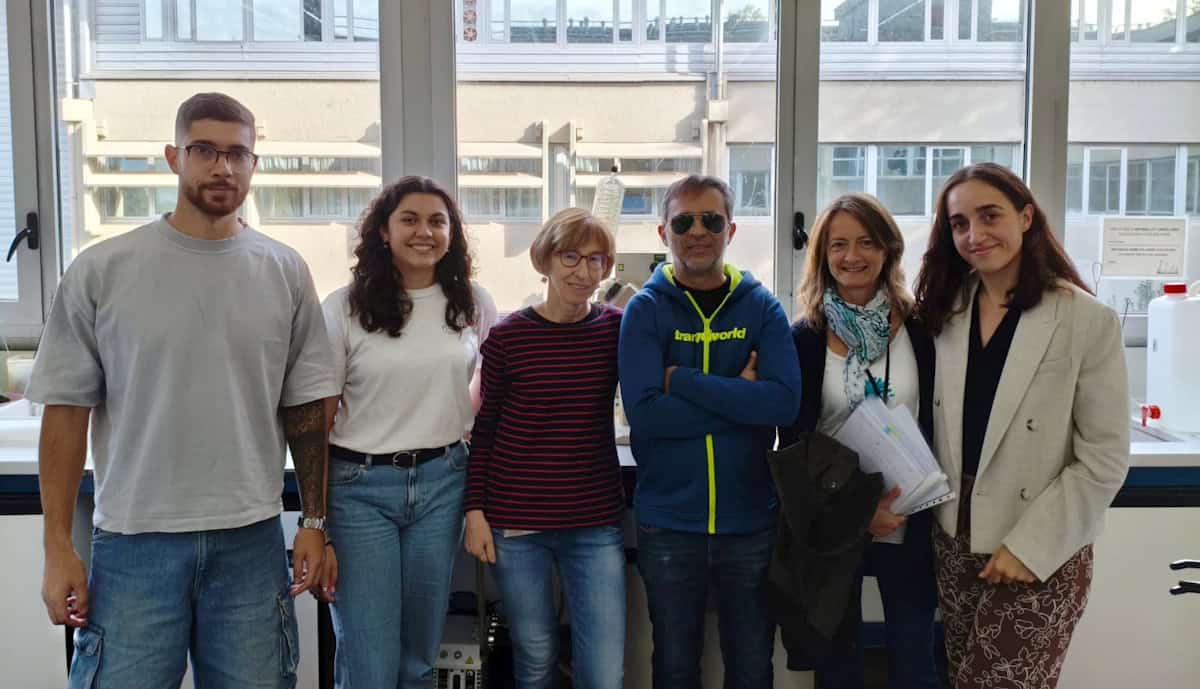
Neurodegenerative diseases, which impact millions globally, often face treatment challenges due to the blood-brain barrier (BBB). A research team from the University of the Basque Country in Spain and Tulane University in the USA, led by the CHEMIF.PTML Lab, has developed a groundbreaking machine learning technique aimed at optimizing nanoparticle design for efficient drug delivery to the brain.
The team’s work involves creating nanoparticles capable of crossing the BBB, thereby enhancing drug transport to specific brain regions. Designing these targeted nanoparticles has traditionally been complex and time-consuming, necessitating the development of advanced frameworks to identify candidates with desirable bioactivity profiles.
To tackle this challenge, the researchers employed machine learning, utilizing molecular and clinical data to uncover trends that could lead to innovative drug delivery methods with improved efficiency and minimal side effects. Unlike the slow and costly trial-and-error approaches previously used, machine learning offers a faster screening process for a wide range of nanoparticle compositions. However, traditional methods often struggle due to the lack of suitable datasets.
To overcome this limitation, the CHEMIF.PTML Lab introduced the IFE.PTML method, which integrates information fusion, Python-based encoding, and perturbation theory with machine learning algorithms. According to corresponding author Humberto González-Díaz, “The main advantage of our IFE.PTML method lies in its ability to handle heterogeneous nanoparticle data.” This approach merges diverse data types—such as physicochemical properties and bioassays—while applying perturbation theory to model uncertainties, resulting in more reliable predictions of nanoparticle behavior.
The research team constructed a comprehensive database containing physicochemical and bioactivity parameters for 45 different nanoparticle systems across 41 cell lines. Using this data, they trained the IFE.PTML models employing three machine learning algorithms: random forest, extreme gradient boosting, and decision tree. The random forest-based model demonstrated the highest performance, achieving accuracies of 95.1% on training datasets and 89.7% on testing datasets.
Experimental Validation of Predictions
To validate the applicability of their model, the researchers synthesized two novel magnetite nanoparticle systems, measuring 31 nm in diameter (Fe3O4_A) and 26 nm (Fe3O4_B). These magnetite-based nanoparticles are biocompatible, easily functionalized, and possess a high surface area-to-volume ratio, making them efficient drug carriers. The team coated the nanoparticles with either PMAO (poly(maleic anhydride-alt-1-octadecene)) or PMAO combined with PEI (poly(ethyleneimine)) to enhance water solubility.
The team characterized the structural, morphological, and magnetic properties of the four nanoparticle systems. They subsequently used the optimized model to predict the likelihood of favorable bioactivity for drug delivery in various human brain cell lines, including models of neurodegenerative diseases, brain tumors, and the BBB.
The inputs for their model included a reference function based on bioactivity parameters and perturbation theory operators for several nanoparticle parameters. The IFE.PTML model calculated critical bioactivity parameters, concentrating on indicators of toxicity, efficacy, and safety. These included the 50% cytotoxic, inhibitory, lethal, and toxic concentrations, along with the zeta potential, which influences the nanoparticles’ ability to cross the BBB. The model output binary results: “0” for undesired and “1” for desired bioactivities.
The analysis revealed that PMAO-coated nanoparticles emerged as the most promising candidates for applications involving the BBB and neuronal interactions, due to their favorable stability and biocompatibility. In contrast, nanoparticles with PMAO-PEI coatings showed potential for targeting brain tumor cells.
The researchers noted that, where comparisons were feasible, the trends predicted by the random forest-based IFE.PTML model aligned with experimental findings and previous studies documented in the literature. This congruence suggests that the model is both efficient and robust, providing valuable insights into nanoparticle-coating combinations aimed at specific targets.
González-Díaz stated, “The present study focused on the nanoparticles as potential drug carriers. Therefore, we are currently implementing a combined machine learning and deep learning methodology with potential drug candidates for neurodegenerative diseases.”
The CHEMIF.PTML Lab operates as a multicentre laboratory of the Biofisika Institute of UPV/EHU and the Spanish National Research Council, with support from Ikerbasque, the Basque Foundation for Science.

Cattle Showcases Thrive at RUAS Winter Fair 2023

UK and US Strike Zero Tariff Agreement on Pharmaceuticals

Maya Jama Stuns in Strapless Ensemble at Qatar Grand Prix

Russia and Saudi Arabia Launch Visa-Free Travel Agreement

ISOLDE Facility Marks 10 Years of Advancements in Nuclear Research

Voters Demand Resignation of Chancellor Rachel Reeves Over Tax Hikes

Shoppers Save 30% on Marks & Spencer’s Viral Velvet Dress

Health Campaigners Urge End to Smoking Exemption for Lounges

Charity Shop Surprise: Woman Finds Joggers Worth £2,000 for £8

Iconic 90s TV Show House Hits Market for £1.1 Million

Milk Bank Urges Mothers to Donate for Premature Babies’ Health

Alessia Russo Signs Long-Term Deal with Arsenal Ahead of WSL Season

Shoppers Flock to Discounted Neck Pillow on Amazon for Travel Comfort

Museums Body Critiques EHRC Proposals on Gender Facilities

Trump Visits Europe: Business, Politics, or Leisure?

Japanese Teen Sorato Shimizu Breaks U18 100m Record in 10 Seconds

Couple Shares Inspiring Love Story Defying Height Stereotypes

Anglian Water Raises Concerns Over Proposed AI Data Centre
-
 Entertainment2 months ago
Iconic 90s TV Show House Hits Market for £1.1 Million
-
 Lifestyle4 months ago
Milk Bank Urges Mothers to Donate for Premature Babies’ Health
-
 Sports3 months ago
Alessia Russo Signs Long-Term Deal with Arsenal Ahead of WSL Season
-
 Lifestyle4 months ago
Shoppers Flock to Discounted Neck Pillow on Amazon for Travel Comfort
-
 Politics4 months ago
Museums Body Critiques EHRC Proposals on Gender Facilities
-
 Business4 months ago
Trump Visits Europe: Business, Politics, or Leisure?
-
 Lifestyle4 months ago
Japanese Teen Sorato Shimizu Breaks U18 100m Record in 10 Seconds
-
 Politics4 months ago
Couple Shares Inspiring Love Story Defying Height Stereotypes
-
 World4 months ago
Anglian Water Raises Concerns Over Proposed AI Data Centre
-

 Sports4 months ago
Bournemouth Dominates Everton with 3-0 Victory in Premier League Summer Series
-

 World4 months ago
Wreckage of Missing Russian Passenger Plane Discovered in Flames
-

 Lifestyle4 months ago
Shoppers Rave About Roman’s £42 Midi Dress, Calling It ‘Elegant’