
Health
Trump and Big Pharma Pressure UK on NHS Drug Pricing

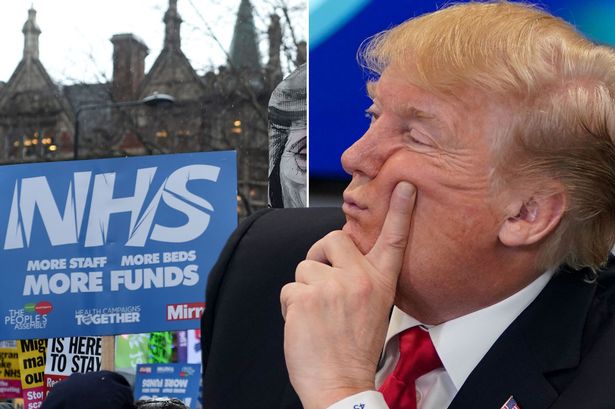
Concerns are growing over the potential impact of drug pricing negotiations between the UK government and pharmaceutical companies, particularly in light of threats from former President Donald Trump. Campaigners warn that the NHS could face significant financial strain if pressured to accept higher drug prices. The global advocacy group Global Justice Now has urged the UK government to resist Trump’s demands for increased payments, fearing that failure to do so could lead to the NHS “going broke.”
On March 15, 2024, British pharmaceutical firm AstraZeneca announced a substantial increase in its planned investment in a US manufacturing site, raising the figure to £3.3 billion. This development follows a recent investigation by UK regulators, which found no evidence of anti-competitive behavior among major pharmaceutical companies, despite their threats to withdraw from the UK market.
In an article for the Mirror, Nick Deardon, director of Global Justice Now, highlighted the disparity in drug prices between the US and the UK. He noted that Americans pay four times as much for medicines compared to their British counterparts. Deardon argued that these exorbitant prices force many Americans into difficult financial situations, leaving them with a choice between forgoing necessary treatments or facing crippling debt.
The advocacy group, along with others such as the Balanced Economy Project and Just Treatment, has called on the UK’s Competition and Markets Authority to investigate the pricing practices of pharmaceutical companies. The CMA has responded, indicating that it has not found direct evidence of collusion among these companies regarding public announcements related to pricing.
Tensions escalated when AstraZeneca, along with other firms like Merck and Eli Lilly, paused investments totaling over £1.3 billion in the UK. Merck halted a planned £900 million research and development center, while AstraZeneca delayed a £170 million investment in its Cambridge research site. The situation has raised alarms about the future of the NHS, which has historically negotiated lower drug prices due to its collective bargaining power, unlike private hospitals in the US.
Reports indicate that the UK government is considering increasing the NHS’s “value for money” threshold by 25%. This proposal is seen as a response to pressure from Trump and the pharmaceutical industry. An industry source familiar with the negotiations suggested that the UK government has yielded to demands from pharmaceutical companies to ensure they remain engaged in the UK market.
Previous research published in the Lancet has suggested that the current drug price threshold, set by the National Institute for Health and Care Excellence (NICE), is already too high. Experts warn that if the NHS pays more for medications, it will have less funding available for essential services such as staffing and hospital beds.
Deardon emphasized the risks of allowing foreign pressure to dictate NHS drug pricing. He pointed out that the UK government must prioritize public health over corporate profits. He argued that the current situation reflects a broader trend of the UK becoming increasingly reliant on American interests, undermining its ability to regulate healthcare effectively.
As negotiations continue, the future of the NHS remains uncertain. Advocates are calling for a shift towards a healthcare system that prioritizes public health needs over the profits of large pharmaceutical companies. Deardon concluded that the government must take action to develop a sustainable and equitable medicine industry that benefits all citizens, rather than acquiescing to the demands of corporate giants.
The ongoing struggle for fair drug pricing underscores the critical balance between health care affordability and corporate interests. The decisions made in the coming months may significantly shape the landscape of the NHS and its ability to provide necessary treatments to the British public.

Marie Helvin Discusses Dating Challenges and Body Confidence at 73

Danny Morrison Reflects on United Ireland, Gerry Adams, and Stormont’s Future

Southampton University and Siemens Collaborate to Advance MEMS Technology

Barcelona’s Deco Highlights Rashford’s Burden at Manchester United

Rolls-Royce Shares Surge 77% in 2025: What’s Next for Investors?

Welsh Ambulance Service Targets Frequent 999 Callers for Support

Welsh Ambulance Service Targets Frequent 999 Callers for Better Care

Bremen’s Marble Imaging Secures €5.3M for Revolutionary Satellites

WNBA and Players Association Secure 40-Day Extension on CBA Talks

Iconic 90s TV Show House Hits Market for £1.1 Million

Milk Bank Urges Mothers to Donate for Premature Babies’ Health

Alessia Russo Signs Long-Term Deal with Arsenal Ahead of WSL Season

Shoppers Flock to Discounted Neck Pillow on Amazon for Travel Comfort

Museums Body Critiques EHRC Proposals on Gender Facilities

Trump Visits Europe: Business, Politics, or Leisure?

Japanese Teen Sorato Shimizu Breaks U18 100m Record in 10 Seconds

Couple Shares Inspiring Love Story Defying Height Stereotypes

Anglian Water Raises Concerns Over Proposed AI Data Centre
-
 Entertainment2 months ago
Iconic 90s TV Show House Hits Market for £1.1 Million
-
 Lifestyle4 months ago
Milk Bank Urges Mothers to Donate for Premature Babies’ Health
-
 Sports3 months ago
Alessia Russo Signs Long-Term Deal with Arsenal Ahead of WSL Season
-
 Lifestyle4 months ago
Shoppers Flock to Discounted Neck Pillow on Amazon for Travel Comfort
-
 Politics4 months ago
Museums Body Critiques EHRC Proposals on Gender Facilities
-
 Business4 months ago
Trump Visits Europe: Business, Politics, or Leisure?
-
 Lifestyle4 months ago
Japanese Teen Sorato Shimizu Breaks U18 100m Record in 10 Seconds
-
 Politics4 months ago
Couple Shares Inspiring Love Story Defying Height Stereotypes
-
 World4 months ago
Anglian Water Raises Concerns Over Proposed AI Data Centre
-

 Sports4 months ago
Bournemouth Dominates Everton with 3-0 Victory in Premier League Summer Series
-

 World4 months ago
Wreckage of Missing Russian Passenger Plane Discovered in Flames
-

 Lifestyle4 months ago
Shoppers Rave About Roman’s £42 Midi Dress, Calling It ‘Elegant’