
Science
Royal Observatory Unveils £77 Million Transformation Project

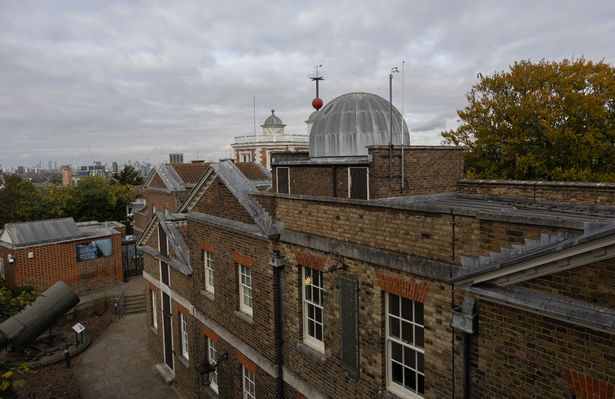
The Royal Observatory in Greenwich has announced a transformative project valued at £77 million, marking a significant milestone in its 350-year history. Titled the **First Light project**, this initiative aims to enhance accessibility and educational opportunities for visitors, particularly surrounding the observatory’s renowned Great Equatorial Telescope.
The project has led to the temporary closure of the **Peter Harrison Planetarium**, the only planetarium in London, alongside parts of the observatory’s southern grounds. Despite this, key attractions such as the Prime Meridian line and the astronomy galleries within Flamsteed House remain open to the public.
Enhancing Accessibility and Engagement
A central focus of the First Light project is improving access to the **Great Equatorial Telescope**, which is 8.5 metres long and features a 28-inch wide lens, making it the tenth largest telescope of its kind in Britain. Currently, the telescope is located in an area only reachable via a narrow spiral staircase, posing challenges for visitors with mobility issues. According to **Paddy Rodgers**, Director of Royal Museums Greenwich, plans include the installation of a lift and a new staircase to ensure universal access.
“We will build a lift and staircase that will ensure there will be universal access to see what is one of the greatest telescopes in Britain,” Rodgers stated. He emphasized the importance of making such historical scientific instruments accessible to the public, aiming to inspire curiosity and a deeper understanding of astronomy.
Interactive Learning Experiences
Beyond accessibility improvements, the project aims to foster a greater comprehension of the work conducted by astronomers and astrophysicists. Rodgers mentioned the intention to extend classroom experiences into the entire museum, allowing visitors to engage with astronomy in innovative ways.
Four new interactive astronomy galleries will be established, focusing on the themes of matter, motion, light, and space. These galleries are designed to provide visitors with insights into how astronomers study the universe. Additionally, a new entrance pavilion will help guide visitors from **Greenwich Park** into the observatory, enhancing the overall experience.
The project will also feature a covered courtyard named **Astronomers Court**, which will facilitate live science events, including experiments, talks led by astronomers, and interactive displays. Above this courtyard, a roof terrace will enable live streaming of astronomical events through the observatory’s modern telescopes.
Rodgers expressed his hope that these new additions will motivate individuals of all ages and backgrounds to engage with astronomy. He recalled bringing his daughter to the Royal Observatory when she was a teenager and noted her recent success in completing a master’s degree in physics and astrophysics.
“We can do everything from STEM to sparking curiosity, to having a really great day out with the family,” he remarked. “We can offer you this, or a career or opening into science and technology.”
Funding for the £77 million project comes from various sources, including the Royal Museums Greenwich’s reserves, government funding, grants from external foundations, and private donations. Notably, the **National Lottery Heritage Fund** awarded £9.7 million to the initiative on **October 7, 2023**, coinciding with **World Space Week**.
Eilish McGuinness, Chief Executive of the National Lottery Heritage Fund, commented on the significance of the project, stating, “The Royal Observatory Greenwich is a beacon of science and learning, and a World Heritage Site of national and international importance.” She expressed delight that National Lottery players are contributing to a project that will continue to inspire future generations.
As the Royal Observatory embarks on this ambitious journey, it aims not only to preserve its rich heritage but also to cultivate a passion for astronomy and science, ensuring that this treasured institution remains a vital resource for education and exploration in the years to come.

Cattle Showcases Thrive at RUAS Winter Fair 2023

UK and US Strike Zero Tariff Agreement on Pharmaceuticals

Maya Jama Stuns in Strapless Ensemble at Qatar Grand Prix

Russia and Saudi Arabia Launch Visa-Free Travel Agreement

ISOLDE Facility Marks 10 Years of Advancements in Nuclear Research

Voters Demand Resignation of Chancellor Rachel Reeves Over Tax Hikes

Shoppers Save 30% on Marks & Spencer’s Viral Velvet Dress

Health Campaigners Urge End to Smoking Exemption for Lounges

Charity Shop Surprise: Woman Finds Joggers Worth £2,000 for £8

Iconic 90s TV Show House Hits Market for £1.1 Million

Milk Bank Urges Mothers to Donate for Premature Babies’ Health

Alessia Russo Signs Long-Term Deal with Arsenal Ahead of WSL Season

Shoppers Flock to Discounted Neck Pillow on Amazon for Travel Comfort

Museums Body Critiques EHRC Proposals on Gender Facilities

Trump Visits Europe: Business, Politics, or Leisure?

Japanese Teen Sorato Shimizu Breaks U18 100m Record in 10 Seconds

Couple Shares Inspiring Love Story Defying Height Stereotypes

Anglian Water Raises Concerns Over Proposed AI Data Centre
-
 Entertainment2 months ago
Iconic 90s TV Show House Hits Market for £1.1 Million
-
 Lifestyle4 months ago
Milk Bank Urges Mothers to Donate for Premature Babies’ Health
-
 Sports3 months ago
Alessia Russo Signs Long-Term Deal with Arsenal Ahead of WSL Season
-
 Lifestyle4 months ago
Shoppers Flock to Discounted Neck Pillow on Amazon for Travel Comfort
-
 Politics4 months ago
Museums Body Critiques EHRC Proposals on Gender Facilities
-
 Business4 months ago
Trump Visits Europe: Business, Politics, or Leisure?
-
 Lifestyle4 months ago
Japanese Teen Sorato Shimizu Breaks U18 100m Record in 10 Seconds
-
 Politics4 months ago
Couple Shares Inspiring Love Story Defying Height Stereotypes
-
 World4 months ago
Anglian Water Raises Concerns Over Proposed AI Data Centre
-

 Sports4 months ago
Bournemouth Dominates Everton with 3-0 Victory in Premier League Summer Series
-

 World4 months ago
Wreckage of Missing Russian Passenger Plane Discovered in Flames
-

 Lifestyle4 months ago
Shoppers Rave About Roman’s £42 Midi Dress, Calling It ‘Elegant’