
Business
NDDC Aims to Transform Niger Delta into Nigeria’s Agricultural Hub

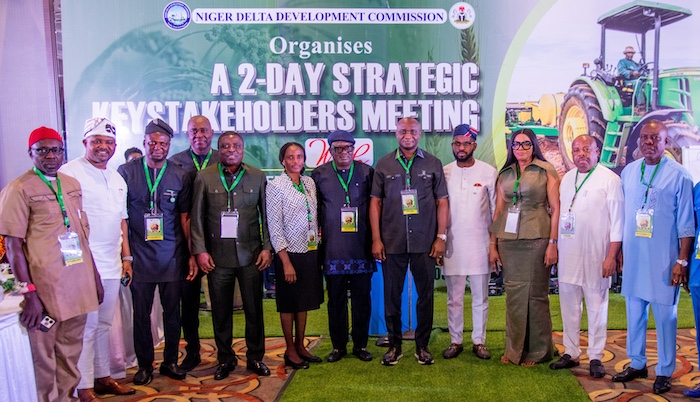
The Niger Delta Development Commission (NDDC) is setting its sights on transforming the Niger Delta region into Nigeria’s primary hub for food production. During a two-day strategic retreat titled “Niger Delta Critical Stakeholders’ Agenda Setting on Unlocking Agricultural Potential of the Niger Delta Region,” held in Port Harcourt, Rivers State, key stakeholders gathered to discuss the future of agriculture in the area.
Dr Samuel Ogbuku, the Executive Director of NDDC, emphasized the Commission’s commitment to achieving this transformation through sustainable agricultural practices and collaboration among regional partners. He remarked that agriculture is the most viable path toward economic growth, peace, and food security in the region. Ogbuku pointed out that prior to the oil boom, the Niger Delta was primarily an agricultural community, and he stressed that a return to farming could provide a more sustainable economic future.
“This retreat is aimed at bringing together stakeholders to ensure food security in the Niger Delta,” Ogbuku stated. “We have the potential and comparative advantage in aquaculture. Now is the time to prioritize agriculture as part of the Renewed Hope Agenda. We must create a legacy for future generations.” He highlighted the importance of agriculture in creating jobs and boosting the national economy, stating that it could also enhance food exports.
The NDDC is currently in discussions with the Origin Group to establish a regional food hub in the Niger Delta, focusing on integrating agricultural value chains and promoting large-scale food processing and export. Ogbuku expressed enthusiasm about the potential of revitalizing staple crops such as bananas and cocoyam, which have diminished over the years.
Call to Action for Agricultural Transformation
Dr Victor Antai, the NDDC Executive Director of Projects, described the gathering as a “call to action.” He urged stakeholders to take decisive steps to advance agricultural transformation in the Niger Delta. “This meeting is not just another gathering; it’s a call to action. Agriculture is our best route to inclusive growth, job creation, and food security,” he said. Antai noted the region’s abundant arable land, rich waterways, and resilient population, which position it as a potential powerhouse in agricultural productivity.
The retreat aimed to unify efforts among state governments, private investors, research institutions, and youth organizations to form a coordinated agricultural transformation plan. Dr Winifred Madume, the NDDC Director of Agriculture and Fisheries, reaffirmed the Commission’s dedication to developing sustainable agricultural and fisheries initiatives. She emphasized that these programs are designed to create jobs, enhance food security, and increase incomes for farmers and fisherfolk.
Madume also underscored the importance of collaboration with agricultural stakeholders to build the capacity of local farmers, promote food sufficiency, and reduce youth unrest in the region. Representatives from various states expressed their commitment to agricultural development and praised the NDDC for its vision to establish the region as an agricultural hub.
Prof Tubokiye Sese, the Bayelsa State Commissioner for Agriculture, reiterated his state’s dedication to food security. He explained that the state government supports farmers by providing seedlings, farming equipment, and free land-clearing services to enhance productivity.
In a similar vein, Dr Offiong Offor, the Akwa Ibom State Commissioner for Agriculture, highlighted her state’s strengths in palm crop and oil production. She mentioned that the state government is actively encouraging youth participation in agriculture through training and empowerment initiatives.
With these ambitious plans in motion, the NDDC aims to reinvigorate the agricultural landscape of the Niger Delta, paving the way for a more robust and sustainable economy. The collaborative efforts of various stakeholders signal a promising future for agriculture in the region, with the potential to significantly contribute to Nigeria’s food security and economic growth.

Liverpool Activates Backup Plan as Man City Targets Antoine Semenyo

British Father Drowns in Thailand After Being Swept Away by Waves

TorroFX Set to Transform Trading Landscape with Launch on December 1, 2025

BBC Breakfast’s Sally Nugent Apologizes for News Disruption

Recognize Bowel Cancer Signs During Festive Overindulgence

Marie Helvin Discusses Dating Challenges and Body Confidence at 73

Danny Morrison Reflects on United Ireland, Gerry Adams, and Stormont’s Future

Southampton University and Siemens Collaborate to Advance MEMS Technology

Barcelona’s Deco Highlights Rashford’s Burden at Manchester United

Iconic 90s TV Show House Hits Market for £1.1 Million

Milk Bank Urges Mothers to Donate for Premature Babies’ Health

Alessia Russo Signs Long-Term Deal with Arsenal Ahead of WSL Season

Shoppers Flock to Discounted Neck Pillow on Amazon for Travel Comfort

Museums Body Critiques EHRC Proposals on Gender Facilities

Trump Visits Europe: Business, Politics, or Leisure?

Japanese Teen Sorato Shimizu Breaks U18 100m Record in 10 Seconds

Couple Shares Inspiring Love Story Defying Height Stereotypes

Anglian Water Raises Concerns Over Proposed AI Data Centre
-
 Entertainment2 months ago
Iconic 90s TV Show House Hits Market for £1.1 Million
-
 Lifestyle4 months ago
Milk Bank Urges Mothers to Donate for Premature Babies’ Health
-
 Sports3 months ago
Alessia Russo Signs Long-Term Deal with Arsenal Ahead of WSL Season
-
 Lifestyle4 months ago
Shoppers Flock to Discounted Neck Pillow on Amazon for Travel Comfort
-
 Politics4 months ago
Museums Body Critiques EHRC Proposals on Gender Facilities
-
 Business4 months ago
Trump Visits Europe: Business, Politics, or Leisure?
-
 Lifestyle4 months ago
Japanese Teen Sorato Shimizu Breaks U18 100m Record in 10 Seconds
-
 Politics4 months ago
Couple Shares Inspiring Love Story Defying Height Stereotypes
-
 World4 months ago
Anglian Water Raises Concerns Over Proposed AI Data Centre
-

 Sports4 months ago
Bournemouth Dominates Everton with 3-0 Victory in Premier League Summer Series
-

 World4 months ago
Wreckage of Missing Russian Passenger Plane Discovered in Flames
-

 Lifestyle4 months ago
Shoppers Rave About Roman’s £42 Midi Dress, Calling It ‘Elegant’