
Health
Apple Watch Launches Sleep Score Feature to Enhance Sleep Insights

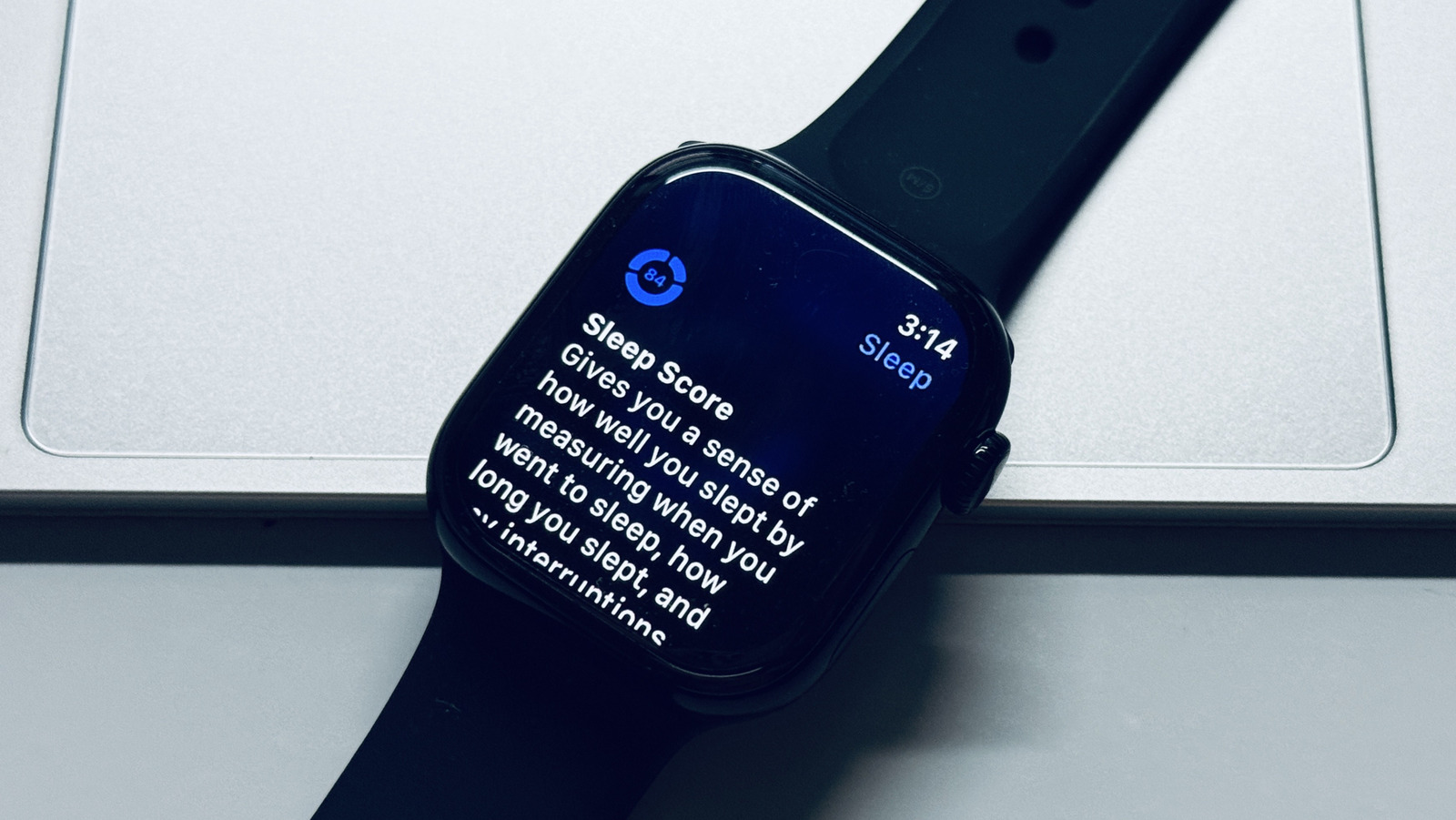
The latest update to the Apple Watch introduces a significant enhancement in sleep monitoring with the new Sleep Score feature. This development aims to provide users with a clearer understanding of their sleep quality. By condensing various sleep metrics into a single score, the Apple Watch is set to help individuals better comprehend their rest patterns.
With the launch of watchOS 26, the Sleep Score feature is available on all models from the Apple Watch Series 6 onward, including the Apple Watch SE 2 and Apple Watch Ultra. This new scoring system evaluates sleep quality by incorporating data from multiple sources, including the duration spent in various sleep stages and the consistency of users’ sleep schedules.
The Sleep Score offers an easy-to-understand numerical rating, alongside qualitative assessments. For example, users might see a notification like “86 Sleep Score, High quality” each morning. To utilize this feature, users are required to set a daily sleep target and a schedule they can consistently follow.
Apple has based the Sleep Score methodology on extensive data collected from over 5 million sleep sessions. The algorithms were trained in accordance with guidelines established by authoritative organizations including the American Academy of Sleep Medicine, the National Sleep Foundation, and the World Sleep Society. This ensures that the scoring system is backed by scientific research and best practices in sleep medicine.
Each morning, approximately 15 minutes after waking, the Apple Watch calculates the Sleep Score, evaluating the restorative quality of the previous night’s sleep. The scoring system considers several factors: the number of interruptions during sleep, the total duration of sleep, and adherence to a usual bedtime. Points are awarded based on these criteria, with a maximum of 20 points for interruptions, 50 points for total sleep duration, and 30 points for maintaining a regular sleep schedule.
The final score is presented on a scale from 0-100, accompanied by a qualitative rating that indicates whether sleep quality was Excellent, High, OK, Low, or Very Low. Users can view their Sleep Score within the Sleep app on their Apple Watch, or access it directly through the Smart Stack on the lock screen. Additionally, this information is synced to the Health app on their paired iPhone, allowing users to track their sleep patterns over time.
For those interested in analyzing past data, the feature enables comparisons with previous nights’ scores and averages from the last two weeks. This historical data can provide insights into how sleep quality evolves over time, offering users a comprehensive view of their sleep health.
The technical aspect of sleep tracking relies on the watch’s built-in accelerometer, which records movement data to assess sleep patterns accurately. This same technology underpins other health features, such as sleep apnea detection.
With the introduction of the Sleep Score feature, Apple aims to empower users to take charge of their sleep health. By leveraging data and scientific principles, the Apple Watch is positioned not just as a smartwatch but as a valuable tool for enhancing overall well-being.

Liverpool Activates Backup Plan as Man City Targets Antoine Semenyo

British Father Drowns in Thailand After Being Swept Away by Waves

TorroFX Set to Transform Trading Landscape with Launch on December 1, 2025

BBC Breakfast’s Sally Nugent Apologizes for News Disruption

Recognize Bowel Cancer Signs During Festive Overindulgence

Marie Helvin Discusses Dating Challenges and Body Confidence at 73

Danny Morrison Reflects on United Ireland, Gerry Adams, and Stormont’s Future

Southampton University and Siemens Collaborate to Advance MEMS Technology

Barcelona’s Deco Highlights Rashford’s Burden at Manchester United

Iconic 90s TV Show House Hits Market for £1.1 Million

Milk Bank Urges Mothers to Donate for Premature Babies’ Health

Alessia Russo Signs Long-Term Deal with Arsenal Ahead of WSL Season

Shoppers Flock to Discounted Neck Pillow on Amazon for Travel Comfort

Museums Body Critiques EHRC Proposals on Gender Facilities

Trump Visits Europe: Business, Politics, or Leisure?

Japanese Teen Sorato Shimizu Breaks U18 100m Record in 10 Seconds

Couple Shares Inspiring Love Story Defying Height Stereotypes

Anglian Water Raises Concerns Over Proposed AI Data Centre
-
 Entertainment2 months ago
Iconic 90s TV Show House Hits Market for £1.1 Million
-
 Lifestyle4 months ago
Milk Bank Urges Mothers to Donate for Premature Babies’ Health
-
 Sports3 months ago
Alessia Russo Signs Long-Term Deal with Arsenal Ahead of WSL Season
-
 Lifestyle4 months ago
Shoppers Flock to Discounted Neck Pillow on Amazon for Travel Comfort
-
 Politics4 months ago
Museums Body Critiques EHRC Proposals on Gender Facilities
-
 Business4 months ago
Trump Visits Europe: Business, Politics, or Leisure?
-
 Lifestyle4 months ago
Japanese Teen Sorato Shimizu Breaks U18 100m Record in 10 Seconds
-
 Politics4 months ago
Couple Shares Inspiring Love Story Defying Height Stereotypes
-
 World4 months ago
Anglian Water Raises Concerns Over Proposed AI Data Centre
-

 Sports4 months ago
Bournemouth Dominates Everton with 3-0 Victory in Premier League Summer Series
-

 World4 months ago
Wreckage of Missing Russian Passenger Plane Discovered in Flames
-

 Lifestyle4 months ago
Shoppers Rave About Roman’s £42 Midi Dress, Calling It ‘Elegant’