
Health
Cancer Deaths Projected to Rise 75% by 2050, Urgent Action Needed

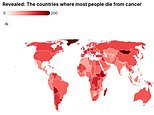
Cancer deaths are expected to increase by 75% globally by 2050, according to a new report published in the esteemed journal The Lancet. The alarming trend is driven by an ageing population and unhealthy lifestyle choices, including obesity and smoking, researchers warn. The findings reveal that the number of new cancer cases has more than doubled since 1990, reaching 18.5 million in 2023.
The report outlines a grim forecast: the number of cancer cases is anticipated to rise to 30.5 million by 2050, representing a 61% increase. Concurrently, the annual global cancer death toll is projected to reach 18.6 million, a staggering rise of almost 75%. Experts have urged governments worldwide to prioritize cancer prevention strategies, including expanding screening programmes to improve early detection and treatment outcomes.
Michelle Mitchell, chief executive of Cancer Research UK, emphasized the urgent need for international collaboration on cancer prevention. She stated, “The number of cancer cases and deaths are rising globally, and that trend is reflected here in the UK where there are nearly 1,100 new cases every day.” Mitchell highlighted the importance of initiatives such as the Tobacco and Vapes Bill and the UK’s forthcoming National Cancer Plan for England, which aims to provide adequate resources for early diagnosis and timely treatment across the nation.
Dr. Lisa Force, an assistant professor in health metric sciences at the University of Washington and co-author of the study, pointed out that cancer control policies often receive insufficient prioritization in global health agendas. “Despite the clear need for action, cancer control policies and implementation remain underprioritized in global health, and there is insufficient funding to address this challenge in many settings,” she noted.
The study evaluated cancer cases and mortality rates for 47 types of cancer across 204 countries from 1990 to 2023. After adjusting for age to ensure accuracy, Lebanon was identified as having the most significant increases in both cancer cases and deaths, with an astounding 80% rise. Other countries like Equatorial Guinea and Laos followed, reporting increases in cancer mortality of 72% and 55.8% respectively.
In contrast, the United Arab Emirates recorded the greatest decline in cancer cases, which fell by 56%. Kazakhstan also saw a significant reduction in deaths, decreasing by 58.2%. The UK reported a 23.4% decrease in cancer deaths, while the US and Australia experienced reductions of 32.5% and 33.2% respectively.
Breast cancer emerged as the most diagnosed cancer worldwide in 2023, affecting both genders. Tracheal, bronchus, and lung cancer were identified as the leading causes of cancer-related deaths. The study also indicated that 42% of global cancer deaths are linked to lifestyle factors such as smoking, poor diets, elevated blood sugar levels, and exposure to environmental toxins. Notably, tobacco use accounted for more than 21% of cancer deaths worldwide.
In the UK, more than 400,000 individuals, or approximately 1,000 people daily, receive a cancer diagnosis each year, with prostate, breast, bowel, and lung cancers being the most prevalent. The COVID-19 pandemic severely disrupted cancer care, leading to canceled appointments and delayed diagnostics. Experts estimate that 40,000 cancer cases went undiagnosed during the pandemic’s first year alone.
Despite these challenges, recent figures show that NHS cancer services are struggling to meet their targets. In July, NHS England achieved only one of its three cancer diagnosis targets. Out of 308,636 urgent cancer referrals made by general practitioners, 76.6% resulted in a diagnosis or exclusion of disease within 28 days, barely surpassing the target of 75%. However, only 92.4% of patients commenced treatment within 31 days, falling short of the 96% target, and only 69.2% of newly diagnosed patients referred for urgent treatment were seen within two months, significantly below the 85% target.
As the global cancer crisis escalates, experts stress the necessity for coordinated efforts to combat this growing health threat. Addressing risk factors, enhancing early detection, and ensuring equitable access to treatment are crucial steps needed to turn the tide against cancer.

Liverpool Activates Backup Plan as Man City Targets Antoine Semenyo

British Father Drowns in Thailand After Being Swept Away by Waves

TorroFX Set to Transform Trading Landscape with Launch on December 1, 2025

BBC Breakfast’s Sally Nugent Apologizes for News Disruption

Recognize Bowel Cancer Signs During Festive Overindulgence

Marie Helvin Discusses Dating Challenges and Body Confidence at 73

Danny Morrison Reflects on United Ireland, Gerry Adams, and Stormont’s Future

Southampton University and Siemens Collaborate to Advance MEMS Technology

Barcelona’s Deco Highlights Rashford’s Burden at Manchester United

Iconic 90s TV Show House Hits Market for £1.1 Million

Milk Bank Urges Mothers to Donate for Premature Babies’ Health

Alessia Russo Signs Long-Term Deal with Arsenal Ahead of WSL Season

Shoppers Flock to Discounted Neck Pillow on Amazon for Travel Comfort

Museums Body Critiques EHRC Proposals on Gender Facilities

Trump Visits Europe: Business, Politics, or Leisure?

Japanese Teen Sorato Shimizu Breaks U18 100m Record in 10 Seconds

Couple Shares Inspiring Love Story Defying Height Stereotypes

Anglian Water Raises Concerns Over Proposed AI Data Centre
-
 Entertainment2 months ago
Iconic 90s TV Show House Hits Market for £1.1 Million
-
 Lifestyle4 months ago
Milk Bank Urges Mothers to Donate for Premature Babies’ Health
-
 Sports3 months ago
Alessia Russo Signs Long-Term Deal with Arsenal Ahead of WSL Season
-
 Lifestyle4 months ago
Shoppers Flock to Discounted Neck Pillow on Amazon for Travel Comfort
-
 Politics4 months ago
Museums Body Critiques EHRC Proposals on Gender Facilities
-
 Business4 months ago
Trump Visits Europe: Business, Politics, or Leisure?
-
 Lifestyle4 months ago
Japanese Teen Sorato Shimizu Breaks U18 100m Record in 10 Seconds
-
 Politics4 months ago
Couple Shares Inspiring Love Story Defying Height Stereotypes
-
 World4 months ago
Anglian Water Raises Concerns Over Proposed AI Data Centre
-

 Sports4 months ago
Bournemouth Dominates Everton with 3-0 Victory in Premier League Summer Series
-

 World4 months ago
Wreckage of Missing Russian Passenger Plane Discovered in Flames
-

 Lifestyle4 months ago
Shoppers Rave About Roman’s £42 Midi Dress, Calling It ‘Elegant’