
Health
Eye Drops Show Promise as Alternative to Glasses for Presbyopia

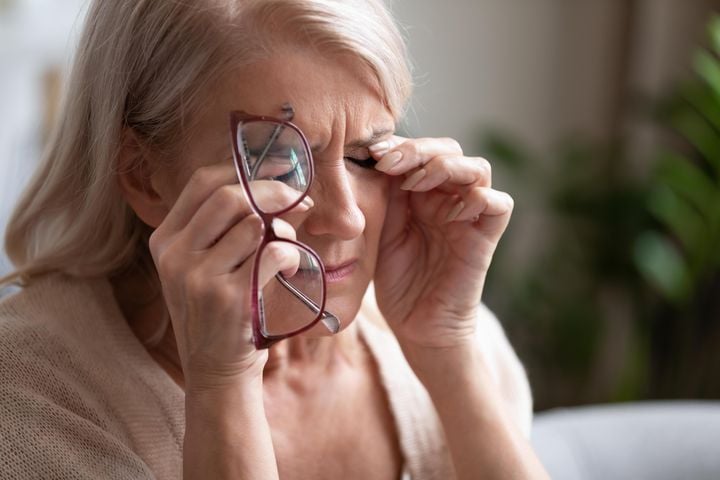
A groundbreaking study suggests that special eye drops may serve as an effective alternative to glasses for individuals suffering from presbyopia, a common age-related vision condition. Conducted by researchers in Buenos Aires, Argentina, the study highlights the potential of these drops to enhance near vision for patients who prefer to avoid the hassle of wearing spectacles.
Presbyopia occurs when the eye’s lens becomes less flexible with age, making it difficult to focus on close objects. This condition typically affects those aged 40 and older. While reading glasses are the standard corrective measure, surgical options are limited and often unavailable through public health systems like the NHS.
Researchers at the Centre for Advanced Research for Presbyopia explored the use of eye drops containing two primary ingredients: pilocarpine, which constricts the pupils, and diclofenac, a non-steroidal anti-inflammatory drug (NSAID). The study involved 766 participants who administered the drops twice daily for improvement in their vision.
Study Findings and Implications
The participants were divided into three groups, each receiving different formulations of the eye drops with varying concentrations of pilocarpine at 1%, 2%, and 3%. After using the drops, patients showed a significant average improvement of 3.45 Jaeger lines in reading ability within one hour. Specifically, in the group receiving the 1% pilocarpine drops, nearly all participants could read two or more additional lines on the vision chart. In the 2% group, approximately 69% of participants could read three or more extra lines, while in the 3% group, around 84% achieved the same result.
Dr. Giovanna Benozzi, director of the research centre, emphasized the importance of this study, stating, “We conducted this research due to the significant unmet medical need in presbyopia management.” She further noted that current solutions, such as reading glasses or surgical interventions, often come with limitations, including inconvenience and potential complications.
The improvements in vision were reported to be sustained for up to two years, with common side effects including temporary dim vision and mild irritation. The findings were presented at the Congress of the European Society of Cataract and Refractive Surgeons (ESCRS) in Denmark, where Dr. Benozzi described the therapy as “safe, effective, and well-tolerated.”
Expert Opinions and Future Research
While the results are promising, experts urge caution before widespread adoption of this treatment. Professor Burkhard Dick, chair of the ophthalmology department at the University Eye Hospital Bochum in Germany, remarked on the study’s single-centre design, which may limit the applicability of the results. He noted, “Long-term pilocarpine use can sometimes cause side effects such as reduced night vision and eye strain.”
He emphasized the need for broader, long-term, multi-centre studies to confirm the safety and effectiveness of this treatment before it can be recommended widely.
Dr. Benozzi concluded by stating, “This treatment is not intended to replace surgical interventions but serves as a valuable solution for patients who seek safe and effective alternatives to eyewear.”
As the study opens up new avenues for managing presbyopia, it also underscores the importance of continued research in addressing the challenges faced by those affected by this common condition.

Cattle Showcases Thrive at RUAS Winter Fair 2023

UK and US Strike Zero Tariff Agreement on Pharmaceuticals

Maya Jama Stuns in Strapless Ensemble at Qatar Grand Prix

Russia and Saudi Arabia Launch Visa-Free Travel Agreement

ISOLDE Facility Marks 10 Years of Advancements in Nuclear Research

Voters Demand Resignation of Chancellor Rachel Reeves Over Tax Hikes

Shoppers Save 30% on Marks & Spencer’s Viral Velvet Dress

Health Campaigners Urge End to Smoking Exemption for Lounges

Charity Shop Surprise: Woman Finds Joggers Worth £2,000 for £8

Iconic 90s TV Show House Hits Market for £1.1 Million

Milk Bank Urges Mothers to Donate for Premature Babies’ Health

Alessia Russo Signs Long-Term Deal with Arsenal Ahead of WSL Season

Shoppers Flock to Discounted Neck Pillow on Amazon for Travel Comfort

Museums Body Critiques EHRC Proposals on Gender Facilities

Trump Visits Europe: Business, Politics, or Leisure?

Japanese Teen Sorato Shimizu Breaks U18 100m Record in 10 Seconds

Couple Shares Inspiring Love Story Defying Height Stereotypes

Anglian Water Raises Concerns Over Proposed AI Data Centre
-
 Entertainment2 months ago
Iconic 90s TV Show House Hits Market for £1.1 Million
-
 Lifestyle4 months ago
Milk Bank Urges Mothers to Donate for Premature Babies’ Health
-
 Sports3 months ago
Alessia Russo Signs Long-Term Deal with Arsenal Ahead of WSL Season
-
 Lifestyle4 months ago
Shoppers Flock to Discounted Neck Pillow on Amazon for Travel Comfort
-
 Politics4 months ago
Museums Body Critiques EHRC Proposals on Gender Facilities
-
 Business4 months ago
Trump Visits Europe: Business, Politics, or Leisure?
-
 Lifestyle4 months ago
Japanese Teen Sorato Shimizu Breaks U18 100m Record in 10 Seconds
-
 Politics4 months ago
Couple Shares Inspiring Love Story Defying Height Stereotypes
-
 World4 months ago
Anglian Water Raises Concerns Over Proposed AI Data Centre
-

 Sports4 months ago
Bournemouth Dominates Everton with 3-0 Victory in Premier League Summer Series
-

 World4 months ago
Wreckage of Missing Russian Passenger Plane Discovered in Flames
-

 Lifestyle4 months ago
Shoppers Rave About Roman’s £42 Midi Dress, Calling It ‘Elegant’