
Health
Robots Revolutionize Emotional Support for Hospitalized Children

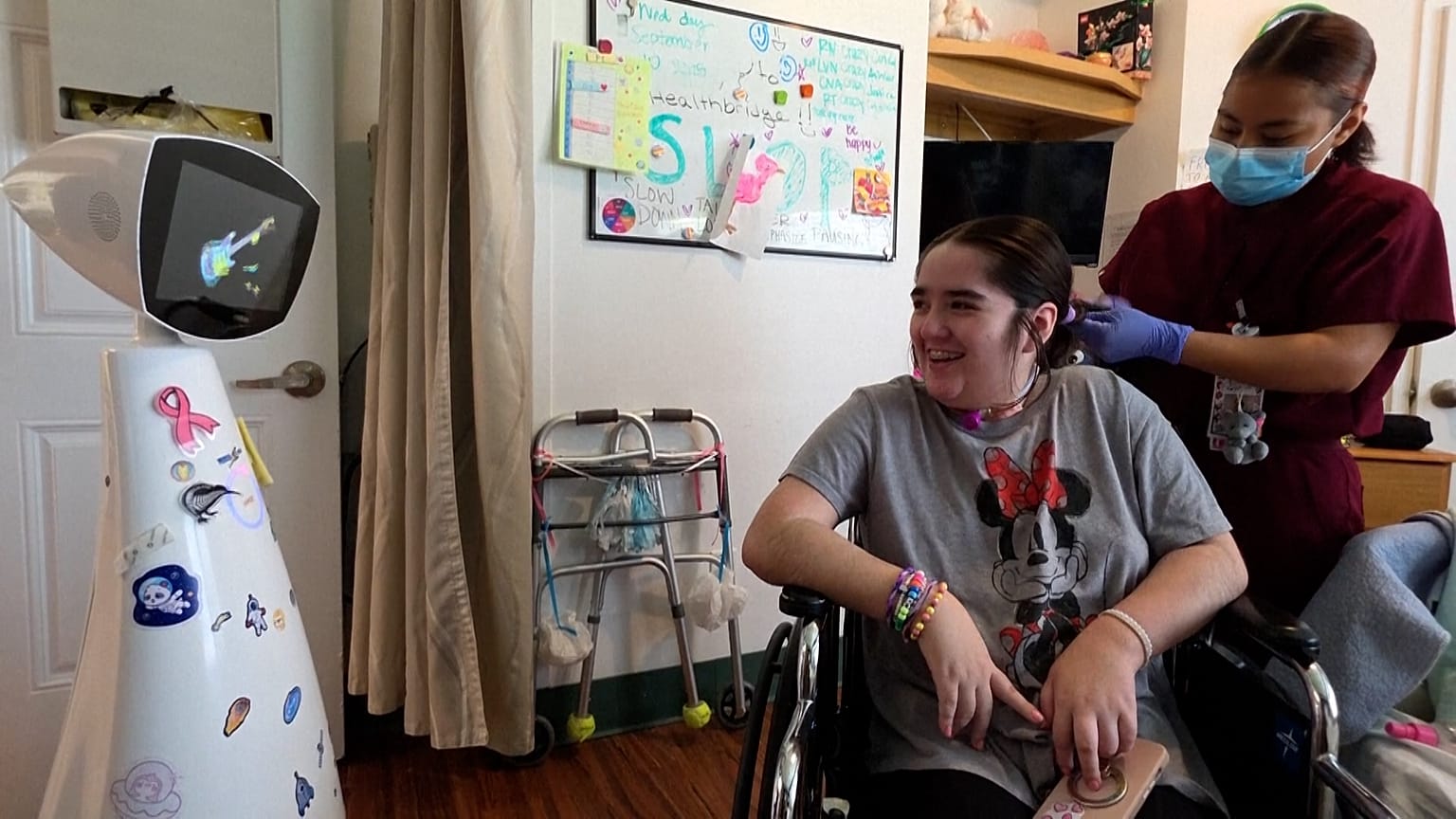
Health facilities in the United States are increasingly integrating robots into their care models to provide emotional support to young patients. A notable example is a therapeutic robot named Robin, which has been roaming the wards of the UMass Memorial Children’s Medical Center in Massachusetts since 2020. This 1.2-metre tall robot is designed to comfort children facing difficult medical procedures.
Robin engages with patients by interacting in a friendly manner, mimicking the voice and demeanor of a seven-year-old girl. During a recent encounter, it greeted a six-year-old boy named Luca, who is undergoing treatment for leukaemia. “Luca, how are you? It’s been a while,” Robin said, showcasing its ability to recognize and connect with patients. Its primary purpose is to provide emotional support, entertainment, and companionship to children during their hospital stays.
Karén Khachikyan, CEO of Expper Technologies, the company behind Robin, emphasizes the robot’s role in boosting children’s emotional well-being. “The primary goal of Robin is to comfort patients during their stay in medical facilities,” Khachikyan stated. He likened Robin’s emotional intelligence to that of the character WALL-E from the 2008 animated film, aiming to cultivate a similar connection with young patients.
Expanding Reach and Capabilities
Since its introduction, Robin has become a familiar presence in approximately 30 healthcare facilities across California, Massachusetts, New York, and Indiana. Its role has also extended to elderly care, where it acts like a grandchild, engaging residents in memory games, guiding breathing exercises, and providing companionship. Khachikyan recounted an instance where Robin alleviated a woman’s panic attack in a Los Angeles nursing home by playing Elvis Presley songs and showing videos of puppies, which were familiar and comforting to her.
Despite its reliance on artificial intelligence, Robin is not fully autonomous. Most of its operations are managed by remote operators under the supervision of clinical staff. Currently, the robot performs about 30 percent of its tasks independently, continually collecting interaction data in compliance with US health privacy regulations. This data collection is aimed at refining Robin’s capabilities, moving closer to independent functioning.
Addressing Workforce Challenges
Expper Technologies emphasizes that Robin is not intended to replace healthcare staff but to support them, especially in light of widespread staffing shortages in the healthcare sector. This issue is not limited to the United States; hospitals in Europe are also exploring the use of robotic assistants. In 2023, during strikes by healthcare workers, the United Kingdom’s National Health Service (NHS) considered deploying helper robots to alleviate staff burdens.
Looking ahead, Expper Technologies plans to enhance Robin’s functionalities further. Future developments could enable the robot to measure patients’ vital signs and relay this information to medical teams. In the long term, the company envisions a version of Robin that assists elderly individuals with daily activities, such as dressing and personal care tasks.
The integration of robots like Robin into healthcare settings represents a significant advancement in how emotional support can be delivered to patients of all ages. As technology continues to evolve, the potential for robots to enhance patient care and alleviate staff challenges appears promising.

LaLiga Thrills: Key Highlights from Recent Fixtures Unveiled

Germany Intensifies Deportations of Afghan and Syrian Migrants

Shoppers Embrace Next’s £36 Knit as Trendy Christmas Alternative

Harbour Energy Announces 100 Job Cuts Amid Industry Challenges

Amy Childs Shares Weight Gain Journey, Emphasizing Self-Love

UK and US Set to Finalize Zero-Tariff Agreement on Pharmaceuticals

Liverpool Activates Backup Plan as Man City Targets Antoine Semenyo

British Father Drowns in Thailand After Being Swept Away by Waves

TorroFX Set to Transform Trading Landscape with Launch on December 1, 2025

Iconic 90s TV Show House Hits Market for £1.1 Million

Milk Bank Urges Mothers to Donate for Premature Babies’ Health

Alessia Russo Signs Long-Term Deal with Arsenal Ahead of WSL Season

Shoppers Flock to Discounted Neck Pillow on Amazon for Travel Comfort

Museums Body Critiques EHRC Proposals on Gender Facilities

Trump Visits Europe: Business, Politics, or Leisure?

Japanese Teen Sorato Shimizu Breaks U18 100m Record in 10 Seconds

Couple Shares Inspiring Love Story Defying Height Stereotypes

Anglian Water Raises Concerns Over Proposed AI Data Centre
-
 Entertainment2 months ago
Iconic 90s TV Show House Hits Market for £1.1 Million
-
 Lifestyle4 months ago
Milk Bank Urges Mothers to Donate for Premature Babies’ Health
-
 Sports3 months ago
Alessia Russo Signs Long-Term Deal with Arsenal Ahead of WSL Season
-
 Lifestyle4 months ago
Shoppers Flock to Discounted Neck Pillow on Amazon for Travel Comfort
-
 Politics4 months ago
Museums Body Critiques EHRC Proposals on Gender Facilities
-
 Business4 months ago
Trump Visits Europe: Business, Politics, or Leisure?
-
 Lifestyle4 months ago
Japanese Teen Sorato Shimizu Breaks U18 100m Record in 10 Seconds
-
 Politics4 months ago
Couple Shares Inspiring Love Story Defying Height Stereotypes
-
 World4 months ago
Anglian Water Raises Concerns Over Proposed AI Data Centre
-

 Sports4 months ago
Bournemouth Dominates Everton with 3-0 Victory in Premier League Summer Series
-

 World4 months ago
Wreckage of Missing Russian Passenger Plane Discovered in Flames
-

 Lifestyle4 months ago
Shoppers Rave About Roman’s £42 Midi Dress, Calling It ‘Elegant’