
Health
Surgeon Sentenced for Faking Illness to Amputate Healthy Legs

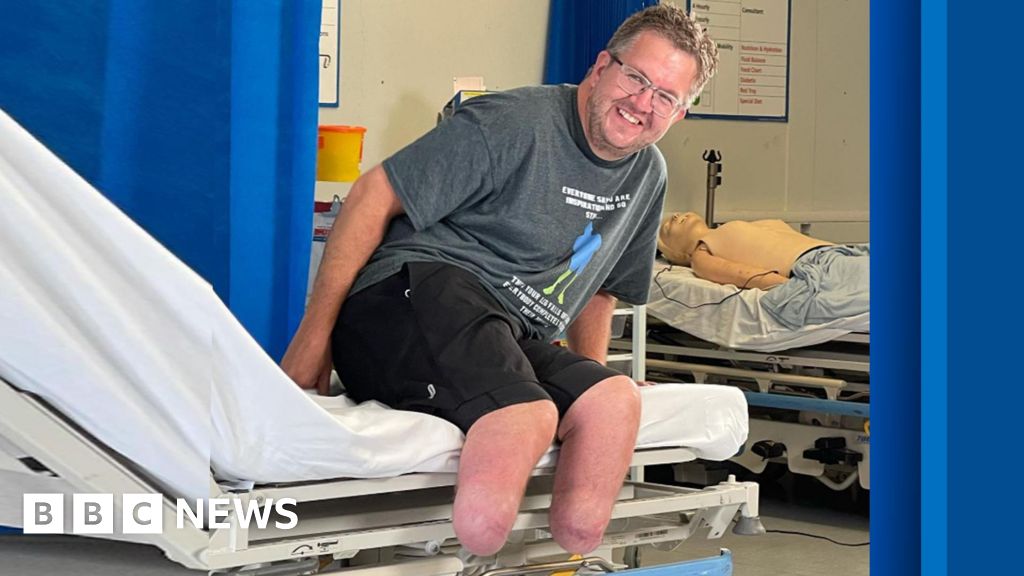
A surgeon in the UK, Neil Hopper, has been sentenced to prison for faking a serious illness to have his own healthy legs amputated. The case has sparked widespread discussions about the psychological motivations behind such extreme actions, particularly the little-known condition known as body integrity dysphoria (BID). Hopper pleaded guilty to insurance fraud and the possession of extreme pornography after it was revealed that he had used dry ice to freeze his legs, necessitating their removal at a hospital.
The court proceedings unveiled Hopper’s troubling history, indicating that he had experienced body dysphoria since childhood. He described his feet as an “unwelcome extra” in his life, causing him “persisting never-ending discomfort.” In addition to his psychological struggles, he had a sexual interest in amputation, having paid for access to videos depicting body mutilation.
Understanding Body Integrity Dysphoria
The case drew the attention of Dr. Michael First, a psychiatrist at Columbia University. Dr. First, who played a pivotal role in adding BID to the International Classification of Diseases (ICD), noted that Hopper’s experiences were reminiscent of those he had encountered in his patients. Although it was unclear whether Hopper had received a formal diagnosis, the circumstances surrounding his case echoed the complexities of BID.
Dr. First’s interest in this condition began in 1997 when he was approached by a BBC program about two men who underwent amputations for psychological reasons. He recalled, “When they called me up, I said, ‘I have never heard of this.'” This inquiry led him to explore a community of individuals who expressed a desire for amputation, a journey that revealed the depths of their psychological struggles.
Through his research, Dr. First identified two related conditions: apotemnophilia, characterized by sexual arousal from being an amputee, and acrotomophilia, which involves a strong sexual interest in amputees. However, he found that for many individuals, the primary motivation for desiring amputation was not sexual in nature, but rather a profound sense of being trapped in the wrong body.
The Reality of Living with BID
Dr. First’s interviews revealed that many individuals with BID live in secrecy, often concealing their desires even from close family members. He explained, “They feel like they’re an amputee in the body of a regular person.” This disconnect can lead to significant mental anguish, with some individuals experiencing suicidal thoughts due to the intensity of their feelings.
He also noted that many have attempted to cope by mimicking amputations, using tools to restrict their limbs or employing wheelchairs. According to Dr. First, these actions often provide some relief from their psychological distress. He emphasized that the condition typically originates in childhood, stating, “Nobody gets this after age 13.”
This psychological struggle can manifest from various triggers, including social experiences or traumatic events. Some individuals have shared stories of childhood incidents that sparked their desires, leading them to feel a lifelong connection to the idea of amputation.
Despite the challenges faced by those with BID, treatment options remain limited. While some individuals may benefit from antidepressants to alleviate depression, these medications do not eliminate the desire for amputation. Dr. First noted that small successes have been observed with antipsychotic medications, although those with BID are not classified as psychotic.
Ultimately, the only treatment that has consistently alleviated the mental anguish associated with BID is amputation itself. However, this raises significant ethical concerns, as irreversible decisions can lead to long-term regret. Dr. First remarked, “It’s scary. If you do it and it turns out to be wrong, you can’t get the leg back.”
The prevalence of BID is difficult to quantify due to the stigma surrounding the condition, which often leads individuals to suffer in silence. Dr. First pointed out that while the condition may be rare, many people around the world are likely living with it without any acknowledgment or support.
If you or someone you know is affected by issues related to body integrity dysphoria, resources and support organizations are available to help navigate these complex feelings and experiences.

Voters Demand Resignation of Chancellor Rachel Reeves Over Tax Hikes

Shoppers Save 30% on Marks & Spencer’s Viral Velvet Dress

Health Campaigners Urge End to Smoking Exemption for Lounges

Charity Shop Surprise: Woman Finds Joggers Worth £2,000 for £8

Comet 3I/ATLAS Reveals Rare Metal Composition and Cryovolcanism

LaLiga Thrills: Key Highlights from Recent Fixtures Unveiled

Germany Intensifies Deportations of Afghan and Syrian Migrants

Shoppers Embrace Next’s £36 Knit as Trendy Christmas Alternative

Harbour Energy Announces 100 Job Cuts Amid Industry Challenges

Iconic 90s TV Show House Hits Market for £1.1 Million

Milk Bank Urges Mothers to Donate for Premature Babies’ Health

Alessia Russo Signs Long-Term Deal with Arsenal Ahead of WSL Season

Shoppers Flock to Discounted Neck Pillow on Amazon for Travel Comfort

Museums Body Critiques EHRC Proposals on Gender Facilities

Trump Visits Europe: Business, Politics, or Leisure?

Japanese Teen Sorato Shimizu Breaks U18 100m Record in 10 Seconds

Couple Shares Inspiring Love Story Defying Height Stereotypes

Anglian Water Raises Concerns Over Proposed AI Data Centre
-
 Entertainment2 months ago
Iconic 90s TV Show House Hits Market for £1.1 Million
-
 Lifestyle4 months ago
Milk Bank Urges Mothers to Donate for Premature Babies’ Health
-
 Sports3 months ago
Alessia Russo Signs Long-Term Deal with Arsenal Ahead of WSL Season
-
 Lifestyle4 months ago
Shoppers Flock to Discounted Neck Pillow on Amazon for Travel Comfort
-
 Politics4 months ago
Museums Body Critiques EHRC Proposals on Gender Facilities
-
 Business4 months ago
Trump Visits Europe: Business, Politics, or Leisure?
-
 Lifestyle4 months ago
Japanese Teen Sorato Shimizu Breaks U18 100m Record in 10 Seconds
-
 Politics4 months ago
Couple Shares Inspiring Love Story Defying Height Stereotypes
-
 World4 months ago
Anglian Water Raises Concerns Over Proposed AI Data Centre
-

 Sports4 months ago
Bournemouth Dominates Everton with 3-0 Victory in Premier League Summer Series
-

 World4 months ago
Wreckage of Missing Russian Passenger Plane Discovered in Flames
-

 Lifestyle4 months ago
Shoppers Rave About Roman’s £42 Midi Dress, Calling It ‘Elegant’