
Lifestyle
Montenegro Celebrates 120 Years of Constitutional Progress

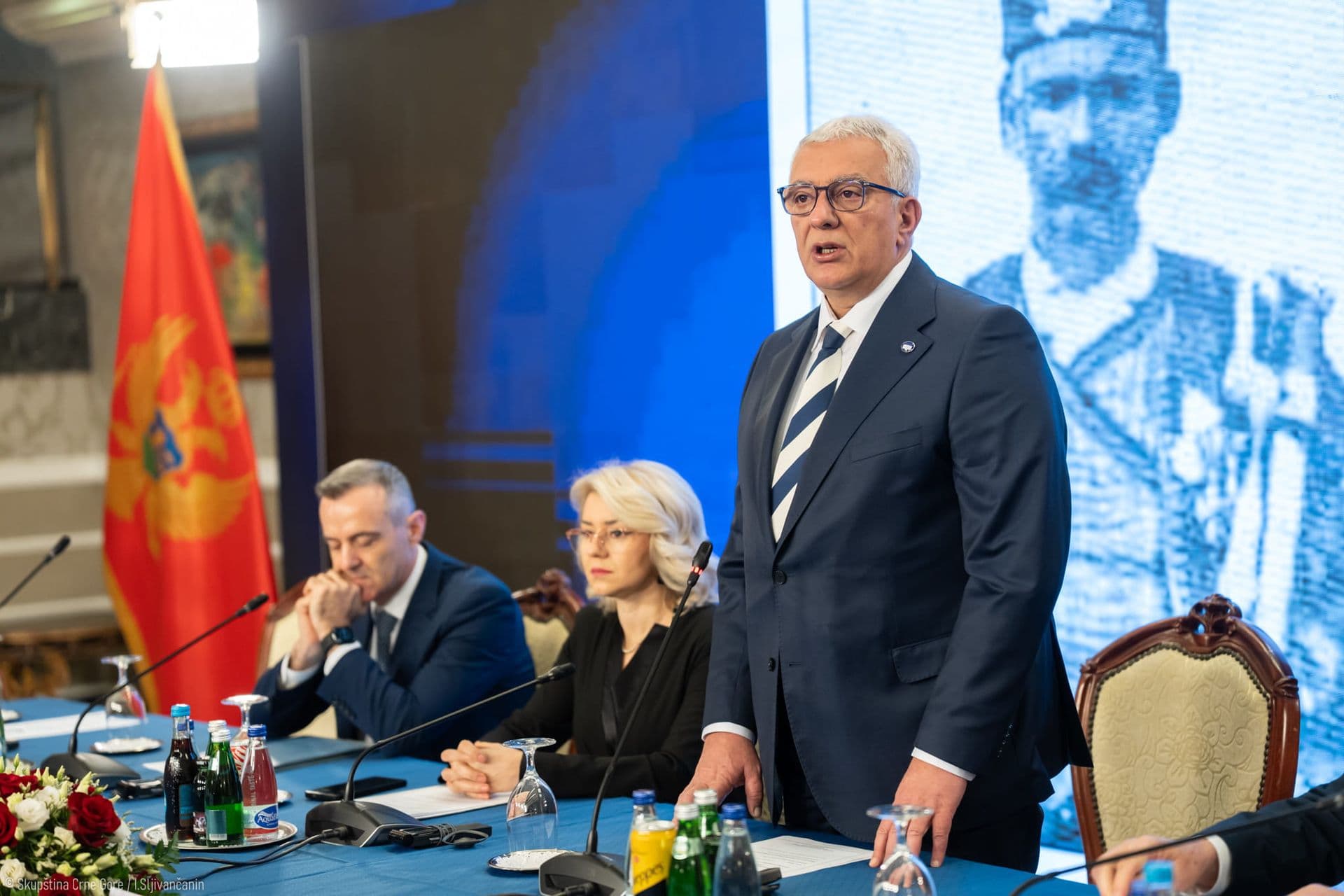
The Assembly of Montenegro hosted a roundtable today to commemorate the 120th anniversary of the adoption of the Constitution for the Principality of Montenegro. The event aimed to highlight the significance of the first Montenegrin Constitution and its enduring impact on the country’s democratic and parliamentary development.
In his opening remarks, the President of the Assembly, Andrija Mandic, emphasized the importance of preserving the messages and conclusions from the discussions, which will serve as a testament to how one generation engaged with this pivotal historical act. Mandic noted that the 1905 Constitution was remarkably modern for its time, leading to substantial political changes, including the establishment of a party system and the transition from autocratic rule to parliamentary democracy. Despite initial shortcomings, this process laid the groundwork for a vibrant political life in Montenegro.
Mandic stated that the experiences of that era are invaluable for contemporary politicians, illustrating how the principles of parliamentarism were established and how new political energy reshaped Montenegro. He reiterated the Assembly’s intention to honor this milestone with dignity, recognizing the profound mark that this historical moment has left on current generations.
The President remarked, “Democracy is a process that matures and learns, facing new challenges to which each generation must respond. Our ancestors from the time of the Principality of Montenegro provided answers to the challenges of their era, and it is the responsibility of the modern generation to offer its own solutions.” Mandic believes that gatherings like this contribute significantly to Montenegro’s ability to celebrate 120 years since the Constitution’s adoption in a dignified and responsible manner.
Vladimir Bozovic, the Rector of the University of Montenegro, highlighted the event as a celebration of a pivotal moment in Montenegro’s modern history. He pointed out that the 1905 Constitution marked the country’s entry into the community of modern, constitutionally governed political systems. Bozovic described the adoption of the Constitution as an act of exceptional importance for its time and a nearly revolutionary step within a broader regional context.
He underscored the significance of recognizing the value of this constitutional document, given its content and long-term implications that have persisted since 1905. According to Bozovic, the institutes and principles contained in the Constitution are not merely legal but also social, forming a foundation that has significantly influenced the development and functioning of Montenegrin society.
The celebration featured a range of notable legal and academic figures from Montenegro and the region, including Snezana Armenko, President of the Constitutional Court of Montenegro, and Dobrila Kacarska, Judge of the Constitutional Court of North Macedonia. The panel also included experts from various institutions, such as the Historical Institute of Serbia and the Venice Commission.
During the discussions, Jelena Bozovic, Chairwoman of the Constitutional Committee of the Assembly, reminded attendees that commemorating 120 years since the adoption of the Nikolaj Constitution, the first written constitution in Montenegrin history, serves to highlight a critical moment where the boundaries of power were clearly established and the principle that no one is above the Constitution was affirmed.
Bozovic emphasized that the Constitution was never intended to be a mere symbol; rather, it serves as a fundamental mechanism for limiting power and protecting citizens. She argued that the Constitution must transcend daily politics and current interests, functioning as a foundational social contract between the state and its citizens.
Moreover, she noted that the essence of modern constitutionalism should reflect normative and social consensus, allowing citizens to identify with it and fostering a sense of justice. In this context, she raised the issue of language as a fundamental means of participation in public life, specifically mentioning the Serbian language.
Bozovic warned of the serious problems that arise when constitutional violations are perpetrated by those entrusted with its protection, prompting a crucial inquiry into whether society desires a Constitution that exists only formally or one that is genuinely respected and applied. She concluded that losing citizens’ trust in institutions is the most dangerous consequence of constitutional violations, urging that the commemoration of the anniversary should not remain merely symbolic but should seek to restore the Constitution to its original meaning—superior to power and serving the people.
The event was moderated by Budimir Aleksic, Vice President for Education, Science, and Relations with Religious Communities. Participants presented insights into the historical, legal, and social significance of the 1905 Constitution, as well as its role in shaping the contemporary constitutional and parliamentary system in Montenegro.
As the discussions concluded, the assembly underscored the enduring legacy of the Constitution, emphasizing its relevance in addressing present and future challenges facing Montenegro.

Chelsea Faces Cardiff in Carabao Cup Quarterfinal Showdown

Youth Universal Credit Claims Surge to 300,000 Amid Health Issues

iRobot Enters Chapter 11 Bankruptcy Amid Rising Competition

iRobot Enters Chapter 11 Bankruptcy Amid Rising Competition

Office Christmas Party Erupts in Festive Revelry and Surprises

NHS Leaders Warn Doctor Strikes May Impact Elderly Patients This Christmas

Manchester United Frustrated as Morocco Blocks Mazraoui’s Play

Authorities Seize £150,000 Worth of Counterfeit Goods in Market Raid

Unexpected Advocate Emerges for Breastfeeding Awareness

Iconic 90s TV Show House Hits Market for £1.1 Million

Milk Bank Urges Mothers to Donate for Premature Babies’ Health

Alessia Russo Signs Long-Term Deal with Arsenal Ahead of WSL Season

Shoppers Flock to Discounted Neck Pillow on Amazon for Travel Comfort

Museums Body Critiques EHRC Proposals on Gender Facilities

Trump Visits Europe: Business, Politics, or Leisure?

Japanese Teen Sorato Shimizu Breaks U18 100m Record in 10 Seconds

Couple Shares Inspiring Love Story Defying Height Stereotypes

Anglian Water Raises Concerns Over Proposed AI Data Centre
-
 Entertainment3 months ago
Iconic 90s TV Show House Hits Market for £1.1 Million
-
 Lifestyle5 months ago
Milk Bank Urges Mothers to Donate for Premature Babies’ Health
-
 Sports3 months ago
Alessia Russo Signs Long-Term Deal with Arsenal Ahead of WSL Season
-
 Lifestyle5 months ago
Shoppers Flock to Discounted Neck Pillow on Amazon for Travel Comfort
-
 Politics5 months ago
Museums Body Critiques EHRC Proposals on Gender Facilities
-
 Business5 months ago
Trump Visits Europe: Business, Politics, or Leisure?
-
 Lifestyle5 months ago
Japanese Teen Sorato Shimizu Breaks U18 100m Record in 10 Seconds
-
 Politics5 months ago
Couple Shares Inspiring Love Story Defying Height Stereotypes
-
 World5 months ago
Anglian Water Raises Concerns Over Proposed AI Data Centre
-

 Sports5 months ago
Nathan Cleary’s Family Celebrates Engagement Amid Romance Rumors
-

 Sports5 months ago
Bournemouth Dominates Everton with 3-0 Victory in Premier League Summer Series
-

 World5 months ago
Wreckage of Missing Russian Passenger Plane Discovered in Flames