
Politics
Youth Uprisings Challenge Corruption Across Asia’s Nations

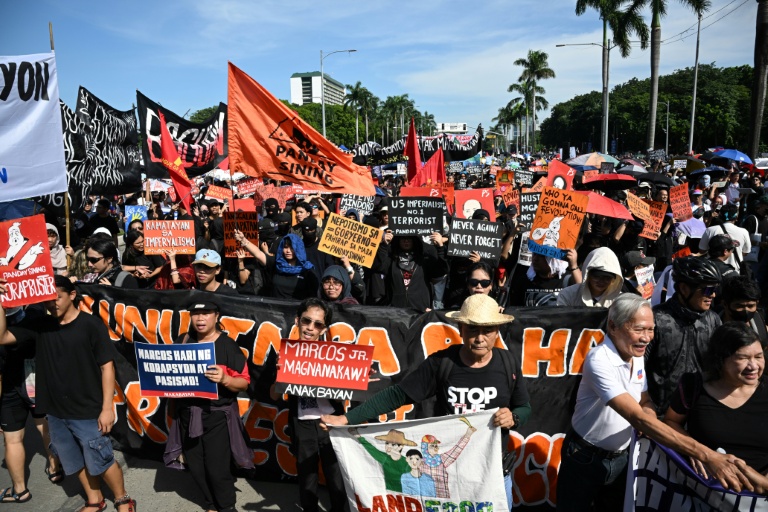
Across Asia, youth-led movements are igniting significant protests against corruption and government mismanagement. From the streets of Manila to Kathmandu and Jakarta, tens of thousands are demanding accountability from leaders who have been accused of siphoning public funds and perpetuating elite privileges. These uprisings reflect a growing frustration among young citizens unwilling to accept business as usual.
In the Philippines, exactly 53 years after former President Ferdinand Marcos Sr. declared Martial Law, a wave of protests erupted in Manila’s Luneta Park. Demonstrators gathered to voice their anger over a scandal involving billions of pesos allegedly misappropriated through “ghost” flood control projects that were contracted but never completed. According to Agence France-Presse, by mid-morning on Sunday, at least 13,000 protesters had assembled, with more joining as they marched down Epifanio de los Santos Avenue (EDSA), a site synonymous with the 1986 People Power revolution that ousted the elder Marcos.
Aly Villahermosa, a 23-year-old nursing student, expressed the sentiments of many, stating, “This theft of public funds is truly shameful. If there’s a budget for ghost projects, then why is there no budget for the health sector?” The public outcry has prompted President Ferdinand Marcos Jr. to acknowledge the anger, calling for peaceful demonstrations while placing the military on high alert. The Department of Finance estimates losses of 118.5 billion pesos (approximately $2 billion) between 2023 and 2025. Greenpeace has suggested that the total may reach closer to $18 billion.
The political fallout has already begun, with House Speaker Martin Romualdez, a cousin of the president, resigning amid intensifying investigations into corruption. Additionally, construction executives have implicated nearly 30 lawmakers and public works officials in bribery schemes.
Protests in Nepal and Indonesia
In Nepal, youth-led protests, referred to as the Gen Z protests, recently forced Prime Minister K.P. Sharma Oli to resign. Protesters accused his administration of corruption, censorship, and economic mismanagement. Efforts to suppress dissent included a ban on numerous social media platforms, which only fueled unrest. Violence erupted, leading to the deaths of more than 70 individuals and leaving hundreds injured. Following the upheaval, Sushila Karki, a former chief justice, assumed the role of interim prime minister, pledging to prioritize transparency, reform, and fresh elections in 2026.
Indonesia has also seen significant unrest, particularly spurred by public outrage over lavish parliamentary perks amid rising living costs. A monthly housing allowance of 50 million rupiah (around $3,000) for lawmakers sparked mass protests in Jakarta and other cities. The demonstrations prompted President Prabowo Subianto to reshuffle his cabinet, removing several ministers, including the finance chief. Reports of fatalities during the protests have intensified demands for governmental accountability and a reevaluation of public priorities.
Across these nations, the common threads of the protests are clear: a demand for accountability and an end to impunity. The uprisings in the Philippines, Nepal, and Indonesia serve as crucial stress tests for their respective democracies. As disillusionment with political elites grows globally, the actions of Asia’s youth illustrate that patience with corruption has limits, and that citizens are reclaiming their power to instigate political change.

Cattle Showcases Thrive at RUAS Winter Fair 2023

UK and US Strike Zero Tariff Agreement on Pharmaceuticals

Maya Jama Stuns in Strapless Ensemble at Qatar Grand Prix

Russia and Saudi Arabia Launch Visa-Free Travel Agreement

ISOLDE Facility Marks 10 Years of Advancements in Nuclear Research

Voters Demand Resignation of Chancellor Rachel Reeves Over Tax Hikes

Shoppers Save 30% on Marks & Spencer’s Viral Velvet Dress

Health Campaigners Urge End to Smoking Exemption for Lounges

Charity Shop Surprise: Woman Finds Joggers Worth £2,000 for £8

Iconic 90s TV Show House Hits Market for £1.1 Million

Milk Bank Urges Mothers to Donate for Premature Babies’ Health

Alessia Russo Signs Long-Term Deal with Arsenal Ahead of WSL Season

Shoppers Flock to Discounted Neck Pillow on Amazon for Travel Comfort

Museums Body Critiques EHRC Proposals on Gender Facilities

Trump Visits Europe: Business, Politics, or Leisure?

Japanese Teen Sorato Shimizu Breaks U18 100m Record in 10 Seconds

Couple Shares Inspiring Love Story Defying Height Stereotypes

Anglian Water Raises Concerns Over Proposed AI Data Centre
-
 Entertainment2 months ago
Iconic 90s TV Show House Hits Market for £1.1 Million
-
 Lifestyle4 months ago
Milk Bank Urges Mothers to Donate for Premature Babies’ Health
-
 Sports3 months ago
Alessia Russo Signs Long-Term Deal with Arsenal Ahead of WSL Season
-
 Lifestyle4 months ago
Shoppers Flock to Discounted Neck Pillow on Amazon for Travel Comfort
-
 Politics4 months ago
Museums Body Critiques EHRC Proposals on Gender Facilities
-
 Business4 months ago
Trump Visits Europe: Business, Politics, or Leisure?
-
 Lifestyle4 months ago
Japanese Teen Sorato Shimizu Breaks U18 100m Record in 10 Seconds
-
 Politics4 months ago
Couple Shares Inspiring Love Story Defying Height Stereotypes
-
 World4 months ago
Anglian Water Raises Concerns Over Proposed AI Data Centre
-

 Sports4 months ago
Bournemouth Dominates Everton with 3-0 Victory in Premier League Summer Series
-

 World4 months ago
Wreckage of Missing Russian Passenger Plane Discovered in Flames
-

 Lifestyle4 months ago
Shoppers Rave About Roman’s £42 Midi Dress, Calling It ‘Elegant’