
Science
Academics Warn of Rising Threat from Neuro-Weapons Research

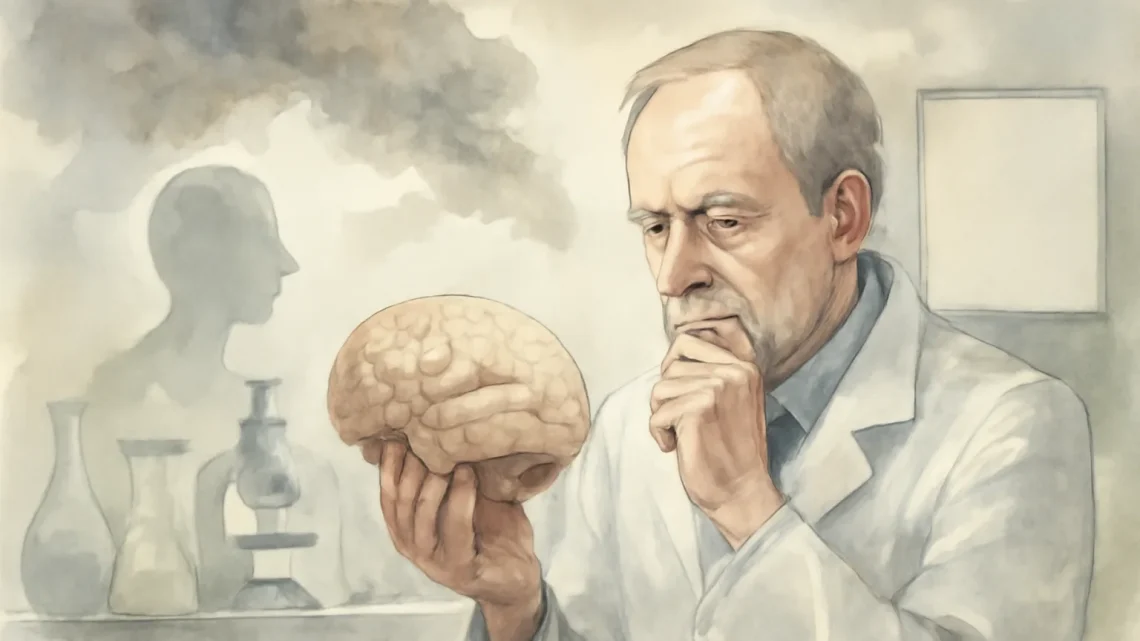
Researchers from the University of Bradford have raised alarms about the escalating risks associated with chemical neuro-weapons that could target the human brain and central nervous system (CNS). Their recent publication delves into the implications of advancements in neuroscience, pharmacology, and artificial intelligence (AI), suggesting these developments could facilitate new forms of warfare aimed at manipulating cognition, behavior, and perception.
Emerging Risks from CNS-Acting Chemicals
The book titled Preventing Weaponization of CNS-acting Chemicals: A Holistic Arms Control Analysis, co-authored by Dr Michael Crowley and Professor Malcolm Dando, investigates the intersection of various scientific fields that may allow for the creation of chemical agents capable of altering mental processes. The authors assert that the capacity to chemically modify consciousness, memory, or behavior has transitioned from theoretical speculation to a pressing global security issue.
Dr Crowley remarked, “We are entering an era where the brain itself could become a battlefield. The tools to manipulate the central nervous system—to sedate, confuse, or even coerce—are becoming more precise, more accessible, and more attractive to states.”
Historical Context and Modern Developments
The authors trace the evolution of CNS-acting chemical research, highlighting Cold War experiments conducted by the CIA and the Soviet Union, as well as notable recent incidents like the 2002 Moscow theatre siege. During this event, Russian forces deployed aerosolized fentanyl derivatives to incapacitate hostage-takers, resulting in over 120 deaths among hostages.
While early attempts at developing such weapons were constrained by technological limitations, contemporary advances in neuroscience and AI have significantly increased the potential for targeted manipulation of brain functions. Scientists are now mapping neural pathways associated with fear, sleep, aggression, and decision-making, which could be exploited for both therapeutic and hostile applications.
Professor Dando cautioned, “The same knowledge that helps us treat neurological disorders could be used to disrupt cognition, induce compliance, or even in the future turn people into unwitting agents. That’s the dual-use dilemma we face.”
Regulatory Challenges and Proposed Framework
The publication emphasizes that existing international treaties, such as the Biological and Toxin Weapons Convention (BTWC) and the Chemical Weapons Convention (CWC), contain gaps and ambiguities concerning CNS-acting agents. Although these treaties forbid the development and use of chemical and biological weapons, they permit certain chemicals for law enforcement applications, potentially paving the way for their weaponization.
Dr Crowley remarked, “There are dangerous regulatory gaps within and between these treaties. Unless they are closed, we fear certain states may be emboldened to exploit them in dedicated CNS and broader incapacitating agent weapons programmes.”
To address these challenges, the authors propose a new initiative called Holistic Arms Control (HAC). This framework aims to integrate various governance layers, including:
- International human rights law
- International humanitarian law
- UN drug conventions
- Medical ethics
- Codes of conduct for scientific professionals
Practical recommendations include the establishment of a dedicated working group on CNS-acting and incapacitating agents within the Organisation for the Prohibition of Chemical Weapons (OPCW), updating treaty definitions to align with scientific advancements, and reinforcing monitoring and verification mechanisms.
Professor Dando stressed the urgency for proactive governance, stating, “The science is moving fast—our regulatory systems need to catch up.”
The authors emphasize that their goal is not to impede scientific progress but to ensure it unfolds within ethical and legal frameworks. They caution that without prompt action, the potential for the weaponization of neuroscience could become a reality.
Dr Crowley concluded, “This is a wake-up call. We must act now to protect the integrity of science and the sanctity of the human mind.”

Marie Helvin Discusses Dating Challenges and Body Confidence at 73

Danny Morrison Reflects on United Ireland, Gerry Adams, and Stormont’s Future

Southampton University and Siemens Collaborate to Advance MEMS Technology

Barcelona’s Deco Highlights Rashford’s Burden at Manchester United

Rolls-Royce Shares Surge 77% in 2025: What’s Next for Investors?

Welsh Ambulance Service Targets Frequent 999 Callers for Support

Welsh Ambulance Service Targets Frequent 999 Callers for Better Care

Bremen’s Marble Imaging Secures €5.3M for Revolutionary Satellites

WNBA and Players Association Secure 40-Day Extension on CBA Talks

Iconic 90s TV Show House Hits Market for £1.1 Million

Milk Bank Urges Mothers to Donate for Premature Babies’ Health

Alessia Russo Signs Long-Term Deal with Arsenal Ahead of WSL Season

Shoppers Flock to Discounted Neck Pillow on Amazon for Travel Comfort

Museums Body Critiques EHRC Proposals on Gender Facilities

Trump Visits Europe: Business, Politics, or Leisure?

Japanese Teen Sorato Shimizu Breaks U18 100m Record in 10 Seconds

Couple Shares Inspiring Love Story Defying Height Stereotypes

Anglian Water Raises Concerns Over Proposed AI Data Centre
-
 Entertainment2 months ago
Iconic 90s TV Show House Hits Market for £1.1 Million
-
 Lifestyle4 months ago
Milk Bank Urges Mothers to Donate for Premature Babies’ Health
-
 Sports3 months ago
Alessia Russo Signs Long-Term Deal with Arsenal Ahead of WSL Season
-
 Lifestyle4 months ago
Shoppers Flock to Discounted Neck Pillow on Amazon for Travel Comfort
-
 Politics4 months ago
Museums Body Critiques EHRC Proposals on Gender Facilities
-
 Business4 months ago
Trump Visits Europe: Business, Politics, or Leisure?
-
 Lifestyle4 months ago
Japanese Teen Sorato Shimizu Breaks U18 100m Record in 10 Seconds
-
 Politics4 months ago
Couple Shares Inspiring Love Story Defying Height Stereotypes
-
 World4 months ago
Anglian Water Raises Concerns Over Proposed AI Data Centre
-

 Sports4 months ago
Bournemouth Dominates Everton with 3-0 Victory in Premier League Summer Series
-

 World4 months ago
Wreckage of Missing Russian Passenger Plane Discovered in Flames
-

 Lifestyle4 months ago
Shoppers Rave About Roman’s £42 Midi Dress, Calling It ‘Elegant’